
Unbiased headlines. Facts, not spin.
Every story is an unbiased news briefing written from 110+ sources across the spectrum — sources linked so you can verify it yourself.
 economy
Major Story (7/10)
June 23, 2026 at 12:43 PM
economy
Major Story (7/10)
June 23, 2026 at 12:43 PM
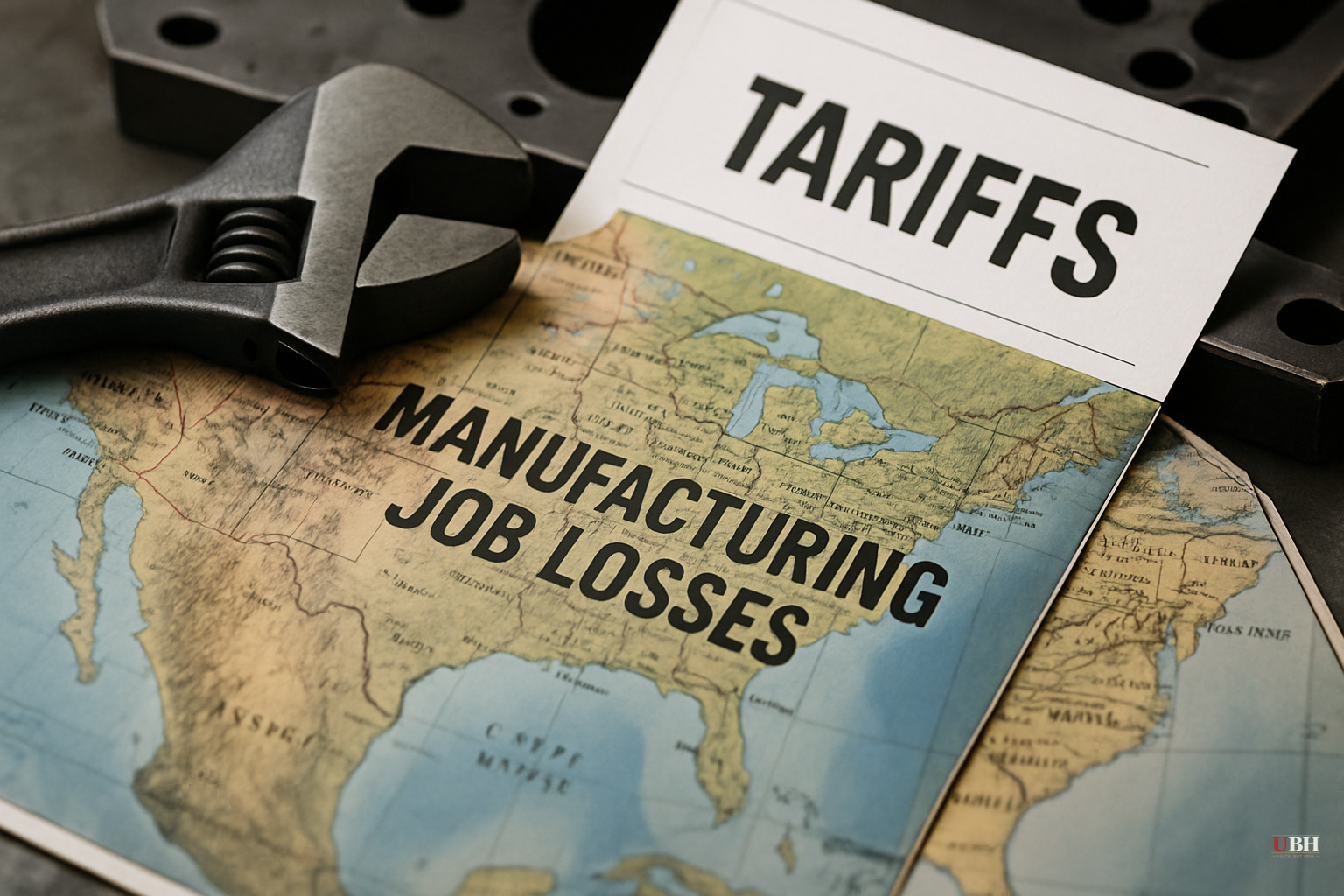
Warren and Kelly Press Trump Officials on Manufacturing Job Losses Under Tariff Regime
What Happened
Sens. Elizabeth Warren (D-MA) and Mark Kelly (D-AZ) sent a letter Monday to U.S. Trade Representative Jamieson Greer, Treasury Secretary Scott Bessent, and Commerce Secretary Howard Lutnick. They want the three officials to explain why the U.S. manufacturing trade deficit is growing and why blue-collar jobs have declined despite the tariffs that were supposed to reverse both trends.
Spokespeople for all three officials did not respond to CNBC's request for comment by the time of publication.
What the Numbers Say
A February analysis of Bureau of Labor Statistics data conducted by Democrats on the Joint Economic Committee, on which Kelly sits, found the U.S. economy lost 108,000 manufacturing jobs in the first year of Trump's second term.
The JEC's Democratic staff ran the numbers, so treat this as a partisan framing of real government data, not an independent audit. The underlying BLS data is public and checkable.
On construction, the Federal Reserve Bank of St. Louis data, which is nonpartisan, shows total construction spending on manufacturing has declined since peaking in summer 2024.
On trade, the Census Bureau reported in February that while the U.S. overall trade deficit with the world narrowed in 2025, the deficit in physical goods hit a record high.
The Offshoring Problem the Tariffs Didn't Fix
Warren and Kelly name two specific cases that undercut the tariff-as-jobs-savior argument.
First, John Paulson, a Trump ally, is closing his Ohio brass instrument manufacturing plant and moving operations to China. Second, Whirlpool has cut nearly 500 jobs since Trump's tariffs took effect and is expanding in Mexico.
These are concrete, named examples, not theoretical economic modeling. Companies can absorb tariff costs, restructure supply chains, or move operations abroad rather than reshore. That the tariffs haven't stopped either of these moves is a legitimate empirical problem for the administration's theory of the case.
The Legal Backstory
Trump's tariff authority under the International Emergency Economic Powers Act of 1977 has faced ongoing legal challenges. Lower courts, including the Court of International Trade, have issued rulings questioning the scope of executive tariff power under IEEPA. The current tariff regime reflects a patchwork of statutory authorities and executive actions that has evolved in response to those legal challenges. Some of the economic disruption may stem from this legal and policy uncertainty itself, rather than from the tariff levels alone.
The Strongest Argument for the Administration's Position
A reasonable supporter of Trump's trade policy would push back on the timeline. Reshoring manufacturing takes years, not months. Factory permits, equipment procurement, workforce training, and supply chain realignment don't happen in 12 to 18 months. The argument is that the job losses are transitional pain during a necessary decoupling from Chinese manufacturing dependency, and that critics are measuring success against a timeline that no serious economist would apply to an industrial buildout.
There's also an attribution problem. The 108,000 job figure covers the first year of Trump's second term, but manufacturing employment trends are affected by interest rates, global demand, automation, and the broader business cycle, not just tariff policy. The JEC Democratic staff analysis does not isolate the tariff variable from those others, according to CNBC's reporting on the letter. That doesn't make the number wrong, but the causal claim about tariffs specifically is less certain than the letter implies.
Political Context
Warren and Kelly are two of the Senate's most consistent opponents of Trump's tariff policy. They've argued repeatedly that tariffs function as a tax on U.S. consumers and businesses. This letter is an extension of that ongoing political argument, timed for maximum visibility.
That doesn't make their data wrong. The BLS numbers, the Census Bureau trade figures, and the St. Louis Fed construction data are real. But packaging them into a cabinet letter and sharing it with CNBC before the administration can respond is a political move, not an oversight hearing.
The administration's silence, for now, leaves the factual record unanswered.
The Open Question
Grounding all of this is a genuine uncertainty: at what point does the administration's stated rationale, that tariff pain is temporary and reshoring takes time, become falsifiable? Warren and Kelly haven't specified that threshold either. Until either side puts a number and a timeline on the table, this debate will keep running on political rails rather than measurable ones. The response from Greer, Bessent, or Lutnick, if it comes, will be the first indication of whether the administration is willing to engage that question directly.
Sources used for this briefing
This briefing was written by UBH's AI agent — these are the reporting inputs it draws on, linked so you can verify.


