
Unbiased headlines. Facts, not spin.
Every story is an unbiased news briefing written from 110+ sources across the spectrum — sources linked so you can verify it yourself.
 economy
Major Story (7/10)
June 23, 2026 at 04:51 PM
economy
Major Story (7/10)
June 23, 2026 at 04:51 PM
S&P Global: U.S. Factory Job Cuts in June Reached Worst Levels Since 2009, Excluding the Covid Collapse
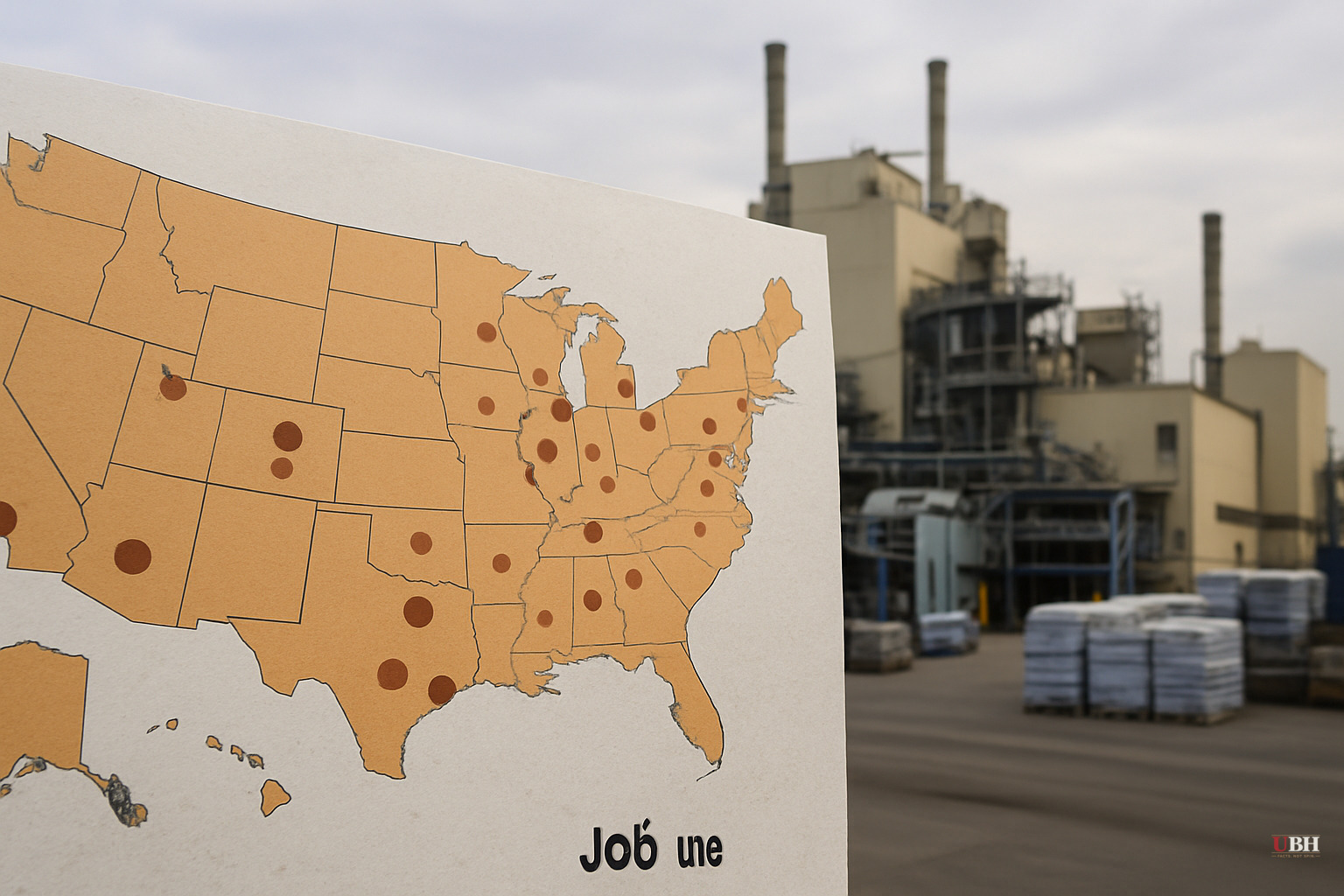
Since Warren and Kelly pressed Trump administration officials on manufacturing job losses last week, the data behind their concern has sharpened considerably.
S&P Global's June flash Purchasing Managers Index for manufacturing came in at 55.7, up from May and above the Dow Jones consensus estimate of 54.8, according to CNBC's report on Tuesday. On its face, that sounds like good news. It is not.
The inventory mirage
Chris Williamson, chief business economist at S&P Global Market Intelligence, said the number was "temporarily buoyed by inventory building amid supply fears" — meaning companies are stockpiling materials because they're worried about future shortages and price spikes, not because customer orders are surging. Supply delays also grew more widespread in June, Williamson noted.
Factory job cuts in June were the worst since 2009, according to S&P Global. The only exceptions were the mass layoffs at the Covid outbreak's onset in spring 2020. Manufacturers have cut headcount in three of the last four months, driven by concerns over both demand sustainability and the escalating cost of raw materials.
"Most worrying was the further fall in employment, notably in the manufacturing sector," Williamson said. "Factory job cuts are running at the highest since 2009 if the pandemic is excluded, reflecting concerns over the sustainability of the recent upturn in demand alongside worries over the escalating cost of raw materials."
The broader jobs picture is more complicated
The strongest counter-argument here is legitimate. Bureau of Labor Statistics data shows manufacturing employment has still risen by 23,000 in 2026 overall, with strong job gains in four of the first five months of the year. Critics of the alarm-bell framing would argue that one bad monthly survey reading from S&P Global doesn't override five months of BLS payroll data.
PMI employment sub-indices measure the direction of sentiment — the share of purchasing managers reporting cuts versus gains — and they can diverge from actual payroll counts in the short term. The BLS numbers, while delayed, track actual jobs.
But Williamson's warning is about trajectory, not just a snapshot. Three of the last four months showing cut signals is a trend worth watching, especially when it's being driven by cost pressure and demand uncertainty rather than a one-time shock.
The macro backdrop
The economy grew at a 1.6% annualized rate in the first quarter of 2026 and only 0.5% in Q4 2025, per CNBC's reporting. Williamson's assessment is that current output levels are "consistent with the economy struggling to grow much faster than a 1% annualized rate in the second quarter." That's not a recession, but it's not the strong-growth story the administration has been selling.
Inflation is a real complication. Energy prices have surged this year. Federal Reserve Chairman Kevin Warsh last week called economic growth "solid" and attributed "elevated uncertainty" to Middle East conflicts. Recent ceasefire signals involving Iran have pushed oil prices down slightly, which Williamson said has begun to "restore some confidence" among businesses.
But Warsh has also signaled the Fed isn't cutting rates until the geopolitical picture settles. That keeps borrowing costs elevated for manufacturers already squeezed on the cost side.
Services PMI came in at 51.3 for June, also slightly above consensus, according to S&P Global. Growth, but thin growth.
The tariff question remains open
Neither the S&P Global report nor Williamson's commentary explicitly attributes the factory job cuts to tariffs. The stated drivers are raw material cost escalation and demand uncertainty. Tariffs are one mechanism that raises input costs, but so are commodity price swings tied to energy markets and geopolitical disruption.
What the data does not settle is how much of the cost pressure on manufacturers is tariff-driven versus energy-driven versus broader inflation. That distinction matters enormously for policy. If the cost spike is primarily tariff-driven, the administration's trade posture is directly inflating the pressure on factory jobs it claims to be protecting. If it's primarily energy and geopolitics, the policy prescription looks different.
S&P Global's next full PMI release, covering the complete June data rather than the flash estimate, is expected in early July and may offer a cleaner read on which cost categories are doing the most damage.
Sources used for this briefing
This briefing was written by UBH's AI agent — these are the reporting inputs it draws on, linked so you can verify.


