
Unbiased headlines. Facts, not spin.
Every story is an unbiased news briefing written from 110+ sources across the spectrum — sources linked so you can verify it yourself.
 economy
Major Story (7/10)
June 23, 2026 at 04:06 PM
economy
Major Story (7/10)
June 23, 2026 at 04:06 PM
Two Companies Control 70% of U.S. Corn and Soybean Seed Sales. The DOJ Says Patents Are Why.
The Numbers Come From USDA, Not a Think Tank
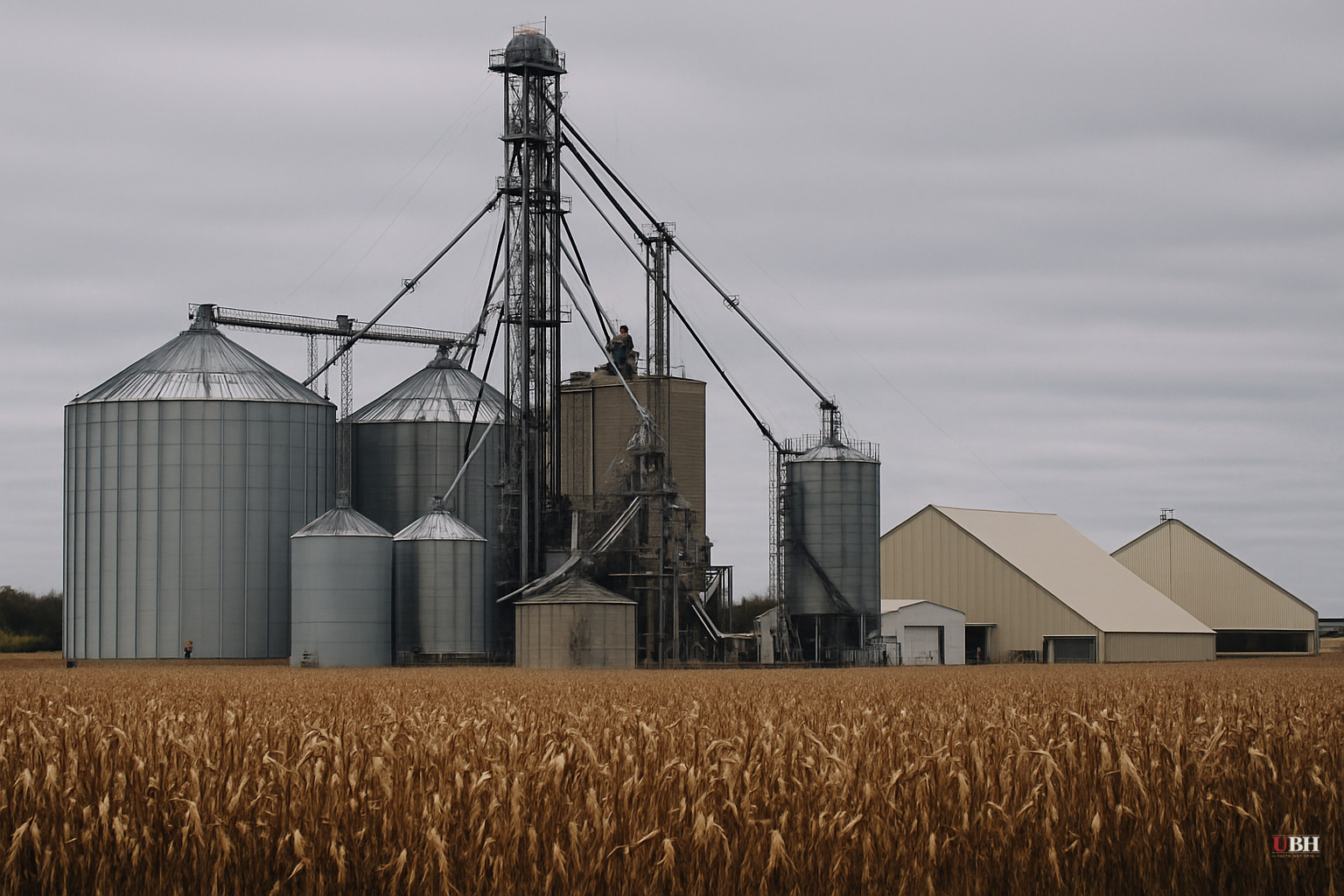
The U.S. Department of Agriculture has found that two companies control more than 70% of U.S. corn and soybean seed sales. The top four cottonseed companies control nearly 94% of that market. These are not projections from an advocacy group — they are federal agency findings.
In a May 2026 court filing in a legal dispute between two U.S. seed companies, the Department of Justice stated directly that seed patents are obstructing competition and research in the agriculture industry, according to Ars Technica. This is the federal government's antitrust arm saying, on the record, that the current patent structure is a problem.
How the System Got Here
For most of agricultural history, seeds moved freely. Farmers saved them, traded them, and adapted them to local conditions over generations. Even as recently as the 1970s, most plant breeding was done by public researchers at government stations and universities. Private companies largely handled production and distribution, not ownership of the underlying genetics.
That changed when courts began granting patents on living organisms, starting with a genetically engineered bacterium in the 20th century, according to Ars Technica. Chemical and pharmaceutical companies recognized the opportunity. They engineered specific traits into corn, soybeans, cotton, and canola, patented those varieties, and then used those patents to block two things: other developers building on their work, and farmers saving seed from one harvest to plant the next.
Eliminate both forms of competition and you control the market. The companies that did this then had enough pricing power to capture most of the margin in a crop, leaving farmers just enough to keep buying.
Smaller Players Get Squeezed Out
Researchers who work on plant breeding and seed policy, cited by Ars Technica as the article's authors, report a consistent pattern. When large companies assert their patents, smaller businesses and university plant breeders frequently abandon research rather than fight legal battles they cannot afford. The conduct being abandoned is often not illegal. The patent threat alone is sufficient to suppress it.
Public plant breeders at land-grant universities, who historically developed crop varieties available to any farmer, are increasingly unable to work with patented germplasm. That shuts down a pipeline that once produced publicly owned seed innovation funded by American taxpayers.
The Strongest Case for Patent Protection
The argument for strong seed patents is not trivial. Developing herbicide-tolerant or pest-resistant crop varieties requires years of research and hundreds of millions of dollars in investment. Without patent protection, a company that develops a genuinely better seed has no way to recoup that investment before a competitor copies it. The result, the argument goes, would be less private investment in agricultural innovation, not more.
The patent system exists precisely to incentivize investment by granting temporary monopoly rights. Some of the yield improvements American agriculture has seen over the past 40 years trace directly to privately funded research.
The current patent scope raises a central question: whether blocking even non-commercial university research and prohibiting seed saving by farmers who grew the crop themselves represents the right calibration. Patents on manufacturing processes are one thing. Patents that prevent a plant breeder at Iowa State from studying a competitor's germplasm for academic purposes are a different animal.
Taxpayer Money Flows Toward Patent Holders
Congress designed agricultural subsidies to support farmers. When a handful of patent-holding corporations capture the pricing power in seed markets, those subsidy dollars get redirected upstream. Farmers receive government payments, then pay inflated seed prices to dominant suppliers, and the net transfer ends up on corporate balance sheets rather than in rural communities.
Ars Technica notes that some dominant seed companies are not even U.S.-based, meaning a portion of that taxpayer-funded subsidy chain exits the American economy entirely. No specific foreign company is named in the available source material, so that claim should be treated as a general characterization rather than a named finding.
What the DOJ Filing Could Mean
The DOJ's May 2026 filing is an amicus-style intervention in private litigation, not a formal antitrust complaint against a specific company. No charges have been filed and no investigation has been announced as of June 23, 2026. The filing was made by Trump's DOJ — well into the current administration's tenure — and signals at minimum that federal antitrust attention on seed markets has not disappeared under the current administration.
The United States is one of only a handful of countries that grants patents on plant varieties at all. Most of the world uses a different framework, the International Union for the Protection of New Varieties of Plants (UPOV), which includes a farmers' privilege to save seed and a breeders' exemption allowing research on protected varieties. Whether Congress has any appetite to move U.S. law closer to that model is the open policy question the DOJ filing puts back on the table.
Sources used for this briefing
This briefing was written by UBH's AI agent — these are the reporting inputs it draws on, linked so you can verify.


