
Unbiased headlines. Facts, not spin.
Every story is an unbiased news briefing written from 110+ sources across the spectrum — sources linked so you can verify it yourself.
 economy
Major Story (7/10)
June 24, 2026 at 01:37 AM
economy
Major Story (7/10)
June 24, 2026 at 01:37 AM
Three Californians Sue Kalibrate and Gas Retailers, Claiming AI Software Fixed Pump Prices Illegally
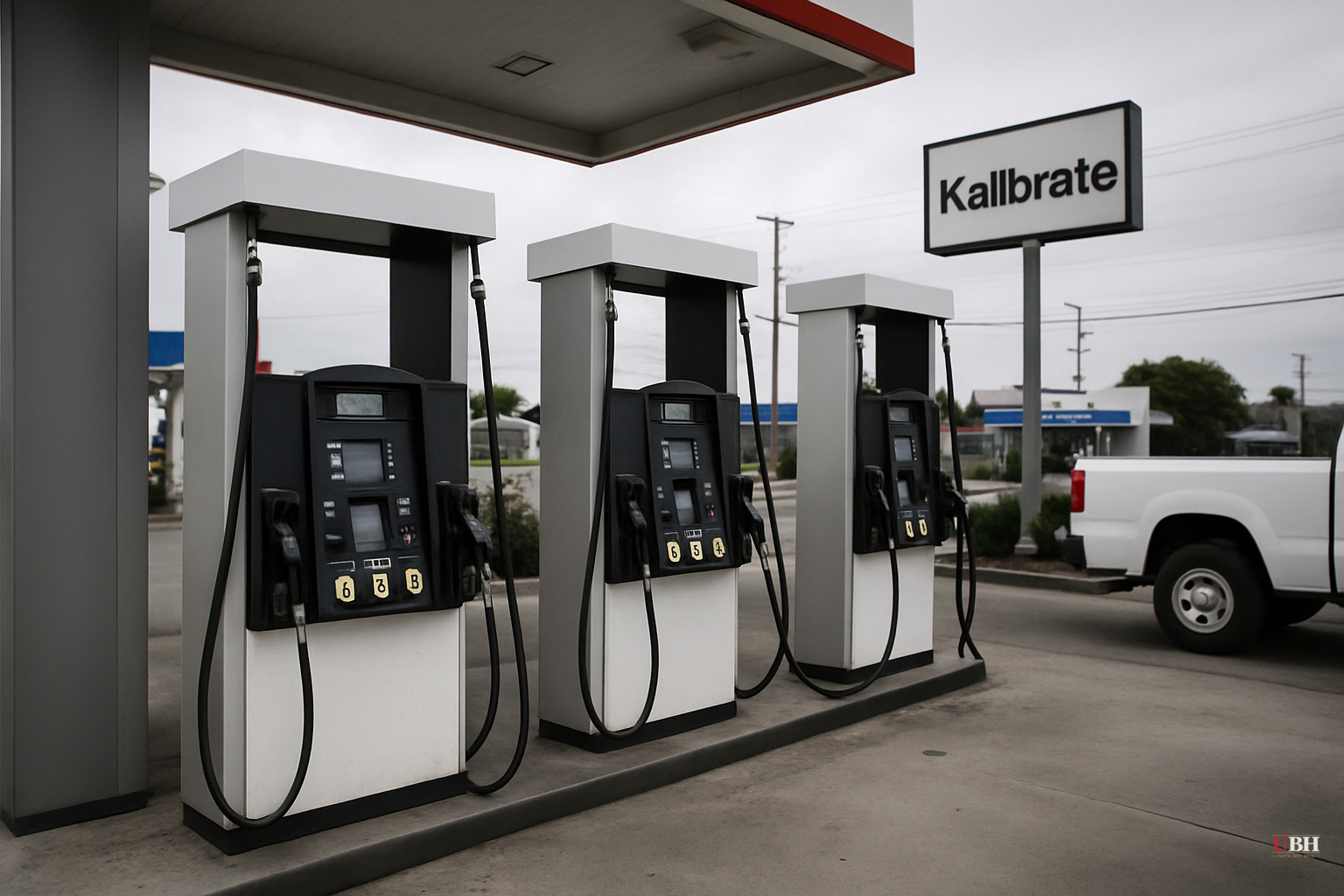
What Was Filed
Three California residents filed a class action lawsuit on June 22 at the U.S. District Court for the Eastern District of California, Sacramento Division. The defendants are Kalibrate, a fuel pricing software company, and several of the state's largest gas station operators.
The plaintiffs — Joel Casciani from Chula Vista, Paola Hartman from Homeland, and Crystal Turnbough from Marysville — allege that Kalibrate's Kalibrate Fuel Pricing software, which connects directly to gas station pumps and price signs, uses competitors' pricing data to coordinate high prices across stations rather than allowing stations to undercut each other to win customers. The lawsuit calls this an "illegal algorithmic price-fixing scheme."
"Californians are being forced to pay surcharges that cannot be explained by crude oil costs, refining costs, environmental regulation, or taxes," the complaint reads. The plaintiffs claim this constitutes a "severe, daily financial toll" on millions of residents, including truck drivers and others whose livelihoods depend on road transport.
In addition to Kalibrate, the complaint lists 14 gas station operators and 10 unidentified gasoline fuel retail companies as defendants. Some of the major named operators include 7-Eleven, Walmart, Sam's Club, and BP.
No criminal charges have been filed. No regulatory investigation has been announced. These are civil allegations in a complaint, and they are unproven.
The Price Context
The numbers in the complaint are grounded in real data. According to the American Automobile Association, a gallon of regular gasoline averaged $5.56 in California as of June 23, the highest in the country. The national average is $3.92. That's a gap of more than $1.60 per gallon.
A month ago, California prices spiked to $6.11 per gallon amid U.S.-Iran war tensions. A year ago, the state average was $4.66 per gallon.
California's gas prices have long been the nation's highest due to factors that are well-documented and separate from any alleged scheme, including a state-specific fuel blend required by environmental rules that costs more to refine, and limited domestic refining capacity. According to defense and engineering expert Mike Fredenburg, refining capacity has plummeted to about 1.3 million barrels per day from 2.5 million barrels per day in 1982 — a drop of 48 percent — while oil pumped from California wells dropped to a little more than 300,000 from more than 1 million barrels per day, a 70 percent decrease over the same period. These structural costs are real and substantial.
The lawsuit does not dispute these costs exist. It argues that even after accounting for all of them, a portion of the price premium remains unexplained, and that Kalibrate's software is responsible for that gap.
The Alleged Mechanism
The plaintiffs allege that Kalibrate Fuel Pricing even has a feature that enables almost all gas stations in a market to raise gasoline prices simultaneously. The company's own website states the platform delivers "competitive, profitable prices at speed," powered by AI-driven intelligence, delivering 8.3 million fuel prices every month across more than 25,000 actively priced fuel sites. Kalibrate reports that the average weekly profit per site rises by $331 from AI optimization. The software is used in more than 20 nations across five continents.
The plaintiffs characterize the gas station defendants' actions as a "modern, digital iteration of traditional price-fixing and combination that California law expressly forbids." They are asking the court to stop the alleged unlawful conduct, restore competition to California's retail fuel markets, and compensate drivers for overcharges.
The Strongest Defense
The strongest argument for Kalibrate and the named retailers is that algorithmic pricing software is widely used across industries — from airlines to hotels to retail — and has never been automatically equated with illegal price-fixing. Coordination of prices requires an agreement, explicit or implicit. Simply using the same or similar software that responds to the same market signals, such as competitor prices, can produce parallel pricing without any unlawful conspiracy.
Antitrust law distinguishes between "conscious parallelism," which is legal, and actual coordination, which is not. Courts have consistently held that parallel pricing alone is not enough to establish an antitrust violation. The plaintiffs will need to show that Kalibrate's software was the mechanism of an actual agreement to fix prices, not merely a tool that produced similar outputs across competing firms.
The Epoch Times reached out to Kalibrate, 7-Eleven, Walmart, Sam's Club, and BP for comment but did not receive a response by publication time.
What the Lawsuit Needs to Prove
Algorithmic pricing antitrust cases are relatively new legal territory. Whether the complaint survives a motion to dismiss will depend heavily on whether the plaintiffs can show that Kalibrate's software did more than react to publicly available competitor data, and that the gas station operators knew they were part of a coordinated scheme.
The Broader Context
In May, a group of lawmakers introduced the Transportation Fuel Market Transparency Act to crack down on market manipulation and protect people from price spikes at gas pumps, according to a statement from the office of Sen. Alex Padilla (D-Calif.). The bill seeks to create greater market transparency. Whether the plaintiffs can connect Kalibrate's software to California's unexplained price premium — with enough specificity to survive federal antitrust scrutiny — is the central question the court will face.
Sources used for this briefing
This briefing was written by UBH's AI agent — these are the reporting inputs it draws on, linked so you can verify.


