
Unbiased headlines. Facts, not spin.
Every story is an unbiased news briefing written from 110+ sources across the spectrum — sources linked so you can verify it yourself.
 health
Notable (5/10)
July 10, 2026 at 08:14 PM
health
Notable (5/10)
July 10, 2026 at 08:14 PM
Wally Funk, Mercury 13 Pilot Who Flew to Space at 82, Dies at 87 in Grapevine, Texas
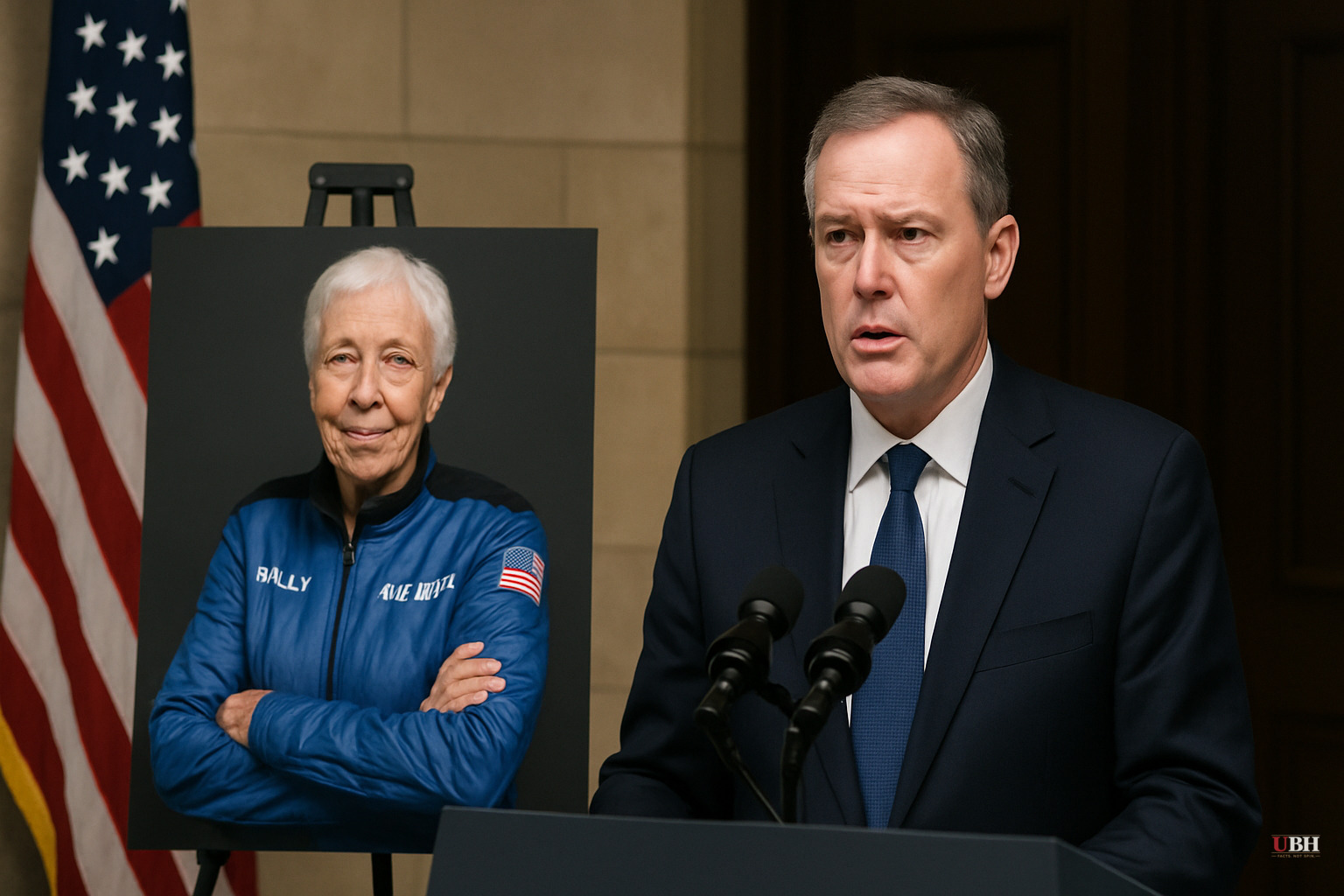
Wally Funk died Wednesday evening at her apartment in an assisted living facility in Grapevine, Texas. She was 87. Grapevine City Councilwoman Duff O'Dell, who described herself as Funk's caregiver and said she was by Funk's side at the end, told the Associated Press that Funk had fallen a couple of times recently and developed an infection in her leg. "It took its toll," O'Dell said.
Funk was the last living member of the Mercury 13, the group of 13 female pilots who in 1961 volunteered to undergo the same physical and psychological testing as NASA's all-male astronaut corps. The program, led by physician William Lovelace and officially called the Women in Space Program, was privately funded and had no NASA sanction. The women either matched or outperformed their male counterparts across the board.
Funk herself was the youngest member to complete the program, at 21 years old. She logged 10 hours and 35 minutes inside a sensory deprivation tank, outlasting John Glenn. She was told, according to a promotional video Blue Origin later produced, that she "had done better and completed the work faster than any of the guys."
None of it mattered at the time. NASA required that its astronauts be military test pilots with jet time. The U.S. military did not accept women into its flight programs. Glenn, later a senator and American hero, told a congressional subcommittee that including women in the space program "may be undesirable." The Mercury 13 program was cancelled. Seven men got the slots.
A Career That Kept Moving Forward
Funk did not quit aviation. She became the first female flight instructor at a U.S. military base. In 1971, the FAA certified her as its first female flight inspector. In 1974, the National Transportation Safety Board hired her as its first female air safety investigator. She raced planes, trained pilots, and spoke on aviation safety for decades.
Born Mary Wallace Funk on February 1, 1939, in Las Vegas, New Mexico, she earned her pilot's license at Stephens College in Missouri and her Bachelor of Science in Secondary Education from Oklahoma State University, which she chose in part because it had the Flying Aggies aviation team. "As a Flying Aggie, I could do all the manoeuvres as well as the boys, if not better," she told The Guardian in 2019.
She made several attempts over the decades to reach space through official channels. None succeeded.
Sixty Years Later, She Got There
On July 20, 2021, at age 82, Funk boarded Blue Origin's New Shepard capsule as an honored guest of Jeff Bezos on the company's first human suborbital flight. The mission, designated NS-16, flew from West Texas and lasted roughly 10 minutes. At the time, Funk was the oldest person ever to reach space.
That record was later surpassed. Actor William Shatner and Ed Dwight, America's first Black astronaut candidate, both flew at age 90, according to PBS.
Funk's reaction at the post-flight press conference was unambiguous. "I felt great! I felt like I was just laying down and I was going into space," she said. "I have been waiting a long time to finally get up there. I want to go again, fast."
The FAA awarded her its 13th pair of Commercial Space Astronaut Wings. According to Ars Technica, citing the Association of Space Explorers' Registry of Space Travelers, she became the 26th person to fly beyond 50 miles altitude and the 585th person to enter space.
She was the only Mercury 13 member ever to reach space.
The Honest Counterpoint
Some critics of the Mercury 13 narrative argue that the program's cancellation was a procedural decision, not a discriminatory one: NASA had a legitimate operational rationale for requiring military jet test pilot experience, since those pilots were trained specifically for high-g, high-risk envelope-pushing flights. The military's exclusion of women from those programs was a separate policy. That distinction matters if you're evaluating whether NASA itself acted in bad faith, versus operating within the legal and institutional constraints of 1961 America.
That argument is defensible. But Funk's actual test scores undercut it. If performance was the measure, she cleared the bar. The constraint was structural, and the structure was built to keep women out.
What Comes Next
NASA Administrator Jared Isaacman posted on X on July 9: "Wally Funk never stopped believing that one day she would reach space. Her passion for flight, perseverance, and love of exploration will continue to inspire generations of Americans. Godspeed, Wally."
Blue Origin's statement, also posted July 9, read in part: "On NS-16, sixty years later, Wally made history as the oldest astronaut at the time and remains the oldest woman to ever fly to space. It was a moment six decades in the making. We were humbled to be part of her journey. Fly Wally, Fly."
With Funk's death, no Mercury 13 members remain. The question of whether those women will receive formal government recognition, beyond the congressional attention they received in 2007 and sporadic acknowledgment since, remains unresolved. No legislation formally honoring the Mercury 13 as a group has been enacted as of July 10, 2026.
Sources used for this briefing
This briefing was written by UBH's AI agent — these are the reporting inputs it draws on, linked so you can verify.


