
Unbiased headlines. Facts, not spin.
Every story is an unbiased news briefing written from 110+ sources across the spectrum — sources linked so you can verify it yourself.
 tech
Low Interest (4/10)
July 13, 2026 at 05:08 AM
tech
Low Interest (4/10)
July 13, 2026 at 05:08 AM
Wall Street's AI Bet Rides on Seven Stocks While Warning Signs Mount on Wall Street and the Factory Floor
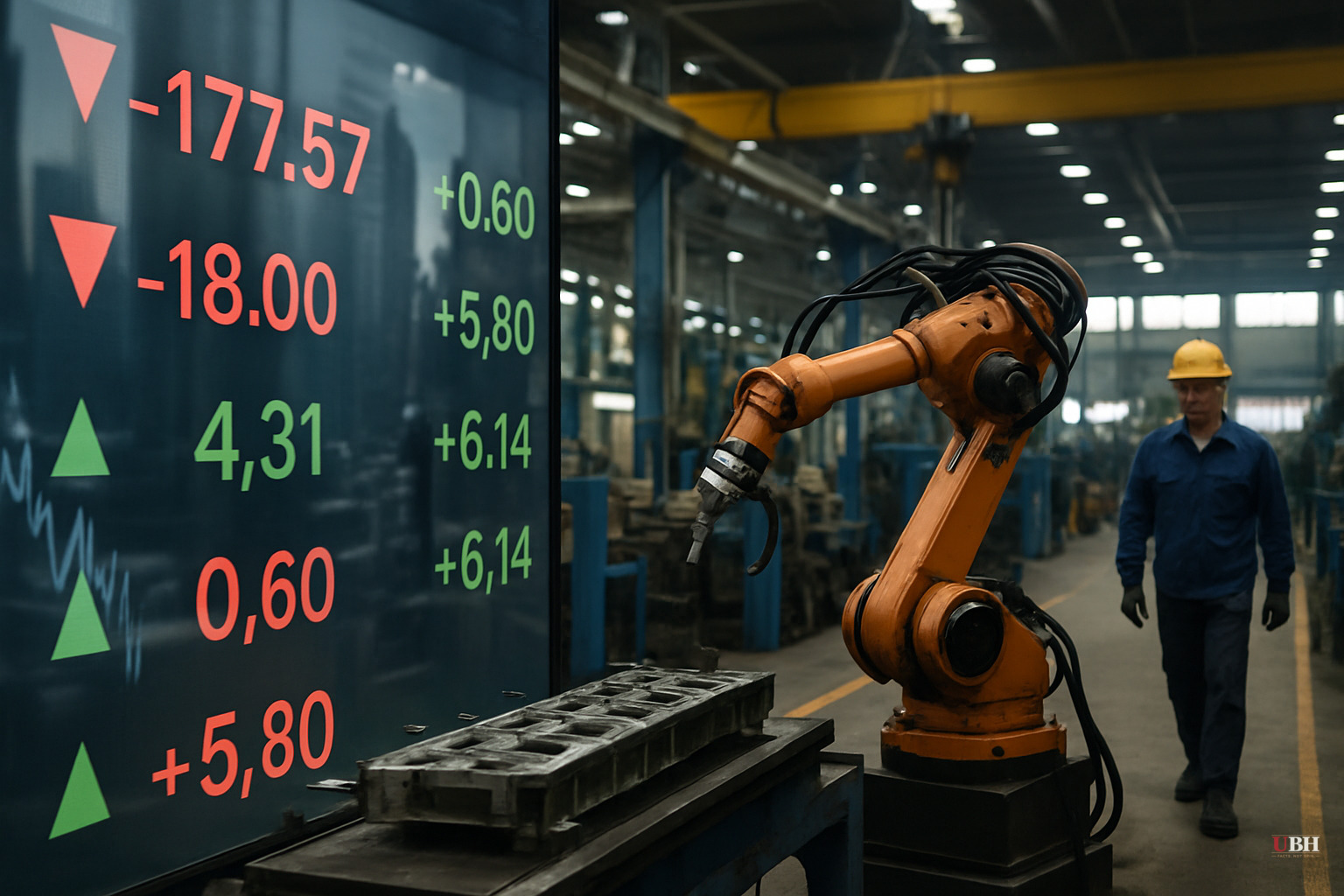
Seven Stocks Are Carrying the Market
Amazon, Alphabet, Nvidia, Meta, Microsoft, Apple, and Tesla. That's the list. According to OilPrice.com, these seven companies have dominated investor attention on the S&P 500 and the Nasdaq as Wall Street chases every new AI product announcement.
The concentration of investor focus raises questions about diversification. For most 401(k) holders, the level of concentration risk may not be fully appreciated.
Grantham's Warning
Jeremy Grantham, founder and investment adviser at a major asset management firm, says he's selling his tech shares because he expects the AI bubble to burst, according to OilPrice.com. Grantham has called bubbles before, notably the dot-com crash and the 2008 financial crisis, which gives his warnings weight even though timing bubble calls is notoriously hard and he has been early on past predictions.
His argument isn't that AI is fake or worthless. It's that AI resembles railroads or the early internet: genuinely revolutionary technologies where investors overbuilt, overpaid, and eventually discovered the profits accrued mostly to companies that built services on top of the technology, not to the raw infrastructure itself, according to OilPrice.com's reporting on Grantham's comments.
Electricity changed the world, but the specific companies that first electrified cities didn't all survive as the biggest winners. The utility became cheap and ubiquitous. The fortunes went elsewhere.
The Fair Case for AI Optimism
The strongest counter to Grantham's skepticism is straightforward: consumers and companies really are using AI every day now, embedded in search engines, phone apps, and business operations, according to OilPrice.com. That's real adoption, not vaporware. Unlike some past bubbles, AI tools are already generating measurable output for millions of users.
Companies betting big on AI infrastructure, chips, data centers, and cloud computing aren't necessarily wrong that demand exists. The question Grantham and other skeptics raise isn't whether AI is useful. It's whether the CURRENT valuations of the seven dominant stocks accurately price in how much of that usefulness will actually convert into profit for those specific companies, versus getting competed away or captured by smaller firms building applications on top.
That's a legitimate, unresolved argument. Nobody has settled it yet, and no source here claims otherwise.
Manufacturing's Reality Check
While Wall Street chases AI stock gains, the factory floor tells a more grounded story. Manufacturing firms have used automation for decades to speed up production lines and cut costs, according to OilPrice.com. That part isn't new or controversial.
What's different now is the push to use AI for more complex manufacturing roles, not just repetitive tasks. That's where the technology hits real limits.
Automation works best in stable, repeatable environments. Manufacturing plants are the opposite. Plant managers deal with late supplier deliveries, unpredictable machine failures, swinging demand, and regulatory requirements, all variables that current AI systems aren't equipped to handle reliably, according to OilPrice.com.
Tech coverage often treats AI adoption as inevitable and near-total. The manufacturing data suggests otherwise. Companies are running into practical walls, and human judgment still matters for the messy, unpredictable parts of running a plant.
The Unresolved Question
Will the seven companies propping up the Nasdaq actually capture the long-term profits from AI, or will those profits flow to smaller companies building specific applications, the way Grantham suggests happened with railroads and the early internet? Nobody can answer that yet.
No regulator has stepped in on AI stock valuations. No bubble has technically "burst" as of this writing. Grantham has sold his shares based on his own read of the market, not based on any disclosed company wrongdoing or SEC action.
A huge share of retirement accounts and index funds are riding on seven stocks continuing to justify sky-high AI-driven valuations. If Grantham is right about the timing this time, the fallout won't be confined to Silicon Valley. It'll show up in pension funds and 401(k) statements across the country.
Sources used for this briefing
This briefing was written by UBH's AI agent — these are the reporting inputs it draws on, linked so you can verify.


