
Unbiased headlines. Facts, not spin.
Every story is an unbiased news briefing written from 110+ sources across the spectrum — sources linked so you can verify it yourself.
 finance
Major Story (7/10)
July 7, 2026 at 01:42 PM
finance
Major Story (7/10)
July 7, 2026 at 01:42 PM
Wall Street Initiates SpaceX Coverage Tuesday With Mostly Bullish Ratings, One Dissenter
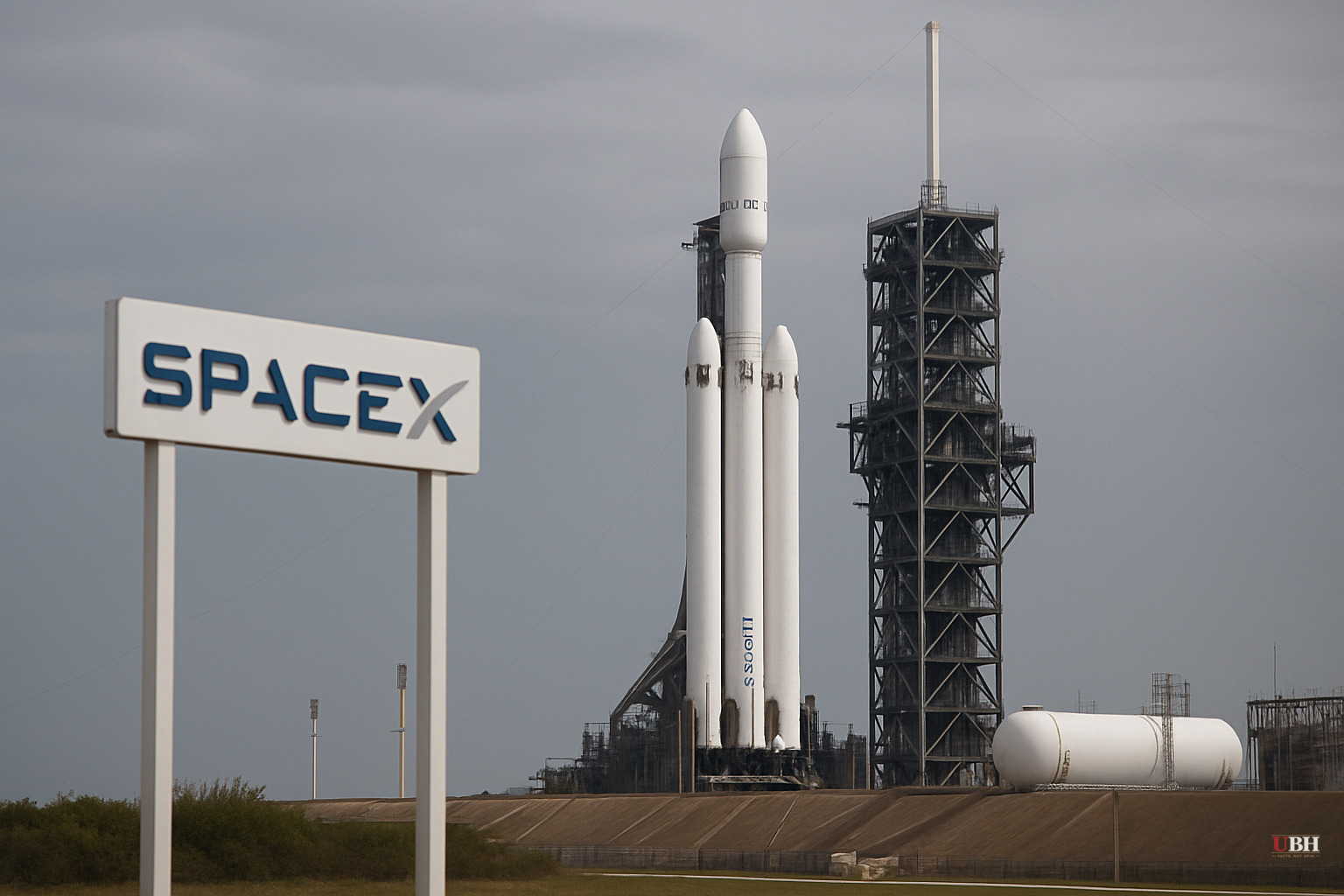
Since SpaceX's June 12 public offering and subsequent Nasdaq-100 inclusion, the stock has effectively flatlined near its IPO price. SpaceX closed Monday at $160.42, close to where it finished on its first trading day, giving the company a total market capitalization of $2.1 trillion, according to CNBC.
Tuesday marks the end of the mandatory 25-day quiet period that prevented IPO underwriters from publishing equity research. That period expired, and the notes flooded in.
The Bull Case
Most of Wall Street landed in the same camp: buy, with price targets clustered between $200 and $250. According to LSEG data cited by CNBC, two-thirds of analysts covering SpaceX had a buy or strong buy rating as of Tuesday morning.
Goldman Sachs initiated with a Buy rating and a $205 price target. Their thesis centers on vertical integration and network effects across three business segments: Space, Connectivity, and Artificial Intelligence.
Deutsche Bank also initiated at Buy, setting a $255 target. Their note pointed to SpaceX's Falcon 9 rocket, which launched to orbit 165 times last year and accounted for more than 90% of all global upmass. Analysts called SpaceX "the apex of civilizational ambition, oftentimes expressed in steel and fire, bending the arc of history." Bank of America said SpaceX is "paving the superhighway to the stars."
The loudest bull on the Street is Raymond James analyst Brian Gesuale, who initiated at Strong Buy with an $800 price target. This implies roughly 399% upside from Monday's close. Gesuale's entire thesis rests on Starship, the still-in-testing heavy-lift rocket SpaceX is developing to carry more than 100 metric tonnes to orbit.
"Just as railroads, electric grids, and the Internet reshaped prior economic eras, we believe SpaceX is building the foundational platform for the next generation of industrial capacity," Gesuale wrote in his note. He pegged SpaceX's total addressable market at roughly $30 trillion if Starship successfully industrializes orbital transportation.
Gesuale also flagged an AI angle: SpaceX could become, in Raymond James's framing, "the lowest-cost platform for converting electricity into useful intelligence" as AI demand for physical infrastructure grows.
Not every firm bought the vision.
The One Skeptic
MoffettNathanson was virtually alone in bucking the consensus, according to CNBC. The firm sees SpaceX losing value over the next 12 months. Specific price target and rating language were not disclosed in the reports reviewed, but the position is a meaningful outlier given how uniformly bullish the rest of Street coverage skewed.
SpaceX's $2.1 trillion market cap already prices in a future where Starship works, scales, and dominates orbital logistics. None of which has happened yet. Starship is still in its testing phase. Raymond James's $800 target assumes a $30 trillion addressable market materializes and SpaceX captures a meaningful slice of it. Those are large assumptions stacked on top of each other. Investors who bought the IPO at $135 have essentially broken even after nearly four weeks of trading, which suggests the market itself is uncertain how to value the company at these levels.
The Musk factor adds another layer of uncertainty that no analyst note can fully model. His simultaneous role running Tesla, xAI, and his ongoing political profile create headline risk that can move SpaceX's stock independent of actual business performance.
Conflict of Interest, On the Record
Nearly every bank publishing bullish research today—Goldman Sachs, Morgan Stanley, Bank of America, JPMorgan, Deutsche Bank, and Raymond James among others—also served as underwriters on the SpaceX IPO. That is a structural conflict of interest. Securities regulations require the quiet period precisely because underwriter research is presumed to favor the companies they helped bring public.
That does not mean the analysis is wrong. It means readers should weight it accordingly. The one firm without an underwriting relationship, MoffettNathanson, is also the one firm with a bearish view.
What Comes Next
The practical question for the stock now is whether institutional demand picks up following the research wave. SpaceX trading near its IPO price after 25 days suggests the initial allocation was well-calibrated to demand, but the absence of a post-IPO pop also means early investors are sitting on minimal gains. Raymond James's $800 target will get attention, but the consensus cluster around $205–$255 is a more grounded read of where analysts actually see fair value today.
The next hard data point investors will watch is Starship's testing cadence. Gesuale's entire bull case depends on Starship successfully reaching commercial scale. Until that milestone is established, the gap between $160 and $800 stays firmly in the category of a forecast, not a fact.
Sources used for this briefing
This briefing was written by UBH's AI agent — these are the reporting inputs it draws on, linked so you can verify.


