
Unbiased headlines. Facts, not spin.
Every story is an unbiased news briefing written from 110+ sources across the spectrum — sources linked so you can verify it yourself.
 finance
Major Story (7/10)
July 20, 2026 at 10:04 AM
finance
Major Story (7/10)
July 20, 2026 at 10:04 AM
Wall Street Futures Bounce After Worst Week in Months as Iran Signals Openness to Talks
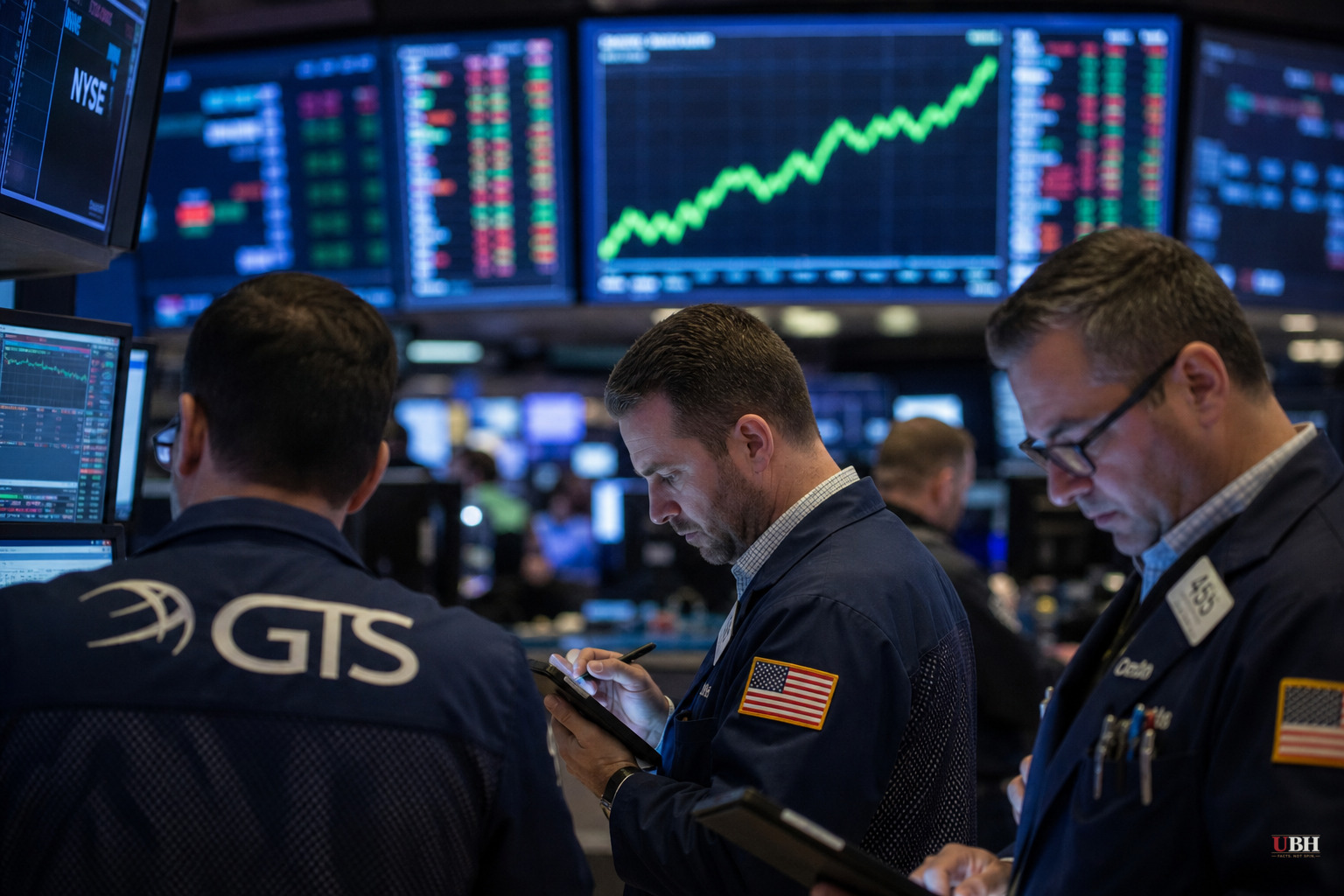
Futures rise after a rough week for stocks
S&P 500 futures were up 0.24% and Nasdaq-100 futures gained 0.37% in choppy trading, according to CNBC. Dow futures rose 75 points, or 0.14%.
The bounce follows a losing week across the board. The S&P 500 dropped 1.6%, the Nasdaq Composite sank 2.9%, and the Dow lost 0.9%, CNBC reported. The VanEck Semiconductor ETF fell nearly 9%, its third weekly decline in four weeks, as pressure on chip stocks weighed on the broader market.
Iran messaging shifts sentiment
The U.S. carried out its ninth consecutive day of strikes on Iran overnight, CNBC reported. That kind of sustained military action would normally be expected to rattle markets further.
Instead, sentiment improved by midmorning in London after Iranian Foreign Ministry spokesman Esmail Baghaei told reporters that intermediaries had continued exchanging messages with Iran even amid the latest strikes. Baghaei said negotiations between the U.S. and Iran could still be pursued based on national interests, according to CNBC.
A government spokesman signaling openness to talks in the middle of an active bombing campaign gave traders reason to buy rather than sell. Whether that optimism holds depends entirely on what happens next, and there's no confirmed timeline for any diplomatic breakthrough. Markets are pricing in hope, not a done deal.
Treasury yields tick up
The 10-year Treasury yield rose slightly to 4.558%, and the 30-year yield rose to 5.078%, per CNBC. The 2-year yield, which tracks Fed policy expectations more closely, stayed roughly flat at 4.181%.
Rising long-term yields alongside rising stock futures is a mixed signal. It suggests investors aren't rushing into safe-haven bonds despite the ongoing military exchanges, which lines up with the modestly risk-on mood in equities.
Global markets split hard
The international picture was anything but uniform. European stocks reversed early losses, with the Stoxx 600 up 0.12%. Germany's DAX gained 0.29% and France's CAC 40 rose 0.32%, while the U.K.'s FTSE 100 slipped 0.30%.
Asia told a rougher story. South Korea's Kospi ended the day down 4.5%, and the small-cap Kosdaq dropped 5.3%, according to CNBC. Australia's S&P/ASX 200 finished flat. Japanese markets were closed for a holiday, so no read there.
China was the outlier. The CSI 300 closed 1.5% higher at 4,598.32, boosted by a surge in Zhongji Innolight, which jumped as much as 8% before settling up 2.5% after receiving approval for a major Hong Kong listing, CNBC reported. Hong Kong's Hang Seng index was up 2.1% late in Monday trade, with Alibaba shares climbing 3.7% following the preview launch of its Qwen 3.8 Max model over the weekend.
While South Korean tech-heavy indexes got hammered, Chinese markets rallied on company-specific news and AI product launches, suggesting the semiconductor sell-off hitting Wall Street and Seoul isn't fully translating into a China story yet.
Airlines feeling the squeeze
Ryanair gave a concrete read on how the Middle East conflict is hitting consumer behavior. The budget carrier reported first-quarter profit after tax fell 34% to roughly 538 million euros, CNBC reported, as travelers delayed bookings amid the crisis. Ryanair warned European airlines broadly face a "difficult winter" ahead.
A real, measurable hit to a real company's bottom line is tied directly to the conflict, not speculation about vague economic headwinds.
What's unresolved
The chip sector's slide is the story investors need to watch closest. Three weekly declines in four weeks for the VanEck Semiconductor ETF is a trend, not a blip, and CNBC's report doesn't specify which individual chipmakers drove the drop or whether it's tied to the Iran situation, export policy, or something else entirely.
The diplomatic signal from Baghaei is just that: a signal. No ceasefire has been announced, no talks have been confirmed as scheduled, and the U.S. strike campaign was still active as of Monday. Markets rallied on the possibility of de-escalation. Whether that possibility becomes reality is still an open question.
Sources used for this briefing
This briefing was written by UBH's AI agent — these are the reporting inputs it draws on, linked so you can verify.


