
Unbiased headlines. Facts, not spin.
Every story is an unbiased news briefing written from 110+ sources across the spectrum — sources linked so you can verify it yourself.
 finance
Notable (5/10)
July 19, 2026 at 10:02 PM
finance
Notable (5/10)
July 19, 2026 at 10:02 PM
Wall Street Funds Pile Into 'Reverse Dispersion' Bets as Chip Stocks Wobble
A Trade Built for Chaos
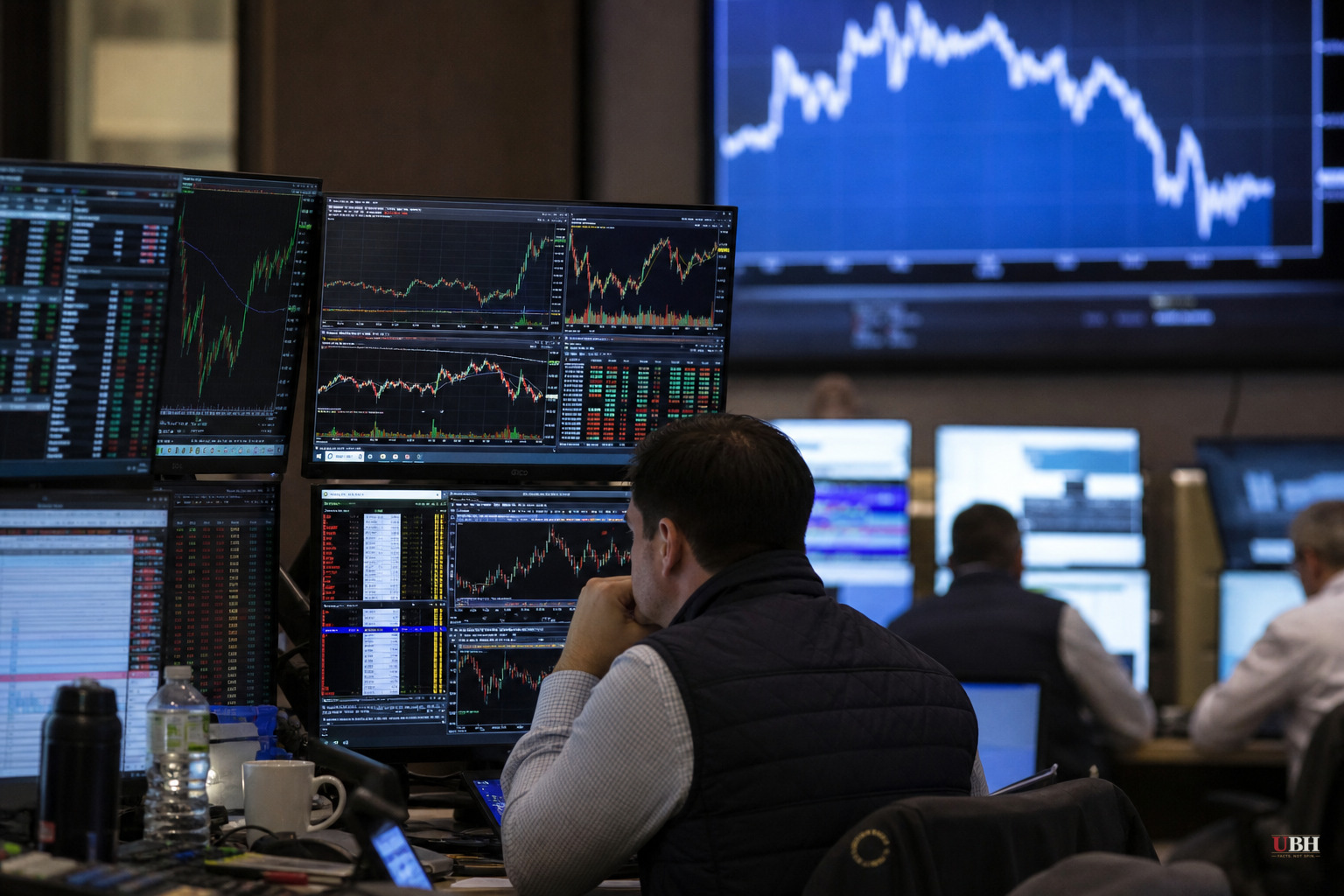
Hedge funds are leaning into something called the reverse dispersion trade heading into the week of July 20. The idea is simple even if the name isn't: bet that individual stocks, especially chipmakers and AI names, will swing harder than the S&P 500 index as a whole.
That's the opposite of the standard dispersion trade, which bets on individual stocks moving in their own directions while the index stays calm because gains and losses cancel out. Reverse dispersion flips it. Funds are wagering the swings will hit everywhere at once, correlated and violent, dragging the index around with them.
Why now? Chip stocks have been getting hammered on AI doubts. A pullback in semiconductor names sparked fresh worries about whether the AI trade still has legs, a concern flagged directly in market coverage tracked by Finviz heading into the week. When the stocks that have carried the market for two years start wobbling, the whole index starts wobbling with them. That's exactly the setup reverse dispersion is built to profit from.
Big Tech Earnings Are the Test
This week matters because Big Tech earnings are landing right in the middle of the doubt. Finviz's market brief specifically frames the coming days as a test of tech's "big rotation," the shift of money in and out of the Magnificent Seven mega-caps that have dominated index returns.
The stakes are blunt. If Apple, Microsoft, Nvidia, Alphabet, Amazon, Meta and Tesla can't deliver, there's a real question of whether the broader market can hold up without them. One market analysis piece put it directly: can the Magnificent Seven save a stock market that might be doomed without them?
This reflects a market structure problem that's been building for years. A handful of mega-cap tech names now account for an outsized share of S&P 500 gains. When seven companies are propping up an index of 500, any crack in those seven names ripples through everyone's 401(k), not just tech traders' portfolios.
AMD's AI Event and the Nuclear Angle
Adding fuel to the AI debate, market previews are circulating ahead of AMD's AI event scheduled for July 22. Coverage tracked by Yahoo Finance framed it as a potential catalyst, with predictions that investors could benefit if they buy in ahead of the event. That's a forward-looking prediction, not a reported outcome, and it should be read that way. Nothing about AMD's stock performance around that event has happened yet as of this writing.
Separately, there's growing chatter about nuclear energy stocks as a longer-term AI infrastructure play, tied to the enormous power demands of data centers running AI models. Again, that's framed as a prediction in the sourcing, not a settled outcome.
Not Just a Tech Story
The reverse dispersion trade isn't happening in a vacuum. Oil market pressures are also weighing on sentiment heading into the week, according to Finviz's weekend market brief, adding another layer of uncertainty on top of the chip stock jitters.
Meanwhile, Venture Global shares reportedly rallied on geopolitical tensions fueling a natural gas rally, according to Yahoo Finance reporting from July 19. That's a reminder that energy and geopolitics are still very much in the mix even while all eyes are on chipmakers.
The Fair Pushback on This Trade
Here's the honest counterargument fund managers making this bet would raise: correlated volatility isn't guaranteed just because chip stocks had a rough stretch. Markets have shrugged off AI doubts before. If Big Tech earnings come in strong this week, the reverse dispersion bet could lose money fast, because it depends on stocks moving together and violently, not just moving down.
In any trade like this, funds are betting on market structure and correlation, not a directional bet on stocks going up or down. They're making a wager on chaos itself, and chaos doesn't show up on a schedule just because Wall Street strategists expect it to.
What Comes Next
Big Tech earnings reports are the immediate catalyst to watch this week, alongside AMD's AI event scheduled for July 22. Whether chip stocks stabilize or keep sliding will determine whether the reverse dispersion trade pays off or blows up in the funds that piled into it.
No regulatory body has flagged concerns about this trade, and there's no indication reverse dispersion positioning is systemically risky the way some derivatives trades have been in past market cycles. It's a bet, made by professional money managers, with real money, on how violently the market's most important stocks behave in the days ahead.
Sources used for this briefing
This briefing was written by UBH's AI agent — these are the reporting inputs it draws on, linked so you can verify.


