
Unbiased headlines. Facts, not spin.
Every story is an unbiased news briefing written from 110+ sources across the spectrum — sources linked so you can verify it yourself.
 finance
Notable (6/10)
August 2, 2026 at 12:14 PM
finance
Notable (6/10)
August 2, 2026 at 12:14 PM
Wall Street Banks Are Quietly Buying 'Crash Puts' to Hedge Leveraged ETF Blowups
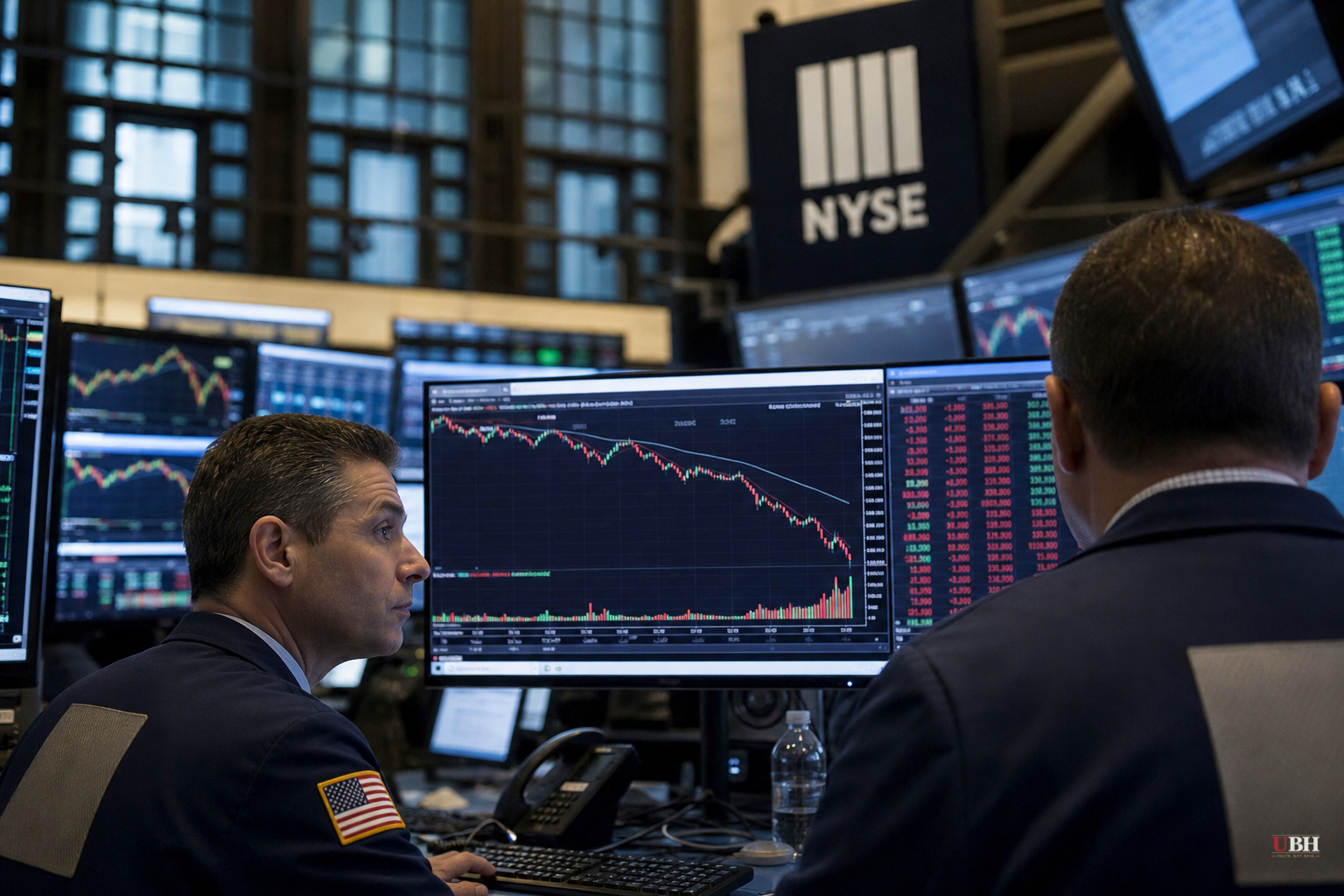
Leveraged ETFs promise retail investors double or triple the daily return of a single stock. Wall Street has quietly discovered these products carry a different kind of risk for the banks that build them, and it's driving a surge in an obscure derivatives market few outside institutional trading desks have heard of.
According to Bloomberg News, investment banks, hedge funds and other big institutional players have ramped up trading in so-called "crash puts," also known as cliquets or stability notes. These over-the-counter contracts let banks buy insurance against a catastrophic one-day drop in a stock, the kind of move that could wipe out a 2X leveraged ETF tied to it entirely.
Because these products trade over-the-counter, nobody can put a hard number on how big this market has gotten. But Bloomberg reviewed documents and talked to market participants who describe demand as unprecedented.
"I have never seen this level of demand in this product," said Natasha Sibley, a portfolio manager on the diversified alternatives team at Janus Henderson, according to Bloomberg.
The Goldman Pitch
Bloomberg reported that Goldman Sachs Group Inc. sent an email in May pitching a trade built around what it called an "Expensive Crash Cliquet." The idea: capitalize on heavy demand to hedge South Korea's SK Hynix Inc. and Samsung Electronics Co., since a one-day drop of 50% or more in either stock could blow up the 2X leveraged ETFs built on top of them.
The yields on offer for investors willing to sell that protection ranged from 14.2% to 20%, for contracts running up to a year and using leverage to juice returns, according to the Goldman email cited by Bloomberg. Goldman's pitch described it as a chance for investors to "act as the 'insurer,' selling this overpriced crash protection to earn a high premium."
For anyone willing to take the other side of a doomsday bet, that's a real payday. The high premiums also reflect how nervous banks have gotten about tail risk sitting inside these leveraged products.
Is the Risk Real or Overpriced?
Here's the fair question skeptics should ask: are 50%-in-a-day crashes actually a realistic threat, or is this fear driving up premiums for a risk that rarely materializes? SK Hynix's worst single-session decline on record was a 15.4% drop on July 13, according to Bloomberg. That's brutal, but nowhere near the 50% threshold that would zero out a 2X ETF.
Goldman's own pitch language calling the protection "overpriced" suggests the bank itself thinks the odds of a true catastrophic move are lower than the premiums imply. That's a legitimate case for skepticism about how much genuine tail risk exists here versus how much fear is being monetized.
But the counterargument is sitting right there in the data. Bloomberg noted that Lucid Group Inc., the US electric vehicle maker, sank as much as 57% intraday on July 14 before closing down 16%. A leveraged ETF tied to Lucid subsequently shut down entirely. So the scenario banks are hedging against isn't hypothetical. It happened, in the same month Goldman was pitching the trade, to a real company with a real leveraged ETF wrapped around it.
South Korea's Regulators Already Moved
This isn't a purely American story. Bloomberg reported that South Korean regulators have stepped up restrictions on retail investment in leveraged ETFs specifically to cool a violent bout of market volatility there. Samsung and SK Hynix are among the most heavily traded names in Korean leveraged products, and their swings ripple straight into the derivatives banks use to hedge them.
No US regulator has announced new restrictions on leveraged ETFs tied to these dynamics, based on available reporting. Whatever risk-management moves are happening here are being driven by bank trading desks and demand from sophisticated institutional investors, not by a regulatory mandate.
What This Means for Regular Investors
Most people who buy 2X or 3X leveraged ETFs through a retail brokerage account have no visibility into any of this. The crash-put market operates in the background, among banks, hedge funds, and Janus Henderson-style asset managers, not on any exchange retail investors can watch.
What happens if a genuine 50%-plus one-day crash hits a heavily leveraged name like Samsung or Nvidia and the crash-put sellers can't cover their side of the bet remains unclear. Lucid's ETF shutdown after its July 14 plunge is the closest real-world test case so far, and it happened to a single mid-cap stock, not a mega-cap like the ones Goldman's pitch was built around. Nobody in the sourcing has modeled what a Samsung-scale event would do to this market.
Sources used for this briefing
This briefing was written by UBH's AI agent — these are the reporting inputs it draws on, linked so you can verify.


