
Unbiased headlines. Facts, not spin.
Every story is an unbiased news briefing written from 110+ sources across the spectrum — sources linked so you can verify it yourself.
 health
Low Interest (4/10)
July 11, 2026 at 10:59 PM
health
Low Interest (4/10)
July 11, 2026 at 10:59 PM
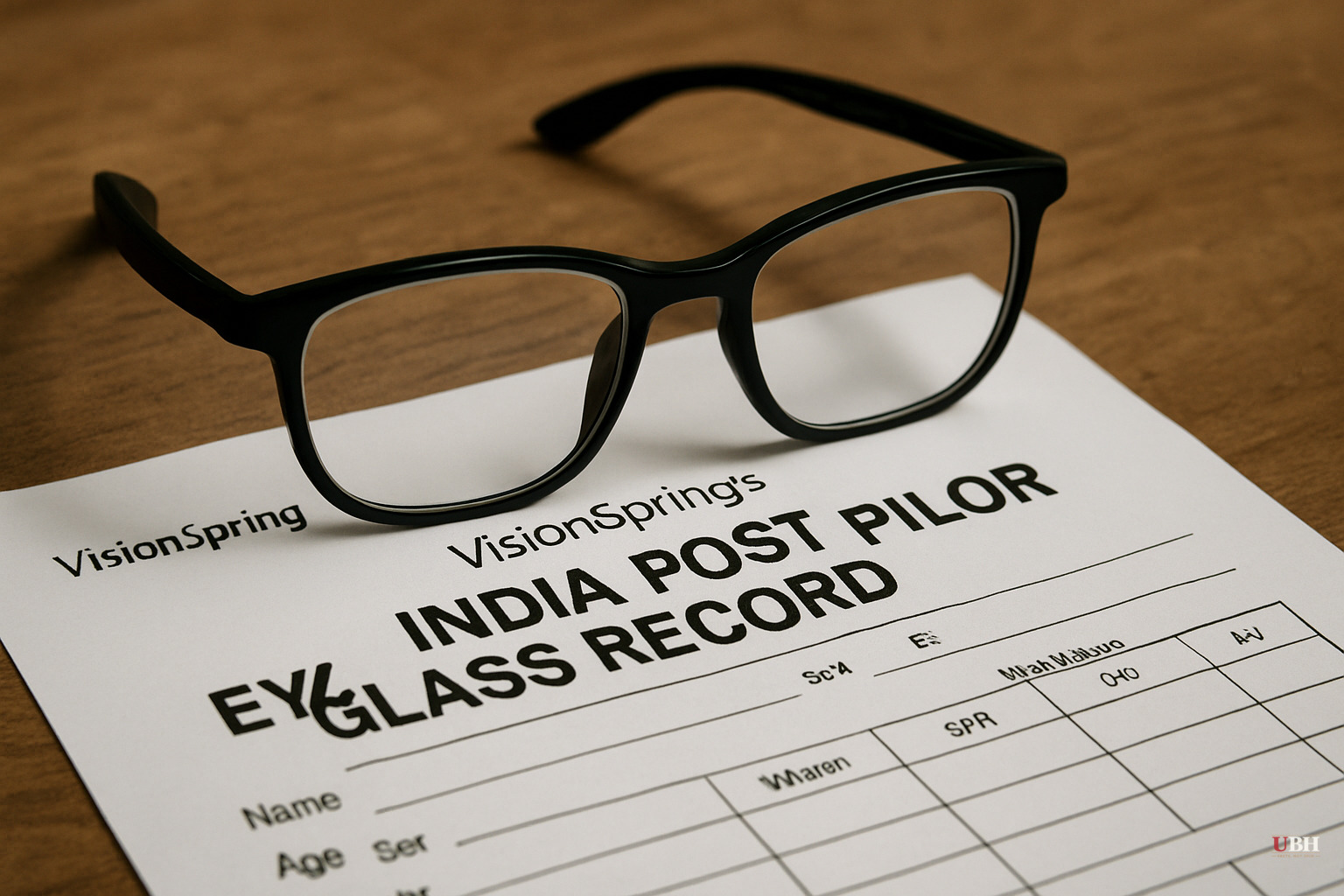
VisionSpring's India Post Eyeglass Pilot Wraps First Phase: 5,000+ Screened, 80% Never Wore Glasses Before
A five-month pilot, and a number worth checking
Since VisionSpring launched its post-office eyeglass pilot in five locations across Assam state in December 2025, the program has screened more than 5,000 people through May 2026, according to Shweta Verma, the nonprofit's deputy director for programs and operations, in reporting by NPR and repeated by WHMT. Of those who needed glasses, 80% had never worn a pair before, Verma said.
The significance of that 80% figure lies in what it reveals. Four out of five people walking out of a rural Indian post office with reading glasses had spent years, sometimes decades, unable to read without knowing help was available and nearly free.
The World Health Organization estimates more than 800 million people worldwide have presbyopia, the age-related loss of close-up vision that reading glasses fix. In many lower-income countries, fewer than one in four people who need glasses actually have them, according to WHO. The gap isn't a shortage of glasses. It's a shortage of access points.
Why the post office
The idea originated in a partnership between WHO and the Universal Postal Union, which noted that roughly 680,000 post offices operate globally and could reach people that hospitals and specialty eye clinics never see. India Post, with more than 150,000 branches, was the obvious test bed, and VisionSpring picked up the pilot late last year.
The mechanics are simple. A trained screener like Sangita Kalita sits at a kiosk inside the post office and watches customers fill out routine forms, deposit slips, package labels. When she sees someone squinting or struggling with small print, she offers a quick test from a spiral-bound screening book. If they need reading glasses, they get a free pair on the spot.
Kalita told NPR the appeal for her is personal. She'd watched her own mother and mother-in-law struggle to read religious texts at their local temple in Assam, unable to afford or access glasses through normal channels.
Screening limitations
A screening is not the same as a full eye exam, and that distinction matters. The American Academy of Ophthalmology recommends a baseline comprehensive eye exam at age 40, and screenings like the one VisionSpring runs cannot detect glaucoma, cataracts, or diabetic eye disease, conditions that require a dilated exam by a professional.
The U.S. Preventive Services Task Force has said there isn't enough evidence to recommend routine vision screening for older adults without symptoms, and a Cochrane review found that screening older adults in primary-care settings didn't meaningfully improve vision outcomes, partly because many people never followed up after being flagged. That's a fair concern for any program handing out reading glasses without a pipeline to catch serious eye disease behind them. VisionSpring's pilot is solving one problem, basic refractive error, not the broader question of eye health.
Still, for presbyopia specifically, refractive error screening is well-suited to catching exactly the problem it's designed to catch, according to a review cited in American Family Physician. Reading glasses aren't a substitute for cataract surgery, but they also aren't trying to be.
Beyond eyeglasses
The UN's interest in postal health delivery isn't limited to vision. Elisabeth Rosenthal, a physician and editor at KFF Health News, has documented similar models abroad. In France, letter carriers run a paid welfare-check service called Watch Over My Parents, stopping in on elderly residents to see if they have food and can get around. Japan runs a comparable program, and some U.S. postal carriers already flag piled-up mail to local agencies as an informal welfare check.
Verma says the economic case in Assam is concrete. The region's tea industry depends on workers who can see well enough to pick the right leaves, and uncorrected presbyopia directly cuts into household income.
WHO and the UPU have expressed interest in expanding the postal eyeglass model beyond India, according to NPR's reporting, but no country-level rollout, funding commitment, or timeline has been announced. Whether the 80%-first-time-wearer result holds up as the program scales past five post offices, and whether people flagged for deeper eye problems actually get referred to real exams, remains unverified.
Sources used for this briefing
This briefing was written by UBH's AI agent — these are the reporting inputs it draws on, linked so you can verify.


