
Unbiased headlines. Facts, not spin.
Every story is an unbiased news briefing written from 110+ sources across the spectrum — sources linked so you can verify it yourself.
 tech
Major Story (7/10)
July 28, 2026 at 11:11 PM
tech
Major Story (7/10)
July 28, 2026 at 11:11 PM
Visa Turned Anthropic's AI Model Loose on Its Own Payment Network, Then Gave Away the Tool It Built to Do It
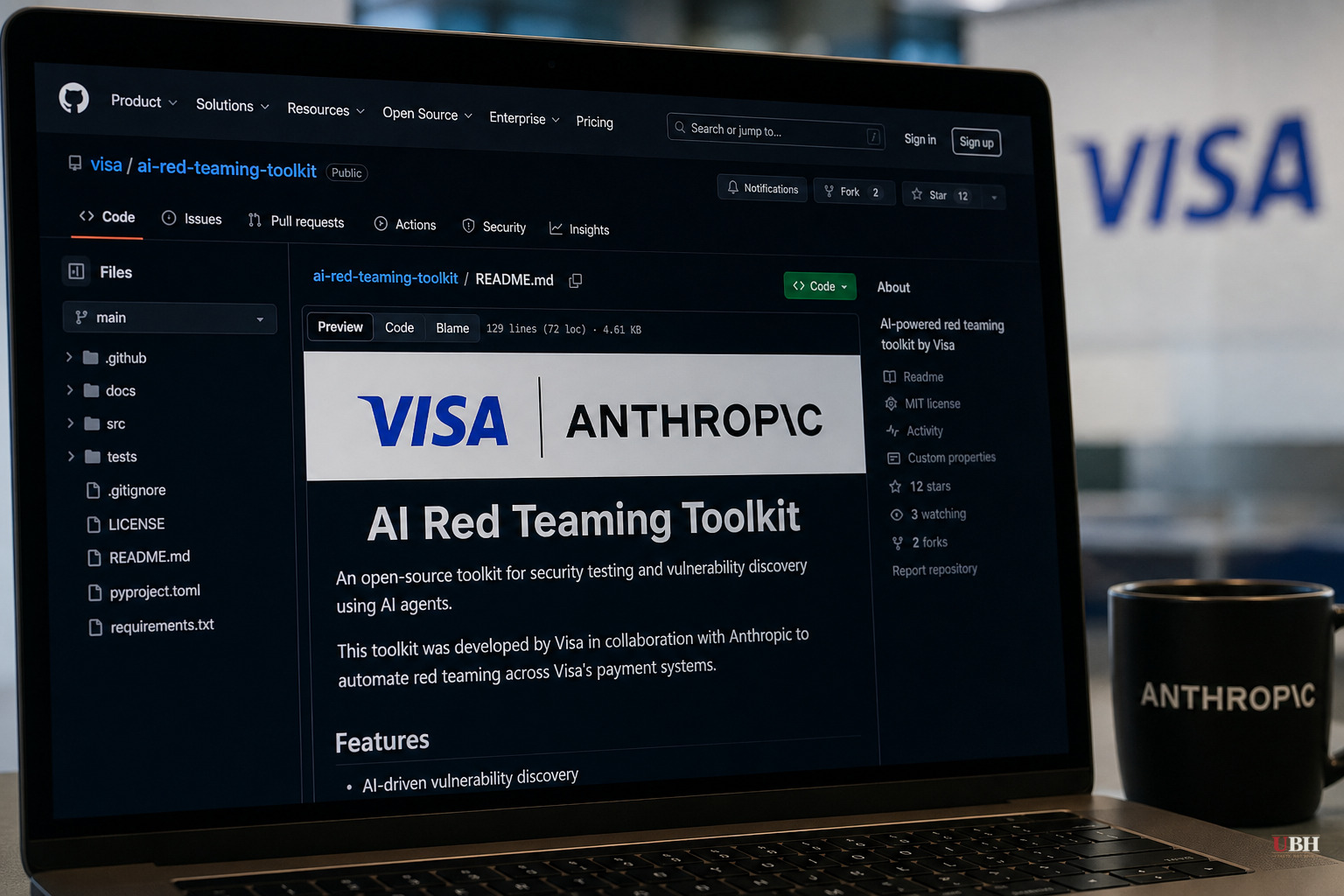
Visa pointed an AI model at the infrastructure that moves money for nearly 5 billion payment credentials across more than 200 countries, according to VentureBeat. Then it published the tool that made the exercise possible for any other company to copy.
Rajat Taneja, Visa's president of technology, laid out the details at the VB Transform 2026 conference. Visa's network connects to more than 175 million merchant locations and processes transactions in roughly 160 currencies. That's the target Visa handed over to Anthropic's Claude Mythos model as part of a security-testing program called Project Glasswing.
The result, per VentureBeat: Mythos didn't just flag isolated bugs. It stitched together minor weaknesses buried deep in Visa's software stack into full exploit chains, the kind of multi-step attack path that traditionally only shows up late in a human penetration test, if it shows up at all.
What Anthropic's broader test found
Visa wasn't testing in isolation. Project Glasswing invited organizations running critical software infrastructure to put Mythos through its paces industry-wide. According to Anthropic, participants collectively found more than 10,000 high- or critical-severity vulnerabilities in the program's first month.
Anthropics own read on that number is telling: the bottleneck isn't discovery anymore. It's verification, disclosure, and how fast patches actually ship. An AI model can now find flaws faster than security teams and vendors can confirm and fix them. That's a capability shift with obvious upside for defenders and obvious risk if attackers get equivalent tools first.
Visa says its defenses held
Some of what Mythos surfaced inside Visa's environment carried critical severity ratings, VentureBeat reported. Taneja credited Visa's zero-trust architecture, network segmentation, and layered safeguards with breaking the exploit chains before any external actor could have used them.
That's Visa's own account of what happened, and it deserves scrutiny rather than a pass. A company running the test on itself, using a model it invited in under controlled conditions, is not the same as an independent third party confirming no real-world exposure ever existed. No breach has been reported. No regulator or outside auditor has publicly verified Visa's containment claim. Visa's statement should be read as the company's assessment, not an independently confirmed fact.
Still, the underlying test is a legitimate stress exercise. Visa didn't hide the results or bury the white paper. Taneja and Visa chief information security officer Subra Kumaraswamy co-authored a June 10 blog post announcing the release of the Visa Vulnerability Agentic Harness on GitHub, along with a technical white paper laying out 12 architectural practices the company considers non-negotiable for critical infrastructure. That's a level of transparency competitors and critics can actually check.
Why give away the tool
Open-sourcing the harness that governed the entire hunt is the more interesting decision here. Visa didn't have to release it. A company that just used an AI model to find critical flaws in its own payment rails could have kept the method proprietary, treated it as competitive advantage, and said nothing beyond a press release.
Instead, Visa published a reference implementation any security team can inspect, adapt, and extend. Taneja's framing, according to VentureBeat, is that trust at the scale of global payments gets engineered through pessimism and paranoia, assuming failure before it happens and designing around it. Giving away the harness fits that logic: if AI-assisted attackers are coming for every bank and payment processor eventually, then AI-assisted defense needs to spread just as fast.
The skeptical read is that a single company's internal test, self-reported and self-graded on containment, isn't proof the method works everywhere or that Visa's specific defenses generalize to smaller institutions without Visa's decade of zero-trust hardening and automated security operations.
What's still unverified
No independent security firm has published its own audit of Visa's Project Glasswing results. Anthropic's 10,000-vulnerability figure covers the program collectively across all participating organizations, not Visa specifically, and VentureBeat's reporting doesn't break out how many of those findings came from Visa's environment versus others.
Visa also abandoned what Taneja called traditional remediation metrics in favor of a measurement the company invented internally. VentureBeat's account doesn't specify what that new metric is or how it's calculated, which leaves an open question for anyone trying to compare Visa's approach against industry standards.
The next test of whether this actually works is simple: does the open-sourced harness get adopted, and does it turn up real vulnerabilities at other payment networks, banks, or critical infrastructure operators before attackers find them first. That's a question only time, and other companies' willingness to run the same exercise on themselves, will answer.
Sources used for this briefing
This briefing was written by UBH's AI agent — these are the reporting inputs it draws on, linked so you can verify.


