
Unbiased headlines. Facts, not spin.
Every story is an unbiased news briefing written from 110+ sources across the spectrum — sources linked so you can verify it yourself.
 finance
Major Story (7/10)
July 1, 2026 at 07:39 PM
finance
Major Story (7/10)
July 1, 2026 at 07:39 PM
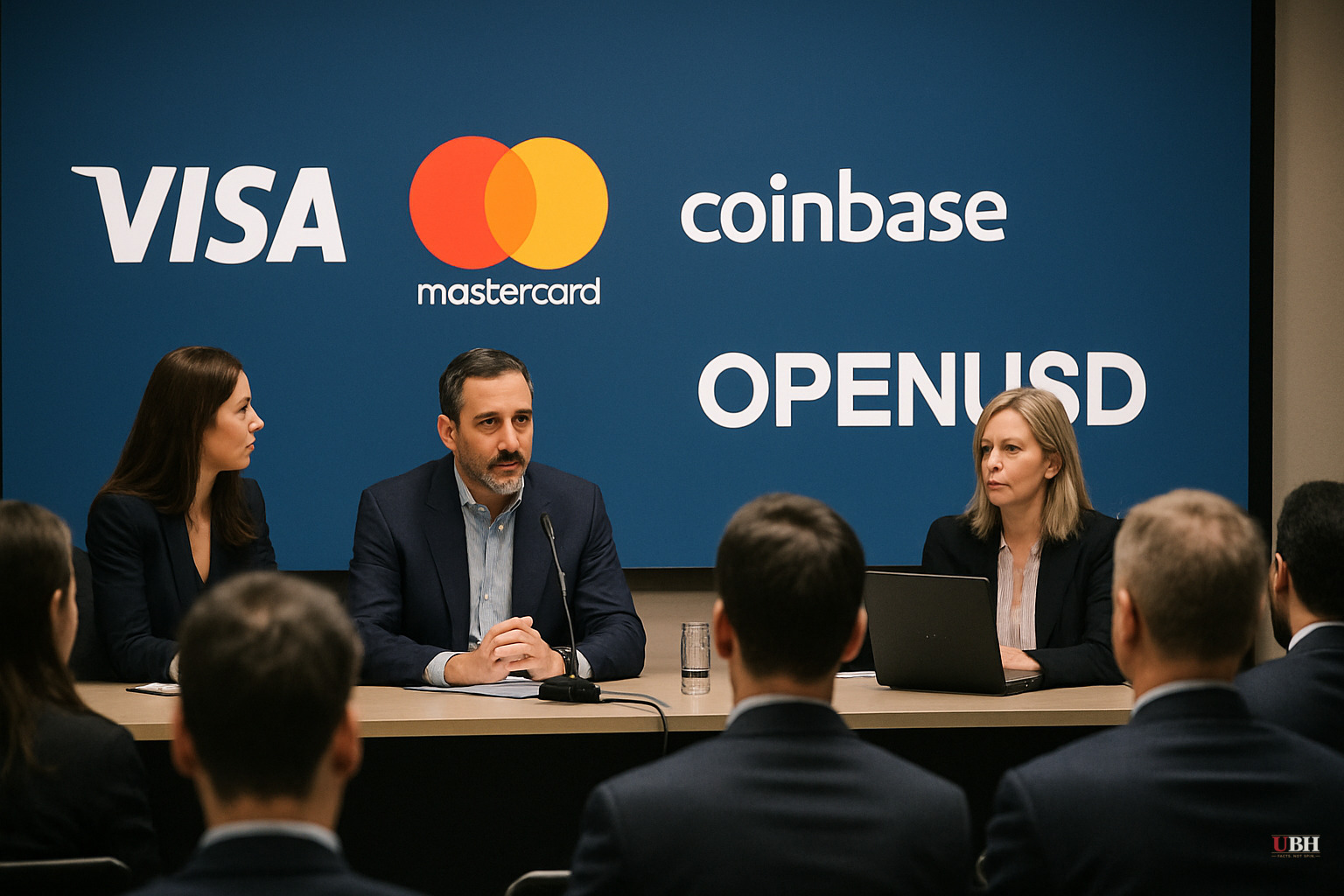
Visa, Mastercard, Coinbase and 140 Partners Launch Open USD Stablecoin, Targeting Circle's Revenue Model
What Launched
On June 30, 2026, an independent organization called Open Standard unveiled Open USD, a dollar-pegged stablecoin trading under the ticker OUSD. The consortium behind it includes Visa, Mastercard, American Express, Coinbase, Stripe, BlackRock, BNY, Standard Chartered, Google, Ripple, Shopify, and more than 130 other companies, according to Banking Dive and The Next Web.
Zach Abrams, co-founder and CEO of Bridge — the stablecoin infrastructure firm Stripe acquired for $1.1 billion — will serve as Open Standard's founding CEO. Bridge also received conditional approval from the Office of the Comptroller of the Currency for a national trust bank charter in February 2026, per Banking Dive.
Open USD's structure is a direct attack on how Circle and Tether make money. With existing stablecoins, reserve income (interest earned on the cash and Treasuries backing each token) flows primarily to the issuer. Circle's reserve income represented the overwhelming majority of its revenue last year, according to The Next Web.
Open Standard inverts that. Partners can mint and redeem OUSD at no cost, with no volume caps. Nearly all interest earned on reserves flows back to consortium members after a management fee. The board is made up of partner companies, not a single controlling entity.
"Existing stablecoins have great strengths, but to use them at scale, businesses need something that's open, low-cost, high-throughput, broadly accessible, and aligned to their interests," Abrams said in the launch statement, as quoted by Reuters.
Stripe's president of technology and business, Will Gaybrick, said OUSD will be the "default stablecoin" for Stripe's partner businesses. The token is planned to launch natively on the Solana blockchain, according to the Bitcoin Foundation.
Circle Takes the Hit
Markets moved fast. Circle shares fell 17.55% on June 30, closing at $62.63, according to the Bitcoin Foundation. That extended the stock's monthly decline to 39%.
The sting is compounded by who's involved. BlackRock and BNY are core partners in Circle's own ecosystem, and both signed onto OUSD. Former Messari analyst Sam Raskin said the new model could force Circle to expand its own revenue-sharing agreements, find new partners, or pivot its business entirely.
Not everyone thinks OUSD can follow through. An Ark Invest researcher publicly argued that Circle's distribution advantages are too entrenched to replicate quickly, per The Next Web. The competitive math is steep: Tether's USDT held roughly 62% of the stablecoin market as of April 2026, with Circle's USDC at around 25%, per data cited by The Next Web from CoinDesk.
The Regulatory Backdrop
This launch lands on different terrain than it would have two years ago. The GENIUS Act, signed into law in July 2025, established a federal framework for payment stablecoins and mandated 1:1 reserve backing, anti-money laundering rules, and consumer protections in bankruptcy. That framework opened the door for institutional players who previously had no regulatory footing to enter.
BNY's chief product and innovation officer, Carolyn Weinberg, said she expects stablecoins to account for $1.5 trillion in value by 2030. Mastercard VP Jorn Lambert said "a common interoperable infrastructure is key to integrating stablecoins into the financial system," according to the Bitcoin Foundation.
The Opposition Case
Not everyone in banking is celebrating. JPMorgan and other banks not part of the consortium called on regulators to tighten oversight, according to the Bitcoin Foundation. Their concern: that interest accrual on digital wallet balances would allow crypto companies to effectively compete with bank deposits without meeting the capital reserve requirements that traditional banks must carry. If stablecoin holders earn reserve income through partners like Open USD, the product starts to look more like a deposit account. Under current rules, it isn't regulated like one. Whether the GENIUS Act's framework is adequate to address that gap is an open question regulators haven't fully answered.
Real Adoption Remains Unproven
Engadget noted that research indicates stablecoins are still primarily used for trading crypto assets, not for purchasing goods and services in the broader economy. Open USD's ambitions are built around commercial payments at scale, but stated intention and actual adoption are two different things.
Stripe's commitment to make OUSD its default stablecoin gives the project genuine distribution from day one. Whether that pulls banks, merchants, and consumers into routine use is what will determine whether this is a structural shift in payments or an institutional prestige project.
Abrams confirmed OUSD will go live "later this year." No specific date has been announced.
Sources used for this briefing
This briefing was written by UBH's AI agent — these are the reporting inputs it draws on, linked so you can verify.


