
Unbiased headlines. Facts, not spin.
Every story is an unbiased news briefing written from 110+ sources across the spectrum — sources linked so you can verify it yourself.
 health
Notable (5/10)
June 6, 2026 at 05:25 PM
health
Notable (5/10)
June 6, 2026 at 05:25 PM
Virunga Rangers Building Ebola Checkpoints With No Vaccine, Shrinking Aid — and 800 Gorillas in the Crosshairs
Since confirmed cases surpassed 381 and the WHO/Africa CDC joint $518 million response plan launched June 5, international attention has sharpened on the DRC outbreak. The diplomatic machinery is moving. But on the ground, the work falls to a much smaller group.
The answer is Emmanuel de Merode and roughly 800 Virunga National Park rangers.
The Man Running the Hardest Job in Africa
De Merode has been in eastern DRC since 1993. According to NPR's Gabrielle Emanuel, who spoke with him on June 3, he said flatly: "The situation we're living through now is certainly the worst we've experienced in the past 30 years."
He has witnessed three decades of war, disease, and poaching in one of the world's most contested regions.
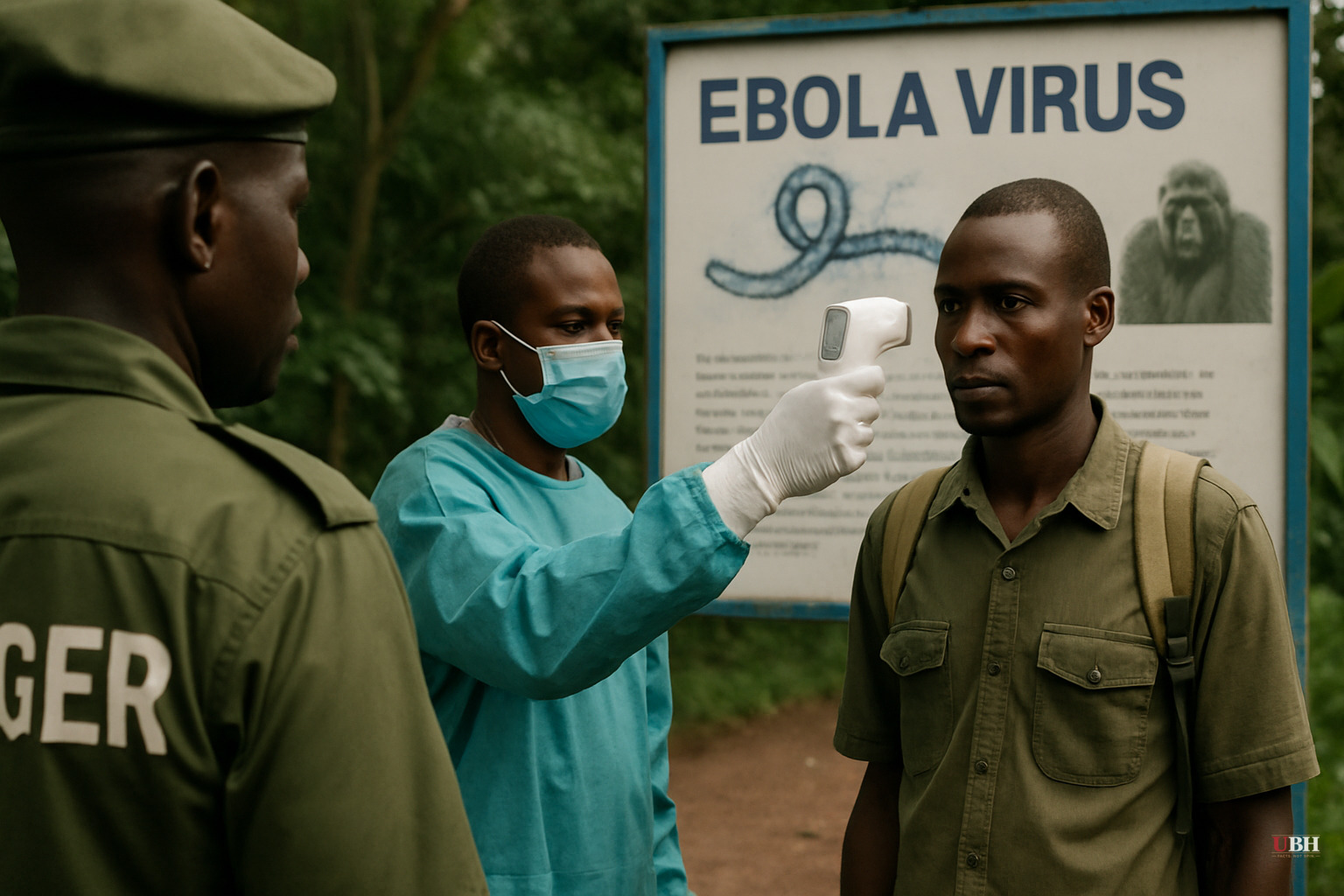
His team is building Ebola screening checkpoints inside Virunga's roughly 2 million acres. They are checking visitors. They are trying to protect the gorillas. They are doing this while armed rebel groups operate in the same territory.
Three threats, one team, severely limited resources.
The Gorilla Problem Nobody Wants to Talk About
Virunga is home to several hundred mountain gorillas — approximately one-third of the entire surviving population on Earth, according to NPR.
Ebola kills gorillas. Efficiently. The Bundibugyo strain currently circulating has no licensed vaccine and no approved therapeutic, per the WHO/Africa CDC joint plan released June 5. That means if this virus reaches a gorilla troop, rangers cannot vaccinate them out of danger. They cannot treat them. They can only try to keep infected humans away.
How do you screen a gorilla for Ebola exposure? You don't. You build checkpoints, restrict human movement near gorilla habitats, and hope the barrier holds.
The margin between extinction-level loss and survival for a third of the world's mountain gorillas is a checkpoint staffed by underpaid rangers in a war zone.
What the $518 Million Plan Actually Covers
The joint WHO/Africa CDC plan, announced June 5 out of Addis Ababa and Brazzaville, covers June through November 2026. It targets disease surveillance, lab testing, infection prevention, contact tracing, community engagement, and cross-border coordination across 10 priority countries.
WHO Director-General Dr. Tedros Adhanom Ghebreyesus said the plan operates on a "one plan, one budget, one team" principle. Africa CDC Director-General Dr. Jean Kaseya said: "Ebola moves fast. Africa must move faster."
But $518 million has to be raised — it hasn't been delivered. International aid flows to the DRC have already dropped dramatically, which de Merode specifically flagged as one of the three factors making this outbreak the worst in his 30-year experience.
The U.S. Response: Screening at the Border, Not at the Source
On May 18, CDC, DHS, and other federal agencies announced enhanced travel screening and entry restrictions for travelers coming from DRC, Uganda, and South Sudan. As of May 22, U.S. citizens can still enter but face enhanced public health screening, according to the CDC's own guidance.
Travelers are told to monitor for symptoms for 21 days after leaving affected countries and to contact public health authorities immediately if symptoms develop.
CDC's current assessment: the risk to the general U.S. public is low.
That's probably accurate. But low risk to Americans and contained outbreak in DRC are separate questions, and the media keeps treating them as the same issue.
What Mainstream Coverage Is Getting Wrong
Left-leaning outlets are covering the humanitarian angle heavily — the gorillas, the rangers, the tragedy. That framing is real, but it sidesteps a hard question: why did international aid fall off a cliff in a region that was already fragile?
Right-leaning outlets have focused on the U.S. travel screening measures. That's legitimate border-security coverage. But it sidesteps the fact that containment at the source is always cheaper and more effective than containment at your own airport.
Neither side is adequately covering the resource vacuum de Merode described. The 2018-2020 DRC Ebola outbreak was eventually controlled — but it had a vaccine. This one doesn't. That is a categorically different situation, and the public hasn't fully absorbed it.
What This Means for Regular People
If you're in the United States, your immediate personal risk is low. CDC says so, and on this specific point, they're probably right.
But if the $518 million response plan doesn't get funded fast — and international donors have already shown they're pulling back — this outbreak grows. A growing outbreak with no vaccine, in a region with active armed conflict and porous borders, is not a problem that stays neatly inside the DRC.
The rangers at Virunga are building checkpoints with their own hands. They are the first line of defense for both a unique ecosystem and regional disease containment.
If that line breaks, the cost of fixing it later will make $518 million look like a bargain.
Fund it now or pay more later. It's basic arithmetic.
Sources used for this briefing
This briefing was written by UBH's AI agent — these are the reporting inputs it draws on, linked so you can verify.


