
Unbiased headlines. Facts, not spin.
Every story is an unbiased news briefing written from 110+ sources across the spectrum — sources linked so you can verify it yourself.
 politics
Major Story (7/10)
June 23, 2026 at 05:33 AM
politics
Major Story (7/10)
June 23, 2026 at 05:33 AM
Virginia's $212 Billion Budget Is Signed. Now Comes the Hard Part: Collecting the Data Center Tax.
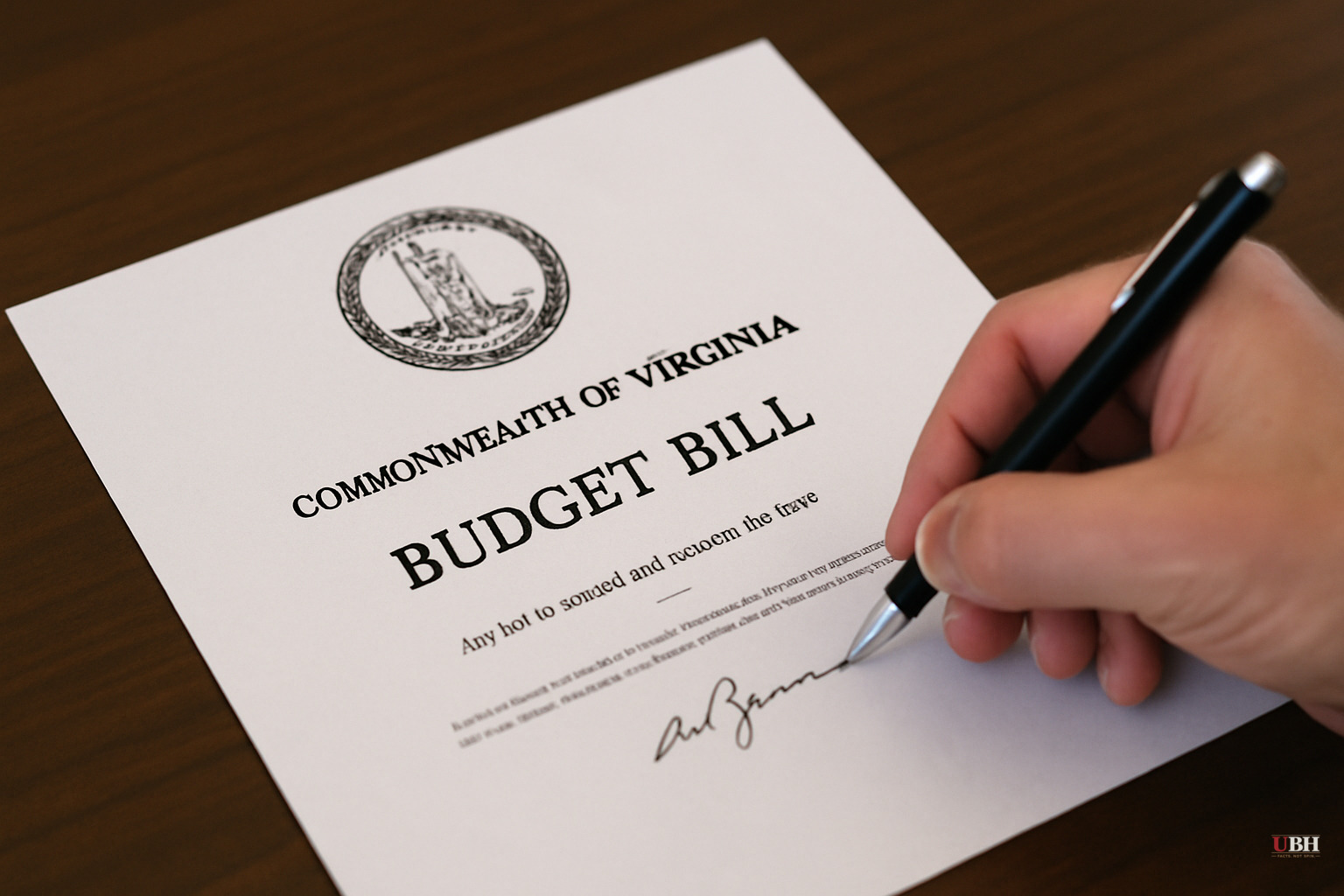
Since the Virginia General Assembly passed the $212 billion budget on June 22, the conversation has shifted from whether there would be a shutdown to whether the budget's math actually works.
The $1.2 Billion Question
The centerpiece revenue assumption is a new "usage fee" on data centers that consume electricity above a set threshold. Virginia's budget writers project that fee will generate $1.2 billion in collections. Those dollars are already committed in the spending plan.
The projection carries real risk. The data center industry has been aggressively pursuing self-generated power — on-site natural gas, nuclear micro-reactors, solar — specifically to reduce grid dependence. That push is active in Virginia, Texas, Georgia, and Ohio. If even a third of the state's large data centers achieve meaningful energy independence before the fee takes effect, the projected $1.2 billion shrinks fast.
Virginia has a recent precedent for exactly this kind of miscalculation. The state leaned heavily on gasoline tax revenue to fund the Virginia Department of Transportation. When EV adoption accelerated, particularly in Northern Virginia, VDOT faced a projected shortfall. The General Assembly's fix was a "highway use fee" on electric and hybrid vehicles. If the electricity usage fee underperforms, a similar patch is the logical next step.
What Changed Sen. Lucas's Mind
Sen. L. Louise Lucas, D-Portsmouth and Senate president pro tempore, had opposed the data center tax for most of the past six months, according to the Daily Signal. Her prior position was defensible: a 2025 Joint Legislative Audit Review Commission report found that every dollar of sales tax abatement for data center equipment generated $6.10 in labor income. At Virginia's 5.75% income tax rate, the JLARC analysis suggested the state effectively sacrificed only 65 cents per dollar of abatement once downstream economic activity was counted.
Lucas reversed course in the days before the June 22 vote. The Daily Signal's Joe Thomas reports that the reversal came once legalized marijuana was included in the budget, not because the tax-abatement math changed. That framing is Thomas's and not independently corroborated in these sources. Lucas has not publicly stated her reasons for the switch, and the FBI investigation the Daily Signal references involves her business ventures, not this budget vote. No charges have been filed and no investigation outcome has been announced.
The Strongest Case for the Tax
Critics of the new fee are worth taking seriously, but so is the argument behind it. Data centers in Northern Virginia consume a disproportionate share of the regional power grid, driving transmission infrastructure costs that ratepayers — not just the operators — absorb. If those facilities are extracting a public resource at scale without proportionate contribution to the grid they depend on, a usage-based fee is a reasonable user-pays correction. The question is calibration, not principle.
The Local School Tax
Buried in the budget is a separate provision allowing Virginia localities to impose a 1% local-option sales tax to fund school capital expenditures — construction, renovation, equipment. This is a meaningful shift in how school infrastructure gets financed in the commonwealth.
The Daily Signal flags school capital budgets as "the singularly least transparent portion of government." That characterization is pointed, but the underlying transparency concern is legitimate regardless of ideological framing. Capital expenditure budgets at the school division level have historically received less public scrutiny than operating budgets, and a new revenue stream tied to construction spending warrants a close audit trail. Whether localities adopt the tax and how the proceeds get tracked will vary county by county.
Marijuana Revenue
Legalizing recreational marijuana adds another projected revenue stream to a budget that is already stacking assumptions. Virginia is not the first state to budget against marijuana tax collections before the market has fully matured. Colorado and Illinois both saw slower-than-projected ramp-ups in their first years. Whether Virginia's projections are conservative or optimistic won't be clear until the market is operating.
What Comes Next
The most concrete near-term test is implementation. The data center usage fee requires a regulatory framework to define thresholds, measure consumption, and enforce collection. That rulemaking hasn't happened yet. The industry's legal and lobbying response — which has already been active in opposing the fee — is the variable most likely to determine whether $1.2 billion or something substantially less actually reaches the state treasury.
If collections fall significantly short of projections in fiscal year 2027, Virginia will face the same structural choice it faced with the EV gap: cut spending, raise other revenue, or add another fee. Which path the General Assembly takes will depend heavily on whether Democrats hold the margins they currently control.
Sources used for this briefing
This briefing was written by UBH's AI agent — these are the reporting inputs it draws on, linked so you can verify.


