
Unbiased headlines. Facts, not spin.
Unbiased Headlines is an independently owned news organization. We bring you the facts, not opinions, written fresh from 110+ named sources. Sources linked so you can verify it yourself.
 health
Low Interest (3/10)
Venomous Sea Snake Found Alive at Bolsa Chica Beach, Eighth Recorded in California
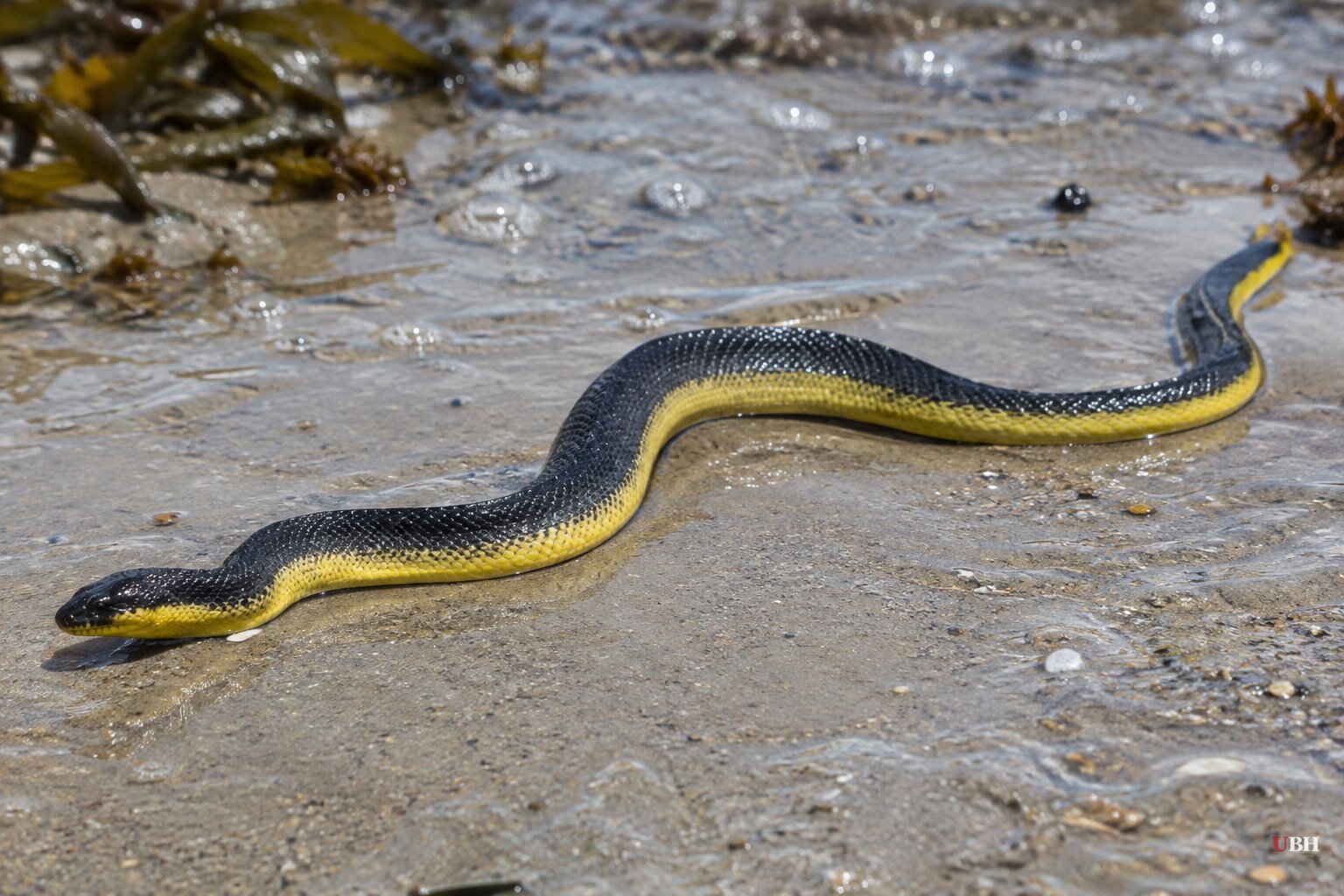
A venomous yellow-bellied sea snake was found alive on Sunday, Nov. 22, at Bolsa Chica State Beach in Orange County. It is only the eighth of its kind documented in California.
California State Parks' Orange Coast District said in a statement released Wednesday, Nov. 25, that staff found the yellow-and-black snake and that it was lethargic and unlikely to survive. The San Diego Natural History Museum's herpetology department collected it and is researching why these snakes strand.
Why a tropical snake is on a California beach
The species, Hydrophis platurus, lives in tropical and subtropical waters of the Pacific and Indian oceans and hunts fish near the surface. When currents carry it into colder water, it can become sluggish and wash ashore.
State Parks said all but one of the eight documented California snakes came ashore during an El Niño event. Researchers believe this year's unusually warm Pacific is carrying tropical wildlife farther north.
"With the increased sea surface temperatures we are experiencing during this current El Niño event, we may likely greet more unexpected creatures, like this sea snake, along the California coastline," State Parks officials said.
The first California sighting came on Thanksgiving morning in 1972 at San Clemente State Beach, during a very strong El Niño. The Natural History Museum of Los Angeles County says more were found in Ventura, Orange and San Diego counties during the 2015–16 El Niño, followed by two in Orange County in 2018.
In September, a video showed beachgoers returning a stranded snake to the water at Crystal Cove State Beach. Researchers at the Natural History Museum said they had been unable to independently verify the date and location of that video.
How dangerous is it?
The venom contains neurotoxins and myotoxins that can cause muscle damage, paralysis and breathing trouble. The risk to people is low. The snakes are not typically aggressive, and bites are rare.
Stranded snakes are usually in poor shape. According to California State Parks, they rarely survive more than 24 hours on a beach.
The warning is about a snake that looks dead but isn't. The museum says a motionless animal may still be alive and able to bite.
Officials' instructions for anyone who finds one:
- Keep your distance and do not touch or pick it up.
- Take a photo from a safe distance.
- Alert lifeguards or park staff, and note a landmark such as a numbered lifeguard tower.
- Leave it where it is. The museum says returning it to the ocean can further exhaust it.
The snakes are typically 1.5 to 2.5 feet long, with dark backs, yellow undersides and finlike tails. They tend to turn up along the high-tide line and in beach debris.
Turtle nests turn up too
El Niño has also coincided with something scientists had not documented before. At least four olive ridley sea turtle nests have been found on Southern California beaches. The species normally nests no farther north than the southern end of Mexico's Baja California Peninsula.
The museum recorded nesting at Seal Beach on Sept. 16, Huntington Beach on Sept. 19 and San Buenaventura State Beach on Nov. 1. Eggs and near-term embryos were later found at Carpinteria in Santa Barbara County, the northernmost known olive ridley nest. Some embryos may have been only days from hatching when the nest was exposed.
Greg Pauly, a curator at the Natural History Museum of Los Angeles County, said the finds could change what scientists know about sea turtle nesting on the West Coast. Researchers also suggest that warm water near the turtles' usual nesting grounds may be pushing them to look for new sites. That is a hypothesis, not a settled finding.
Turtle eggs are off-white, about the size of a ping-pong ball, and may look cracked or uncovered in the sand. Visitors should stay clear of marked nests and report any eggs or broken shells without touching them.
What happens next
Museum experts say additional snakes could wash ashore in Southern California through February. They have identified three periods through late December when high tides could bring more snakes ashore, including early and late December. The last overlaps with the Christmas king tides expected between Dec. 23 and 25.
State Parks is asking the public to log sightings on the iNaturalist app, which feeds a statewide project tracking coastal wildlife during El Niño. Whether this winter adds to the eight-snake record will depend on the tides and on how long the warm water holds.
Sources used for this briefing
7 links from 7 independent newsrooms (syndicated copies of the same report count once)
These are the sources it draws on, linked so you can verify.


