
Unbiased headlines. Facts, not spin.
Unbiased Headlines is an independently owned news organization. We bring you the facts, not opinions, written fresh from 110+ named sources. Sources linked so you can verify it yourself.
 health
Notable (6/10)
Event date: November 23, 2026 ·
Pennsylvania Senate Leader Says Shapiro Delayed CDC Measles Help; Lancaster Officials Say the State Kept Them Out of the Loop
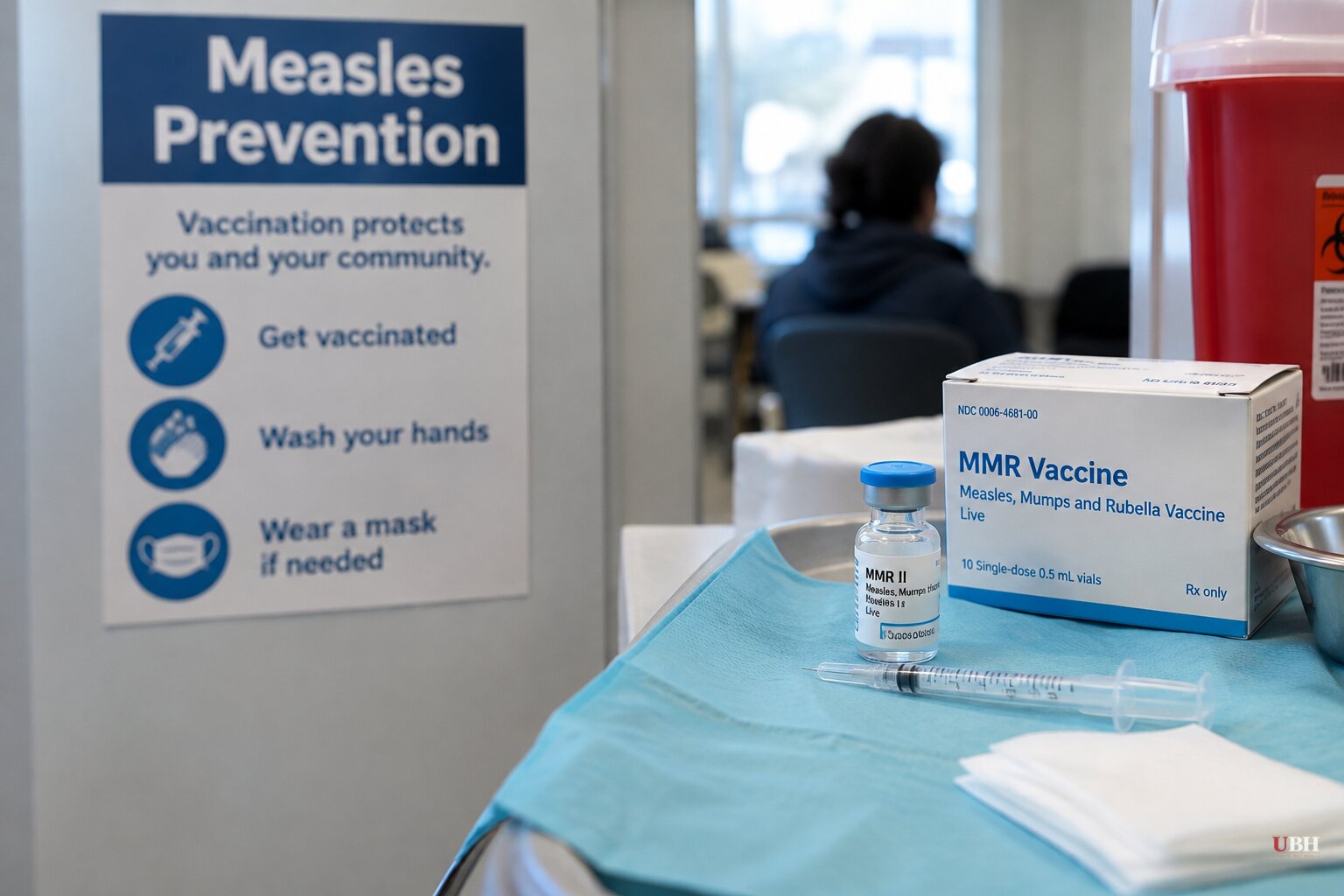
Since the first U.S. case of this outbreak cycle, the national count has passed 6,000 confirmed measles cases and nine deaths as of Nov. 25, according to the CDC. Pennsylvania leads the country with more than 1,650 cases. Lancaster County, home to the nation's largest Amish population, accounts for 571 of them.
The newest development is not the case count. It is a fight over how the state ran its response.
The Epi-Aid dispute
Epi-Aid is the CDC's deployable assistance for public health emergencies. Kennedy said at an Oct. 15 event that Pennsylvania was "the only state where the governor would not accept CDC Epi-Aid." He said outbreaks in Texas, Kansas, South Carolina and Virginia were brought "to a quick halt" after states accepted help.
State Senate President Pro Tempore Kim Ward told The Daily Wire: "The measles outbreak could have been mitigated sooner had Governor Shapiro accepted the help of the CDC instead of fighting for the sake of headlines."
Ward said the governor's public clash with Kennedy began in August, and that the administration "didn't apply for help until October, which was months after the funding was available."
The Pennsylvania Department of Health submitted a formal Epi-Aid request on October 7, according to The Daily Wire. A CDC Epidemic Intelligence Service Officer then joined the department on site from October 19 to November 6. The CDC also provided nearly $4 million in one-time emergency funding.
Pennsylvania Secretary of Health Debra Bogen wrote in a September 16 letter to CDC Director Dr. Erica Schwartz that the state would accept Epi-Aid if the CDC recognized four Pennsylvania measles-associated deaths on its public-facing dashboard. She wrote that the department would otherwise "respectfully rescind our request for a CDC Epi-Aid."
That is Ward's account and Kennedy's. Shapiro did not respond to a request for comment. The Department of Health did not tell The Daily Wire why it waited until October to accept Epi-Aid assistance. No data has been presented showing how much sooner the outbreak would have been contained with earlier federal help. State cases have declined from 71 the week of October 19 to 44 the week of November 16.
The August deaths
The feud traces to late August, when Shapiro announced two "measles-associated deaths" in Lancaster County. Lancaster County Commissioner Joshua Parsons said within hours that the county coroner had no record of deaths caused by measles.
Kennedy then claimed Shapiro's staff had "fabricated" the deaths. State health officials said the death fit the official definition of a "measles-associated death." Prominent physicians also challenged the coroner's position. Citing state privacy laws, the state released few details.
Shapiro has accused Kennedy of "playing games with public health and safety." Kennedy says Shapiro acknowledged on a phone call that Pennsylvania's vaccination rates fell during the Biden administration.
The Pennsylvania Department of Health gave The Daily Wire data showing MMR vaccination rates dropped from 95.5% in the 2020-2021 school year to 93.7% in 2024-2025.
Local officials say they were left out
A separate problem shows up in internal communications obtained through public records requests by The Philadelphia Inquirer. Pennsylvania has local health departments in only six of its 67 counties. Lancaster is not one of them, so it depends on the state for vaccination clinics, contact tracing and sensitive disease data.
Earlier this month, state health officials convened Lancaster hospital, emergency services and school leaders to "enhance response efforts." Elected officials were not invited. Commissioner Ray D'Agostino, a two-term Republican, said most of his information has come from news outlets and a public state website.
The frustration goes back to February. When the state put out a release on five Lancaster County cases, the county's director of public safety wrote to the commissioners' communications director: "Goes to the press first … then official notices?"
State officials said they work closely with local leaders and that the roundtables were intended for healthcare, EMS and school leadership, not local officials. Department spokesperson Neil Ruhland said the state notifies county commissioners and local state lawmakers when cases are first identified in their areas and maintains a public measles dashboard.
Officials from both parties say they want more information from the state. They disagree on how it should be delivered. Alice Yoder, the lone Democrat on the Lancaster County Board of Commissioners, notes that even with more data, counties like hers lack the public health infrastructure to handle complex infectious disease information.
What is on the table
Legislation proposed last year, before the outbreak began, would require the state to share more communicable disease outbreak data with local officials in counties without health departments.
The two accounts overlap. Ward's criticism is that the governor put a political fight with Washington ahead of accepting federal help. The county records show state-to-local communication problems dating back to February. Public health experts quoted in the Inquirer's reporting say the information void allowed anti-vaccine rhetoric to spread.
Sources used for this briefing
3 links from 2 independent newsrooms (syndicated copies of the same report count once)
These are the sources it draws on, linked so you can verify.


