
Unbiased headlines. Facts, not spin.
Unbiased Headlines is an independently owned news organization. We bring you the facts, not opinions, written fresh from 110+ named sources. Sources linked so you can verify it yourself.
 health
Major Story (7/10)
Event date: November 23, 2026 ·
NIH Preprints Link Glyphosate to Cancer, Clashing With EPA's 'Not Likely' Finding
Since the Supreme Court ruled 7–2 in June that federal pesticide law preempted a Missouri man's failure-to-warn claim against Monsanto, the Roundup fight has moved from the courtroom to the federal science agencies. The latest move came from inside the Trump administration's own health apparatus.
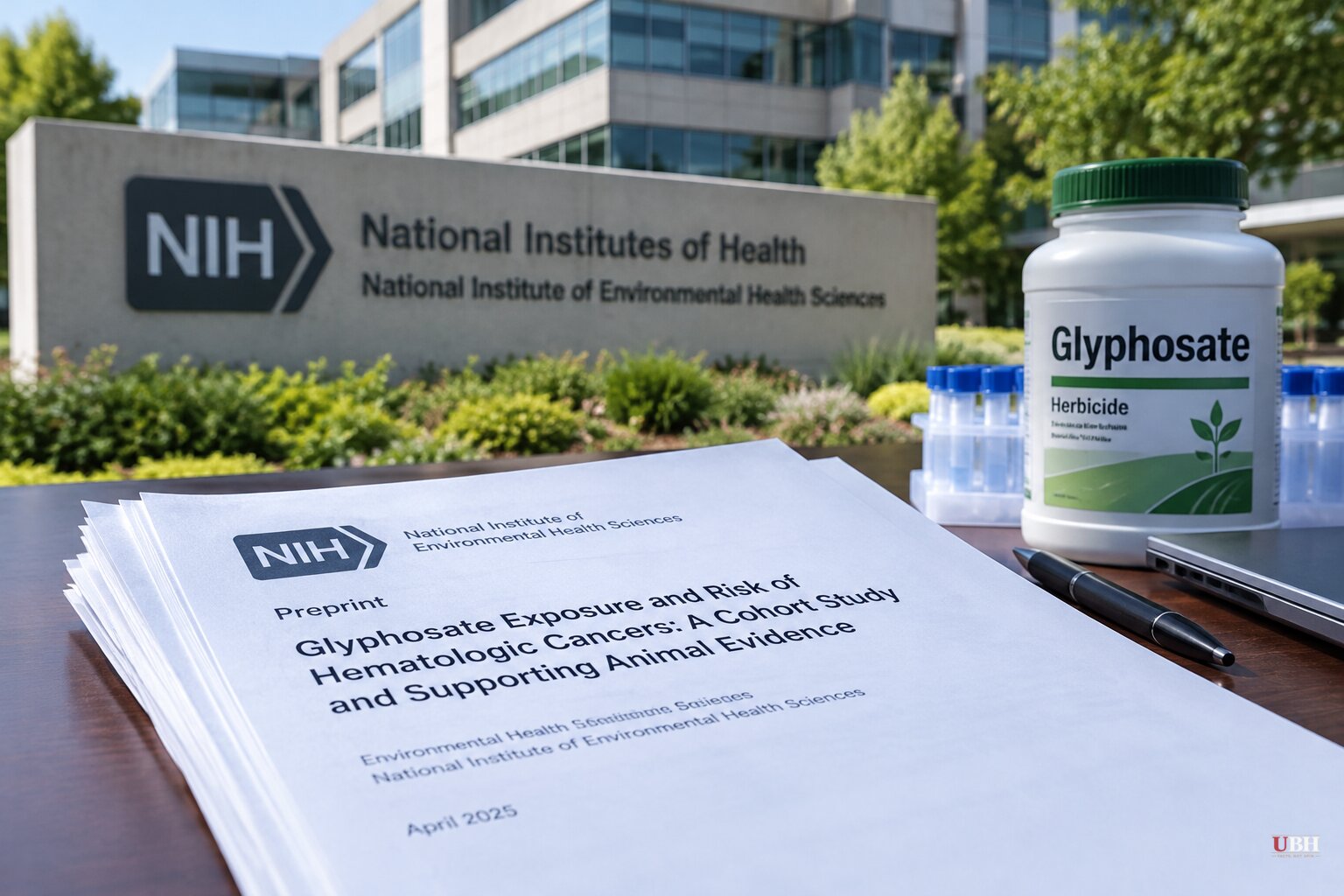
Researchers at the National Institute of Environmental Health Sciences (NIEHS), part of the National Institutes of Health, posted preprint papers last week reviewing the evidence on glyphosate, the active ingredient in Roundup. HHS requested the work. The papers have not been peer-reviewed or finalized.
What the NIH reviews found
The NIEHS authors did not run new experiments. They conducted systematic reviews of decades of published research.
The epidemiology review concluded that "the current body of epidemiology studies found a positive association between [glyphosate based herbicide] exposure and [lymphohematopoietic cancers]," a category that includes non-Hodgkin lymphoma. The Center for Biological Diversity notes the authors also found some inconsistency across the human studies.
The animal review looked at six cancer bioassays in mice and nine in rats. It found evidence of tumors, including lymphoma and leukemia.
A separate review of 55 animal studies, published in November, examined male reproductive health. It found exposure to glyphosate and glyphosate-based herbicides was associated with reduced sperm counts, lower sperm motility, more abnormal sperm shape and lower testosterone. The authors rated the evidence on overall sperm health and abundance as high confidence, and the testosterone finding as moderate confidence.
An association in a literature review is not proof of causation in people. The reviews also rest on animal data, and the work is still preliminary.
A split inside the government
The EPA's pesticide office has long held that glyphosate is "not likely to be carcinogenic to humans." A federal court threw out the agency's finding, according to the Center for Biological Diversity, and the EPA is now re-evaluating the chemical under court order.
In September the EPA announced it was teaming with HHS to "expand the evidence" for that registration review. Kelly Ryerson, a MAHA activist known as "GlyphosateGirl," thanked HHS Secretary Robert F. Kennedy Jr. and the White House on Nov. 19 for commissioning the studies and for the memorandum of understanding between HHS and the EPA on the re-review. The public comment period on the review was set to end Monday, Nov. 23.
The two agencies are now working from different science. The NIH authors used the same published body of evidence the EPA relied on. The Center for Biological Diversity says the difference lies in the protocols: NIEHS followed the established systematic-review methods that the World Health Organization's cancer agency uses, while the EPA "continuously deviated from its own established cancer guidelines." The group's Nathan Donley added that none of the EPA's cancer findings are peer-reviewed. He called the EPA pesticide office's work "a mockery of pesticide science" and accused it of parroting "pesticide industry talking points."
Those are Donley's claims, and the EPA did not respond to a request for comment on them.
The NIH findings echo the 2015 classification by the International Agency for Research on Cancer, which called glyphosate "probably carcinogenic to humans," with a particular link to non-Hodgkin lymphoma.
Bayer's position
Ruveon, the Bayer subsidiary that manages Roundup in the U.S., defended the herbicide. "The US EPA, like other leading health authorities globally, has previously and repeatedly concluded that glyphosate does not cause cancer," the company said. Glyphosate generated $2.8 billion in Bayer sales in 2024.
The administration's record here is not one-directional. President Trump signed an executive order aimed at protecting glyphosate production, and the Justice Department backed Bayer with an amicus brief in the Supreme Court litigation. The Guardian reports the White House has drawn criticism from across the political spectrum for that support. The new research was commissioned by Kennedy's HHS, and MAHA supporters are celebrating it.
The money and the courts
On Nov. 20, a Missouri judge granted final approval to a proposed $7.25 billion nationwide class settlement. It covers people who allege Roundup exposure before Feb. 17, 2026, and who have a non-Hodgkin lymphoma diagnosis now or receive one within 16 years of the agreement's effective date.
Monsanto will pay over 17 to 21 years or more. The judge wrote that, absent a settlement, "only a small fraction of plaintiffs would receive a trial date in the foreseeable future," and that Monsanto could enter bankruptcy, delaying payments.
Bayer CEO Bill Anderson called the approval "a decisive milestone" in limiting current and future Roundup litigation. The company says the agreement contains no admission of liability or wrongdoing. Bayer also said the order can be appealed, and any appeal would pause Monsanto's payments until all appeals are exhausted.
The Supreme Court's June ruling, written by Justice Brett Kavanaugh, tied Monsanto's obligations to the label the EPA approves, which carries no cancer warning. That makes the EPA's pending decision matter. If the agency again finds glyphosate is not carcinogenic, it will have to square that with a sister agency's published reviews. If it finds a cancer link, the label that shields Monsanto from state failure-to-warn suits could change.
The EPA has not said when it will finish the re-review. The NIH preprints also still have to clear peer review.
Neither milestone has a date.
Sources used for this briefing
7 links from 7 independent newsrooms (syndicated copies of the same report count once)
These are the sources it draws on, linked so you can verify.


