
Unbiased headlines. Facts, not spin.
Unbiased Headlines is an independently owned news organization. We bring you the facts, not opinions, written fresh from 110+ named sources. Sources linked so you can verify it yourself.
 health
Notable (6/10)
UNICEF Survey: 12.2% of Gaza Children Under Five Are Stunted, Doctors Report Surge in Growth Cases
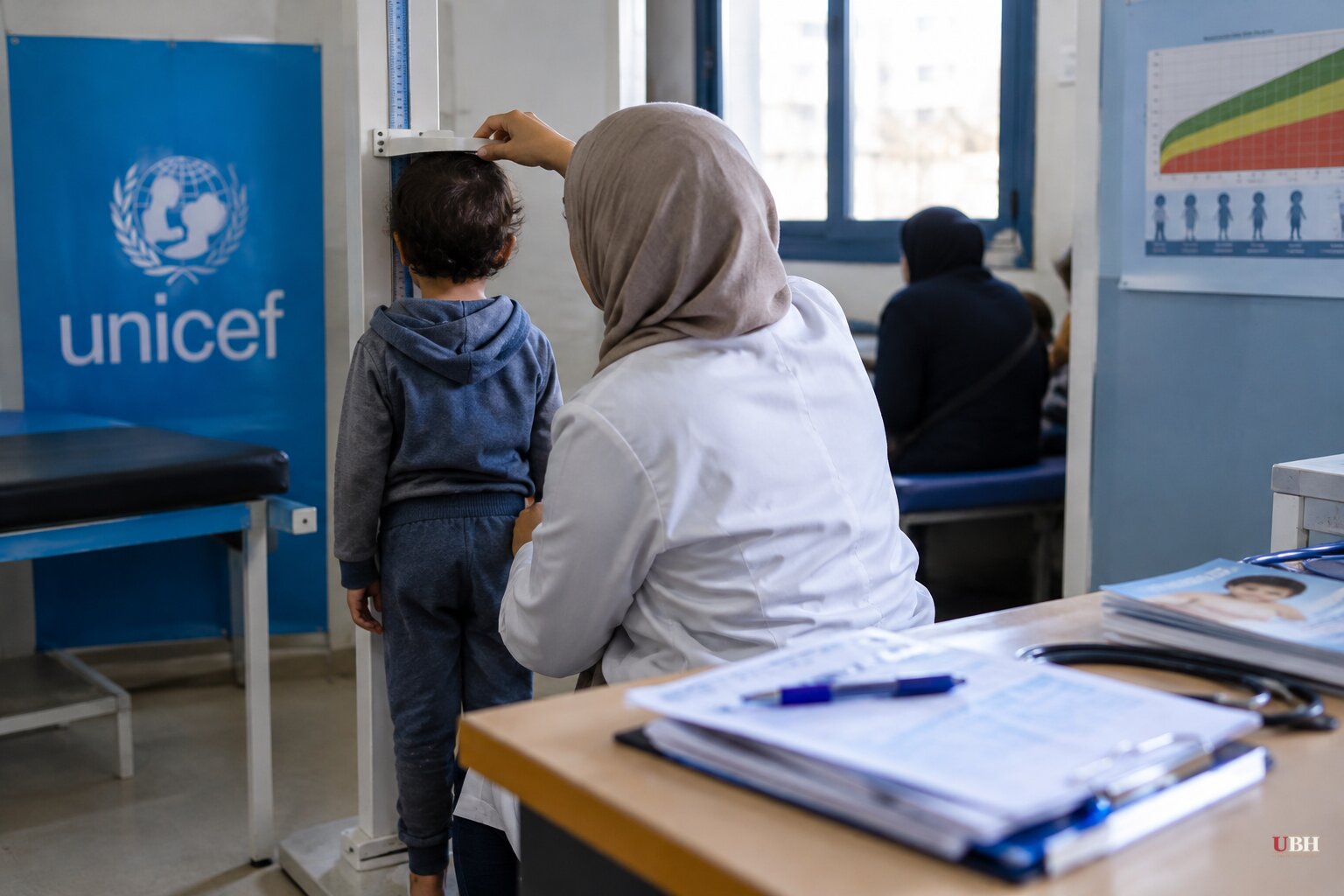
Roughly one in eight Gaza children under five is stunted, according to a nutrition survey by UNICEF and partner agencies. The survey ran from May 31 to June 15, 2026, and covered only the accessible areas of the Strip.
Stunting means a child's height-for-age falls more than two standard deviations below the WHO growth standard. It reflects months or years of poor nutrition, not a bad week of meals. Once it sets in, it is often not reversible.
What the survey found
The same survey found that only 22.4% of children aged six to 23 months received a minimum acceptable diet. That is the window when growth damage is hardest to undo.
The figure covers only areas surveyors could reach. It says nothing about places they could not reach.
Two children in Khan Younis and al-Mawasi
Seven-year-old Nabigha al-Zaqzouq is 99cm (3.2ft) tall and weighs 10kg (22lb). She looks several years younger than she is. She asks her mother, Alia, whether she will ever get taller.
The family eats mostly bread and canned food. Meat, fruit and vegetables are out of reach, Alia says, and so are the medicines and tests needed to track her daughter's growth.
"We lived through extremely harsh days during the war, and after the ceasefire, we are living under a suffocating blockade. Let them allow medicines and treatments in," Alia said.
Five-year-old Tala Zidan is 94cm (3ft), about 15 to 16cm shorter than average for her age. Her father, Tahrir Zidan, says her height has barely changed in two years and she has lost weight.
The family was displaced from Khuza'a to al-Mawasi, and Zidan lost his job. They now depend on charitable community kitchens.
"I have not been able to buy even one kilogramme of meat, a chicken or a kilogramme of fruit," he said. "The meal I get from the community kitchen is usually finished while most of us are still hungry." Tala's brother Mohammed also has malnutrition and growth difficulties.
Diet quality, not just calories
Nutritionist Nada Abu al-Nada says the problem is the quality and variety of food, not only the amount. Prices are up and purchasing power is down. Families have cut meat, chicken, fish, eggs, milk, vegetables and fruit, and lean on bread, rice and pasta.
Children need protein, iron, zinc and calcium to build bone and muscle. When intake falls short, the body prioritizes vital organs over height gain.
That can also mean less muscle mass, anaemia and weaker immunity. Concentration, learning and cognitive development can suffer too. Stress, poor sleep, repeated illness and displacement make the damage worse.
A hospital clinic doubling its caseload
Hani Sayed Zuhair, an endocrinologist at Nasser Hospital, says the number of children brought in for growth problems has climbed from 15 to 20 per clinic session before the war to 30 to 40 now.
He describes eight-year-olds whose bones have developed to a stage normally seen in children half their age. Hormonal disorders can also cause short stature, he says, but in most of his cases the main driver is prolonged nutritional deprivation.
Diagnosis is a problem of its own. Zuhair says the tests cost 350 to 400 shekels, or $106 to $120. That is out of reach for a family like the Zidans, with no income.
Growth-hormone injections need temperature-controlled storage, regular follow-up and carefully prescribed doses. Those conditions are hard to maintain under war and blockade, Zuhair says.
What is established and what is not
The survey numbers come from UNICEF and its partners. The causes families and clinicians cite are food costs, displacement, lost income and restricted medical supplies. Alia al-Zaqzouq calls the restrictions a blockade.
The survey measures stunting. It does not apportion responsibility among the war, border restrictions, local prices or aid logistics.
The doctor's before-and-after clinic numbers are his own account of one hospital. They are not a territory-wide count.
The open question
Stunting cannot be fixed by a few food deliveries. Public health groups say reversing it takes sustained access to nutritious food, clean water, sanitation and primary care.
The unresolved issue is whether the diagnostic tests and temperature-sensitive hormone treatments Zuhair describes will reach Gaza's clinics in meaningful numbers. The families quoted say that without them, their children's growth remains unmeasured and untreated.
Sources used for this briefing
7 links from 7 independent newsrooms (syndicated copies of the same report count once)
These are the sources it draws on, linked so you can verify.


