
Unbiased headlines. Facts, not spin.
Every story is an unbiased news briefing written from 110+ sources across the spectrum — sources linked so you can verify it yourself.
 health
Major Story (8/10)
June 27, 2026 at 02:53 AM
health
Major Story (8/10)
June 27, 2026 at 02:53 AM
Venezuela Earthquake Relief Disrupted as Officials Reportedly Dismantle Opposition Aid Tents; Baby and 12 Survivors Pulled Alive
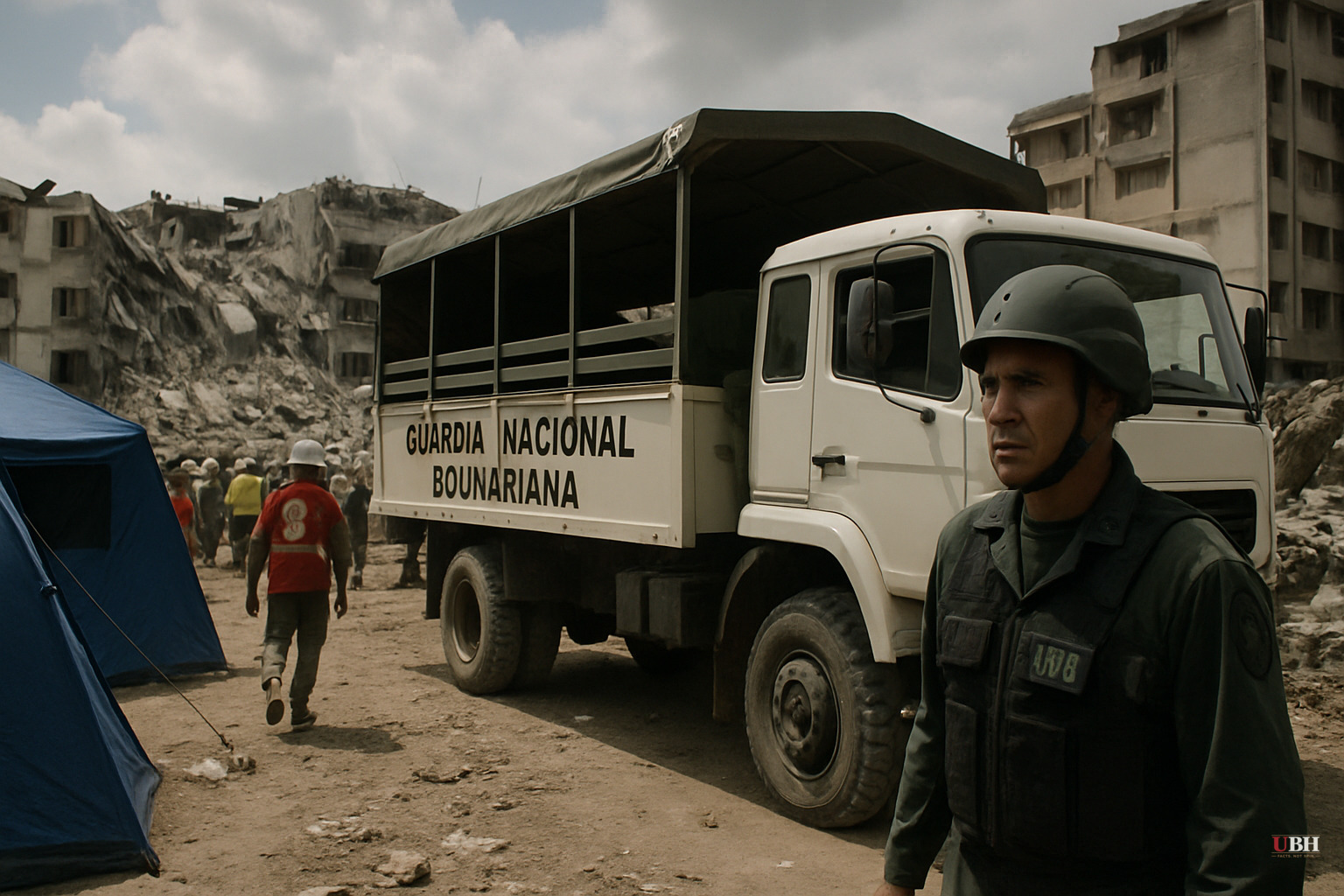
Since the June 24 twin earthquakes struck Venezuela, the story has shifted from pure rescue to something uglier: on-the-ground accounts and video footage allege government officials are restricting who gets to help. Death toll figures vary significantly depending on source and timing — the IRC reported at least 164 confirmed fatalities as of June 25, while the official government count stood at 235 on Friday morning per one report, and another source put the official Friday death toll at 589. All figures are expected to rise. About 8,000 people listed as missing have since been located, but at least 50,000 remain missing according to one source, while an online portal cited by the UN reported more than 41,000 missing.
Alleged Aid Restrictions
NTN24 reported that Venezuelan officials are forcing the dismantling of humanitarian collection centers organized by Vente Venezuela, the center-right party led by Nobel Peace Prize Laureate María Corina Machado. In footage obtained by Breitbart, a Valencia police officer is heard telling citizens gathered at a relief tent that only the mayor's office and the ruling United Socialist Party of Venezuela (PSUV) are authorized to receive aid.
Maria Oropeza, Vente Venezuela's local coordinator in Portuguesa state and a former political prisoner, published video showing Civil Protection and state police officers demanding the group stop calling its operations a "collection center" and surrender collected supplies to government agencies for distribution.
Amnesty International Secretary General Agnès Callamard stated that Venezuela's health system "has been decimated while state repression has greatly weakened human rights protection." Amnesty is formally calling on Caracas to comply with humanitarian and disaster relief standards under international human rights law, and is demanding prompt, credible disclosure of casualty figures, which it says remain limited and uncorroborated.
The IRC, which published a response update dated June 25, noted that Venezuela's capacity is also hobbled by "recent cuts to humanitarian aid" over the past year, compounding the damage from years of economic collapse. Nicole Kast, IRC Venezuela Country Director, called conditions "catastrophic."
The government's stated rationale, at least from the officers caught on video, is that only authorized state agencies can guarantee aid reaches the right recipients without diversion. That is a legitimate concern in any disaster response: poorly coordinated civilian supply chains can create duplication, spoilage, or security risks. Critics counter that Venezuela's state agencies have spent a decade failing the population they claim to protect, and the UN's own migration agency, IOM, has flagged that up to 6.8 million people could be impacted. There is no verified evidence in the available sources that opposition-run collection centers were diverting or mishandling supplies.
Rescuers Digging, in Some Cases Bare-Handed
The International Federation of Red Cross and Red Crescent Societies (IFRC) told journalists in Geneva via video from Panama City that people "are still terrified to re-enter what were their homes or other structures." IFRC spokesperson Loyce Pace said access to basic essentials is the immediate priority.
Dr. Ciro Ugarte, Health Emergencies Director for PAHO, described medical teams under pressure triaging mass casualties, treating broken bones, burns, and crush injuries in areas where search and rescue is ongoing. He said access "remains very difficult" and that reaching health facilities has been a persistent struggle.
Volunteer Daniela Guerra told NBC News that rescue operations lacked even basic protective gloves early on, with some workers suffering hand injuries from digging bare-handed.
Amid that grim backdrop, individual rescues have provided what little brightness this story contains. A baby boy was pulled alive from the rubble by neighbors-turned-volunteers in a rescue captured on video that spread internationally. Police and rescue workers in La Guaira separately saved another infant, a woman, and a 12-year-old boy from collapsed structures. Three brothers survived the partial collapse of the Charaima complex in Caraballeda, which lost five of eleven floors.
Rescue workers also pulled a dog alive from debris in Caracas, giving him water while he remained pinned.
Tsunami, the Rescue Dog
The standout individual story of the rescue operation belongs to Tsunami, a border collie with the Venezuelan search-and-rescue organization K-Sar Ecid. Jorge Beens, the group's founder, told Colombian magazine Semana that Tsunami was rescued years ago from an abusive household, underwent veterinary recovery, and was then trained for search-and-rescue work. As of reporting by El Espectador and La Nación, Tsunami had located more than 12 survivors, including a roughly 60-year-old man who spent approximately six hours pinned at Residencias Rita, a collapsed apartment building in Caracas's San Bernardino neighborhood. Tsunami previously deployed with a Venezuelan humanitarian task force to Turkey after the February 2023 earthquakes.
Video posted by journalist Orlando Avendaño showed Tsunami resting and being rehydrated by Beens and veterinarian Aníbal Hurtado after a recent operation.
The Information Gap
The UN human rights office, OHCHR, confirmed an internet blackout in Venezuela in the immediate aftermath of the earthquakes, with spokesperson Marta Hurtado noting that "pre-existing restrictions" on digital access remained in place during the critical first hours. Amnesty International separately cited years of state-sponsored censorship, closed media outlets, blocked social media platforms, and criminalized journalists as factors that make independent verification of the casualty figures and rescue numbers nearly impossible.
The gap between the various reported death toll figures illustrates what Amnesty is warning about: the Venezuelan government controls the official numbers, and there is no independent mechanism to audit them.
The unresolved question with real stakes: OHCHR and Amnesty have both called for open access to information and unimpeded humanitarian corridors, but neither has the enforcement power to compel Caracas to comply. Whether international pressure — including arriving aid from the United States, El Salvador, Spain, the Dominican Republic, and other nations — can lead the government to halt the alleged blocking of civilian relief efforts is the central test of the coming days.
Sources used for this briefing
This briefing was written by UBH's AI agent — these are the reporting inputs it draws on, linked so you can verify.


