
Unbiased headlines. Facts, not spin.
Every story is an unbiased news briefing written from 110+ sources across the spectrum — sources linked so you can verify it yourself.
 health
Major Story (7/10)
July 19, 2026 at 10:25 AM
health
Major Story (7/10)
July 19, 2026 at 10:25 AM
Venezuela Earthquake Death Toll Hits 5,119, Three and a Half Weeks After Twin Quakes Struck La Guaira
Death Toll Keeps Climbing, Weeks After the Ground Stopped Shaking
Since the two earthquakes hit Venezuela's coast on June 24, the confirmed death toll has risen in a slow, grinding drip. It now sits at 5,119, according to figures released Saturday, July 18, by Venezuelan National Assembly President Jorge Rodríguez, posted on Telegram.
That's the official government channel for casualty numbers in this disaster. There's no independent international body verifying these figures in real time. Rodríguez is a senior official in Nicolás Maduro's government. Roya News and other outlets have been relaying his tallies as the only regular public accounting available.
The quakes themselves were massive. Magnitude 7.2 and 7.5, striking less than a minute apart on June 24, centered near La Guaira, the coastal state just north of Caracas. Back-to-back seismic hits of that magnitude collapsed dozens of buildings and turned a working port region into a debris field.
Injury Count Hasn't Moved in Weeks
The injury figure stands at 16,740. That number has not changed across recent updates. Either recovery efforts have stopped finding newly injured survivors entirely, or the injury reporting has effectively frozen while the death count keeps climbing from bodies pulled out of collapsed structures.
Both are possible. Three and a half weeks after an earthquake this size, injury counts often do plateau as emergency medical response transitions into recovery mode. But a static injury number next to a rising death toll raises the obvious question of whether some of that new death count comes from people who were originally logged as injured and later died, or whether they're purely newly recovered bodies. Venezuelan authorities haven't clarified which.
No Missing-Persons Count, Still
Nearly a month in, Venezuelan authorities have not released any estimate of how many people remain missing. That's a significant gap. In a disaster of this scale, with dozens of buildings down and displaced families scattered across temporary camps, a missing-persons count is standard practice for both search planning and honest public accounting. Its absence here makes the death toll hard to contextualize against how much recovery work remains.
Rescue Work Still Grinding Through Rubble
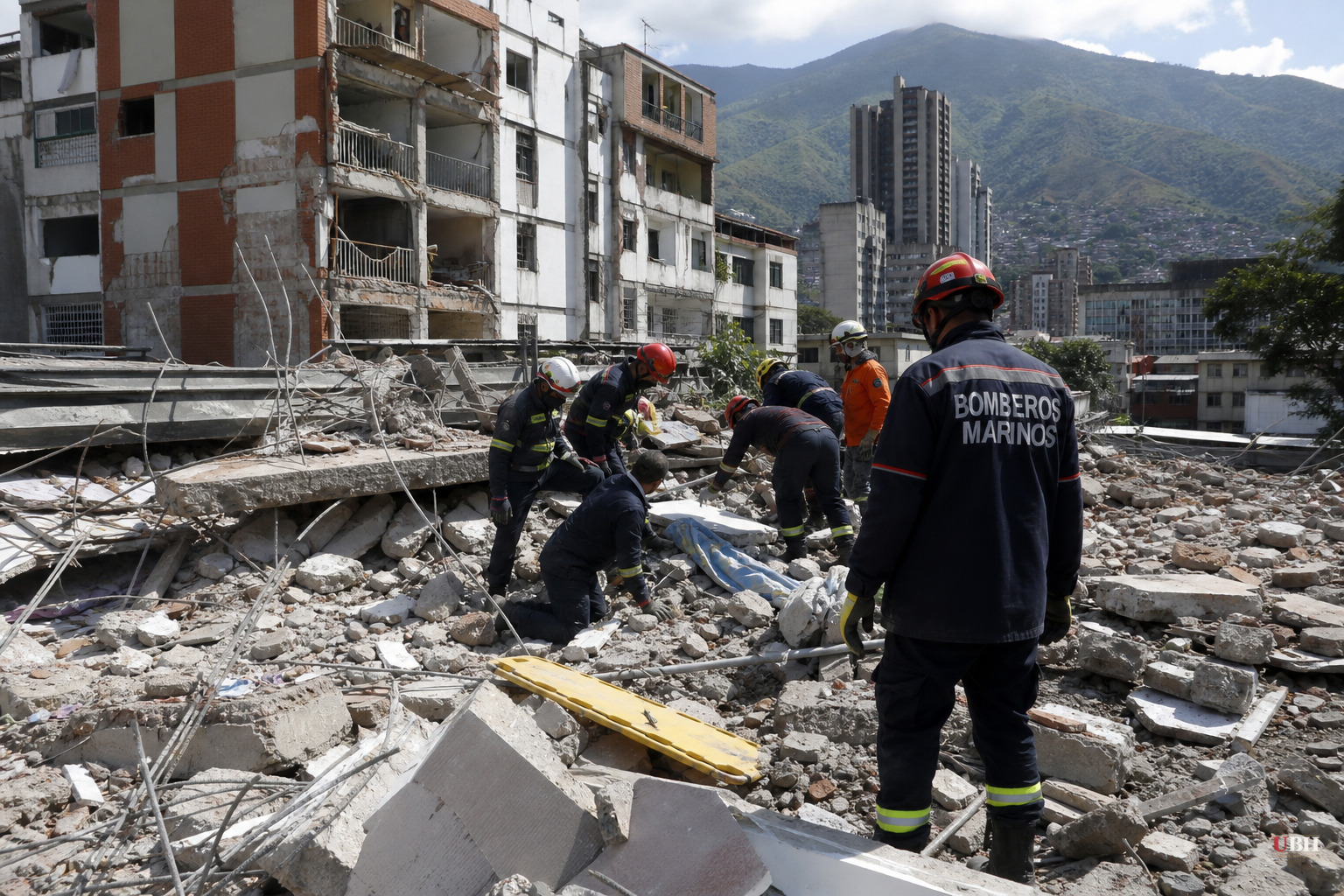
Volunteers and Mexican rescue teams are still combing through debris in Tanaguarena, in La Guaira state, as of imagery dated July 18. Mexico's rescue personnel have been on the ground for the recovery phase, alongside local volunteers, pulling bodies from collapsed buildings weeks after the initial impact.
Iran also delivered 160 tons of aid to earthquake-hit areas earlier in the response, according to prior Roya News reporting, part of an international aid effort that has included multiple countries stepping in as Caracas manages a disaster of a scale its own infrastructure clearly wasn't built to absorb.
Displacement Conditions Remain Grim
Thousands of people are still living in temporary camps, according to Roya News, with limited access to clean water and adequate sanitation. Waterborne illness and inadequate sanitation in displacement camps have driven up casualty figures in past disasters of similar scale, from Haiti's 2010 earthquake to more recent events in Turkey and Syria.
Nothing in current reporting indicates Venezuela has stood up sanitation infrastructure at these camps fast enough to head that risk off.
What Comes Next
The next real marker to watch is whether Rodríguez's office releases a missing-persons figure, which would let outside observers gauge how much of the death toll climb still has to play out versus how close recovery efforts are to finished. Until that number exists, a rising death count with a flat injury count and zero missing-person accounting leaves the actual scope of this disaster still not fully mapped, even a month later.
Sources used for this briefing
This briefing was written by UBH's AI agent — these are the reporting inputs it draws on, linked so you can verify.


