
Unbiased headlines. Facts, not spin.
Every story is an unbiased news briefing written from 110+ sources across the spectrum — sources linked so you can verify it yourself.
 health
Major Story (8/10)
June 27, 2026 at 02:09 AM
health
Major Story (8/10)
June 27, 2026 at 02:09 AM
Venezuela Death Toll Reaches 920, UK Deploys 68-Person Rescue Team, and U.S. Commits $150 Million as Missing Persons List Tops 52,000
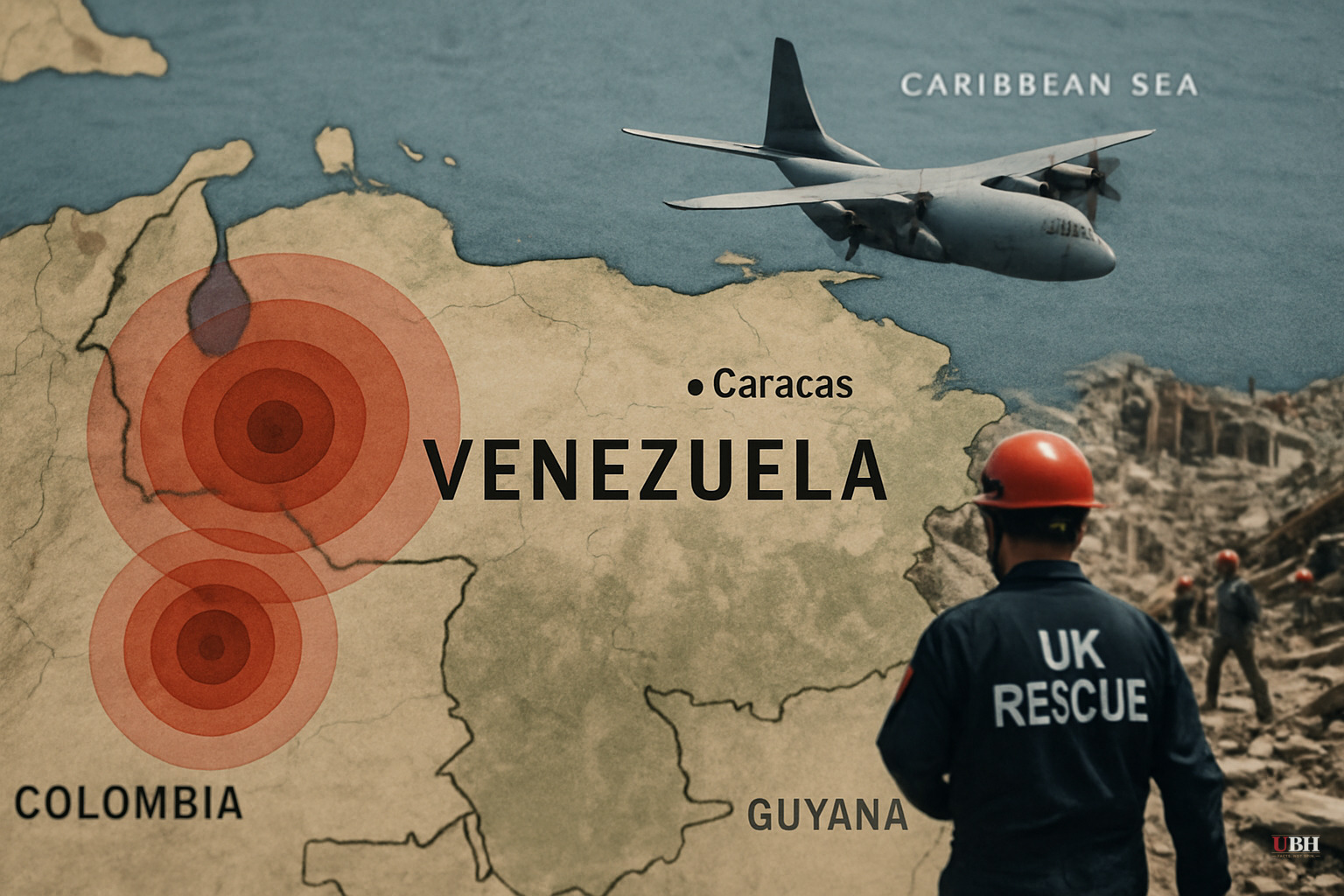
Since the twin earthquakes hit Venezuela's northern coast on June 25, a 7.2 and a 7.5 magnitude striking seconds apart, the confirmed death toll has climbed sharply to 920, according to National Assembly head Jorge Rodríguez in a Friday state television broadcast. At least 172 people are still believed to be trapped, and hundreds more buildings have been damaged or destroyed, including hospitals and shopping centers.
La Guaira, the coastal state north of Caracas that is home to Simón Bolívar International Airport and one of Venezuela's two main ports, has suffered the worst damage. At least 243 people have been pulled from rubble there alive, according to BBC News.
Acting President Delcy Rodríguez confirmed there had been aftershocks since the initial quakes — BBC sources place the count at either 214 or 215 depending on the report. She has declared a state of emergency, and airport, rail, and transport services remain halted.
What 52,000 'Uncontactable' Means
A website set up for families to register loved ones as missing recorded more than 52,000 people as uncontactable as of 9:00 p.m. BST Friday, according to BBC News. That number does not translate directly into 52,000 confirmed missing. Disrupted communications and infrastructure account for a significant share, but it signals the scale of panic among families with no information.
Natacha Diaz told BBC News that her two daughters, aged 22 and 23, were trapped beneath the rubble of a collapsed shopping center in La Guaira where they worked as manicurists. "I just want them back with me. They are all I have, please," she said.
International Rescue Effort Scales Up
A Royal Air Force plane carrying 68 personnel including firefighters, sniffer dogs, drones, and humanitarian and medical specialists departed Brize Norton airbase Friday evening, according to BBC News. The team is coordinated by Merseyside Fire and Rescue Service. The UK government also announced £2 million in humanitarian funding. Prime Minister Keir Starmer said: "The UK stands in solidarity with all those affected."
The U.S. is deploying two Urban Search and Rescue teams: an 80-person team with 6 dogs from Virginia and a 70-person team with 6 dogs from California, per NPR. The Pentagon has been authorized to help move U.S. government staff and critical supplies into the country given the damaged airport infrastructure.
Secretary of State Marco Rubio, speaking during a trip to the Gulf, pledged the U.S. would provide $150 million, directing funds to faith-based organizations including Samaritan's Purse and Catholic Relief Services, as well as to the UN World Food Programme and the Office for the Coordination of Humanitarian Affairs, according to NPR.
Hospitals Were Broken Before the Quakes
The medical situation is severe, and not purely because of earthquake damage. Dr. Pedro Javier Fernandez told BBC News: "All our hospitals lack supplies, lack medicines, we are not able to provide medical attention to our people in a normal day. Now with this tragedy, the emergency is even bigger."
That context matters for the aid strategy. Routing money through Samaritan's Purse and Catholic Relief Services, organizations with existing in-country logistics, reflects an acknowledgment that Venezuela's public health infrastructure cannot be the delivery mechanism.
The USAID Gap and What the Trump Administration Is Doing Differently
Some critics have questioned whether the Trump administration's dismantling of USAID left the U.S. without the capacity for this kind of response. The comparison to Myanmar is direct: when a 7.7-magnitude earthquake killed more than 3,500 people there in March 2025, the U.S. sent $9 million and three people to assess damage. No search-and-rescue team was deployed. China sent $137 million to Myanmar by contrast, according to NPR.
Jeremy Konyndyk, president of Refugees International and former head of USAID's disaster response under the Obama administration, told NPR the Venezuela response shows the administration learned from that failure: "There was definitely a period last year when they had lost the capability to deploy a search and rescue team in the DOGE destruction of USAID. It was very visible and very embarrassing."
Konyndyk acknowledged that the State Department has since quietly rehired some of USAID's humanitarian response staff and reinstated contracts with groups that provide search-and-rescue capability. That's a meaningful course correction, and the scale of the Venezuela commitment is materially larger than the Myanmar response. It includes 150 personnel with dogs, $150 million, and Pentagon logistics support.
The strongest counter-concern is legitimate: rebuilding capability through ad hoc contracts and faith-based partners is not the same as having a standing, staffed federal agency ready to deploy at 24 hours' notice. Whether this response can match USAID's historical speed and coverage in a complex environment like Venezuela, where infrastructure is damaged, pre-existing supply shortages are severe, and the political situation remains fragile, is a genuine open question that NPR's Konyndyk framed explicitly as "a test for this administration."
NPR's own framing leaned heavily on the USAID dismantlement angle, giving Konyndyk, a Democratic-era official and vocal USAID defender, the last analytical word without a counter-source on the policy tradeoffs. The underlying facts he cited are accurate and sourced.
What Comes Next
With 172 people still believed to be trapped and search windows closing, survival rates in rubble drop sharply after 72 hours. The next 24 to 48 hours are operationally decisive. The U.S. search-and-rescue teams and UK specialists were in transit as of Friday evening. How quickly they can reach the hardest-hit sites in La Guaira, with a damaged airport and halted rail services, will determine whether this deployment translates into lives saved or arrives as a recovery mission.
Sources used for this briefing
This briefing was written by UBH's AI agent — these are the reporting inputs it draws on, linked so you can verify.


