
Unbiased headlines. Facts, not spin.
Every story is an unbiased news briefing written from 110+ sources across the spectrum — sources linked so you can verify it yourself.
 health
Breaking / Critical (9/10)
June 27, 2026 at 08:47 PM
health
Breaking / Critical (9/10)
June 27, 2026 at 08:47 PM
Venezuela Death Toll Reaches 1,430 as UN Puts Earthquake Damage at $6.7 Billion and a Larger U.S. Aid Package Nears
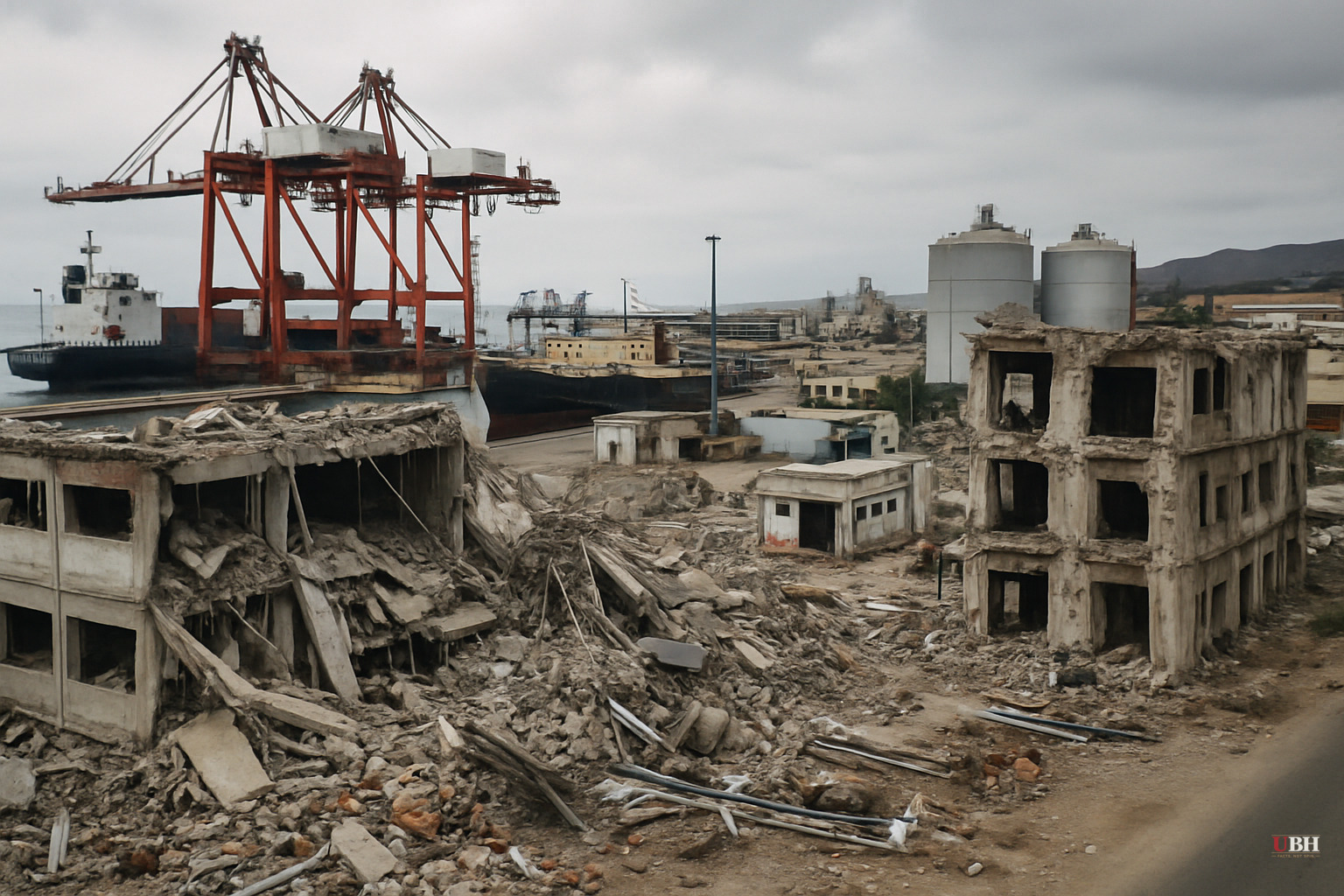
Since the back-to-back earthquakes struck Venezuela on June 24, 39 seconds apart, the confirmed death toll has risen to 1,430, with more than 3,200 injured, according to National Assembly President Jorge Rodríguez, speaking on state television Saturday.
The USGS has estimated the final toll could exceed 10,000, which would rank these quakes among the deadliest in Latin America in the last century.
What's New as of Saturday, June 27
Three significant developments have emerged Saturday that were not part of earlier coverage.
First, the UN Development Programme released a preliminary damage assessment Saturday putting earthquake losses at $6.7 billion, equivalent to roughly 6 percent of Venezuela's entire GDP, according to The Guardian. That figure covers physical assets, primarily housing, and does not include broader economic disruption, meaning the real number will almost certainly be higher.
Second, a senior U.S. administration official told Reuters Saturday that a nine-figure funding package is expected to be announced within the next day or so, layered on top of the $150 million the Trump administration has already committed. U.S. State Department official Jeremy Lewin confirmed two 80-person search teams have been deployed and a U.S. Navy transport ship is now docked off the Venezuelan coast, ready to receive airlifted survivors needing medical attention. Lewin called the rescue operation a "race against the clock."
Third, the international rescue presence has grown substantially. More than 1,600 foreign rescuers have arrived in-country, according to CNBC, with teams from Mexico, Brazil, El Salvador, France, the Netherlands, Turkey, and the UK in addition to U.S. personnel now operating in the field.
430 Aftershocks and Counting
A News reported Saturday that 430 aftershocks have followed the original doublet. Both primary quakes struck at shallow depths of between 10 and 20 kilometers, which, as Wired explains through civil engineer Alan Damián Sánchez Pulido of Mexico's Ibero-American University, caused seismic energy to reach the surface with greater intensity than deeper quakes would. The one-two strike in quick succession is what structural engineers call a "seismic doublet." Rare and particularly destructive, such events occur because buildings weakened by the first quake have no time to stabilize before the second hits.
Venezuela's location at the boundary of the Caribbean and South American plates makes large quakes infrequent, which also means the country has no meaningful earthquake-preparedness culture and building stock largely not designed for this kind of stress.
Civilians Are Still Carrying the Rescue
CBC News, citing volunteer Rober Javier, a French horn musician who has been digging in Catia la Mar since Thursday, reported Saturday that unclaimed bodies were scattered within a 300-meter radius of his base camp near the local Marriott hotel. "The whole city smells of putrefaction," Javier said. "It smells like death."
Former federal lawmaker Vicente Villarroel told CBC the government's response has been "haphazard" and that civilians have shouldered the bulk of the rescue work. That charge is consistent with what residents in La Guaira have told multiple outlets all week: heavy equipment is scarce, official presence is uneven, and families have been digging by hand.
Acting President Delcy Rodríguez said Saturday that more than 14,000 military and police personnel are now patrolling affected areas, according to The Guardian. Authorities have maintained access controls on the main road from Caracas into La Guaira, requiring credentials to pass checkpoints. Officials say this policy is necessary to keep lanes clear for emergency vehicles.
The Strongest Counterargument on Access Controls
The checkpoint policy deserves a fair read. Disaster zones with uncontrolled civilian traffic can genuinely slow heavy rescue equipment and ambulances. When Haiti's 2010 earthquake drew unrestricted crowds into collapsed zones, it complicated rescue coordination for days. Venezuelan authorities are managing a corridor that is one of the few viable arteries into La Guaira; a credentialing system is not inherently political repression. The operational question of whether the specific implementation is keeping out legitimate rescuers along with rubberneckers remains unresolved, and no independent observer with full access has been able to answer it definitively as of Saturday.
The Missing Persons Gap Is Enormous
The government's official missing figure and the opposition's crowdsourced tally remain far apart. Official figures cite thousands unaccounted for. A website promoted by Venezuela's opposition lists more than 68,900 names, according to The Guardian; a separate crowdsourced list cited by CBC has grown past 50,000. A News reported that more than 70,000 families have received government aid, a number the government cites as evidence of outreach, though aid distribution and locating missing persons are separate problems.
Foreign nationals are confirmed among the dead, including 15 of Portuguese nationality or descent, seven Chinese, two Brazilians, five Spaniards, and one Italian-Venezuelan, per The Guardian.
What Comes Next
Pope Leo offered prayers for victims Saturday and called for sustained global solidarity, according to CNBC. The political dimension is also sharpening: the disaster is creating pressure on Delcy Rodríguez, who serves as acting president after Nicolas Maduro fled Venezuela following U.S. pressure and a U.S. federal indictment earlier this year.
The concrete next step to watch is the U.S. nine-figure aid announcement, which a senior administration official told Reuters is expected within roughly 24 hours of Saturday. The size of that package and whether it comes with conditions tied to the ongoing political transition will determine how much material difference outside money makes in a country where the UN says the damage bill is already $6.7 billion and still climbing.
Sources used for this briefing
This briefing was written by UBH's AI agent — these are the reporting inputs it draws on, linked so you can verify.


