
Unbiased headlines. Facts, not spin.
Every story is an unbiased news briefing written from 110+ sources across the spectrum — sources linked so you can verify it yourself.
 health
Major Story (8/10)
June 26, 2026 at 05:46 AM
health
Major Story (8/10)
June 26, 2026 at 05:46 AM
Venezuela Death Toll Holds at 235 as U.S. Military Deploys and Interim Government Faces Infrastructure Test
Since the twin earthquakes struck Venezuela on the evening of June 24, killing at least 235 people and injuring more than 4,300, the focus as of June 26 has shifted from initial shock to the grinding work of recovery — and to whether Venezuela's battered institutions can actually manage one.
The confirmed death toll has not moved significantly from the 235 figure Venezuela's Health Minister Carlos Alvarado announced Thursday, according to both BBC and AP. But the USGS estimated there is a 44% chance the final toll could reach 10,000 and a 30% chance it could reach 100,000, based on historical modeling for quakes of this depth, proximity, and magnitude. Those are probabilistic ranges, not predictions. They reflect how poorly much of Venezuela's building stock would perform under sustained shaking.
As of Friday, June 26, search teams are still working through collapsed structures in La Guaira's Catia La Mar district, roughly 30 kilometers northwest of Caracas. NPR published photographs from the scene showing patients being treated on the ground outside an evacuated hospital in Catia La Mar, cars crushed beneath collapsed residential buildings, and residents picking through rubble to salvage belongings.
Maiquetía's Simón Bolívar International Airport remains closed due to structural damage, according to interim President Delcy Rodríguez, complicating both aid delivery and evacuations. Interior Minister Diosdado Cabello said 30 aftershocks have been recorded since the initial doublet struck.
The U.S. Response
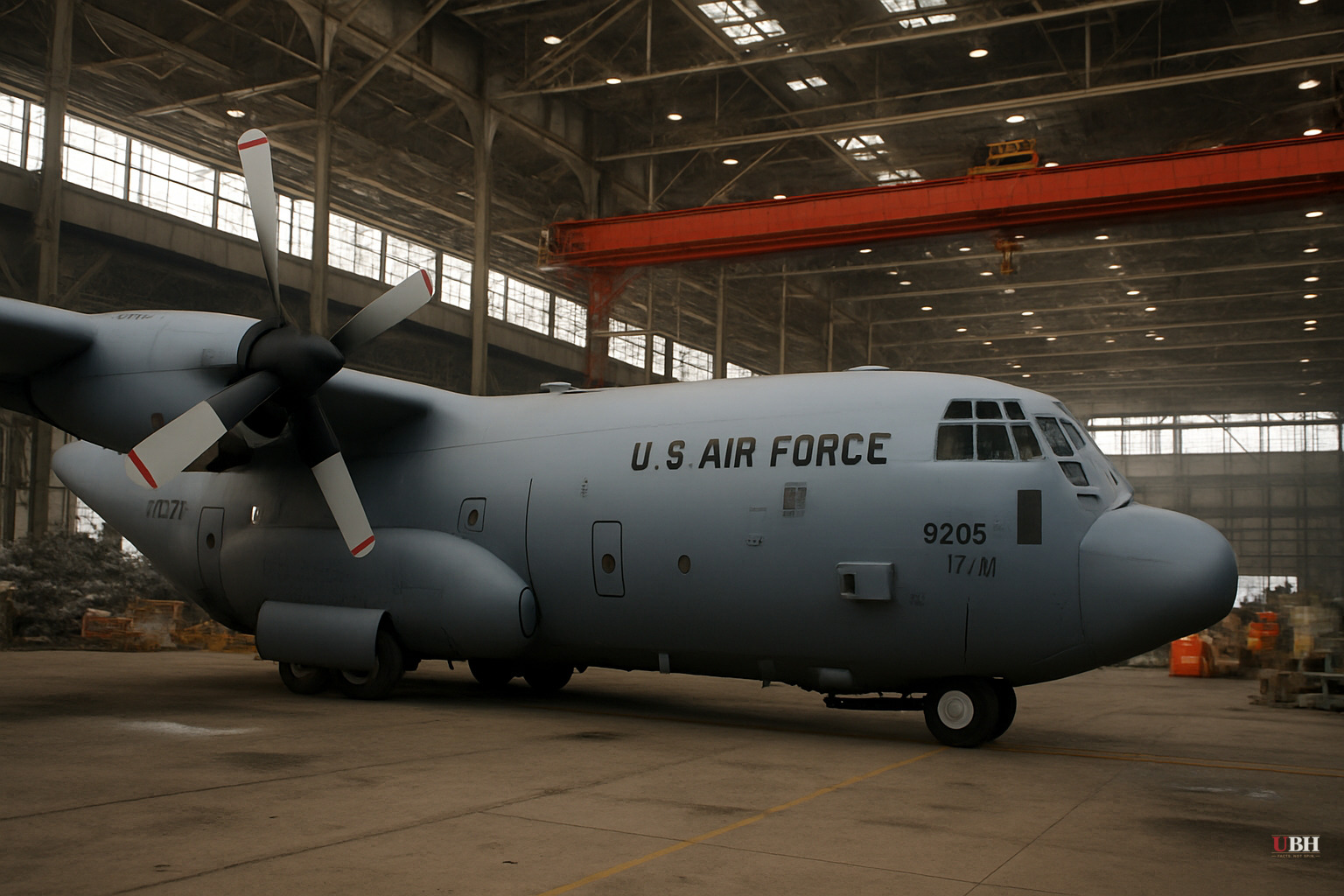
BBC reported the clearest account of the American military and diplomatic mobilization. Several countries have pledged to help rescue efforts, with the U.S. promising $150 million in aid. The U.S. military is sending transport ships and aircraft to support search and rescue teams and "rapid relief operations," according to a U.S. statement cited by BBC.
Secretary of State Marco Rubio confirmed the response, and President Trump said he had instructed his government "to get ready to move quickly." The speed and scale of the U.S. commitment is notable given the complicated political backdrop: the U.S. militarily seized Nicolás Maduro less than six months ago, and Venezuela is now governed by his ally Delcy Rodríguez.
Why These Quakes Were So Destructive
NPR spoke with USGS geophysicist William Barnhart, who explained the core physics: a 7.2-magnitude quake alone would have been devastating, but it was followed 39 seconds later by a 7.5-magnitude event roughly three times more powerful. Buildings weakened by the first quake had no recovery window before the second hit.
Barnhart said the two quakes appear to have occurred on two separate faults in a tectonically complex zone — a scenario historically underweighted in earthquake risk models. Chris Goldfinger, a paleoseismologist at Oregon State University, told NPR this mirrors the 2016 Kaikōura earthquake in New Zealand, where multiple fault ruptures surprised scientists and reshaped how the field thinks about cascading seismic events.
Both BBC and NPR noted that many affected buildings predated modern seismic engineering standards entirely.
Venezuela's Governance Problem Doesn't Pause for Disasters
A significant concern is whether Rodríguez's government can manage a disaster of this scale. The administration inherited a bureaucratic structure in which military officers — many without relevant technical credentials — ran ministries for over a decade. BBC's analysis documented that under Maduro and Chávez, key state ministries were held by high-ranking military officers, with analysts citing this as a reason Venezuela's infrastructure became so run down. BBC reported Rodríguez has recently replaced the general running housing with a civilian architect and swapped another general out of the electricity ministry with an electrical engineer, moves attributed to U.S. pressure.
Communication blackouts in the hardest-hit areas were partly caused by infrastructure failure and partly by the restrictions on independent media that the Maduro era imposed, which shuttered hundreds of local radio stations and news outlets that would normally provide localized emergency information, according to BBC.
Rodríguez supporters would note she has acted. She declared a state of emergency, accepted international aid without the reflexive anti-American posturing Maduro often deployed, and put General Juan Ernesto Sulbarán of the National Guard in charge of emergency coordination. Whether a military officer is the right person to coordinate civilian disaster relief, given the institutional history, is a question Venezuelan civil society groups have raised for years.
The logistical question of whether the closed Maiquetía airport can be partially reopened for military transport will most directly determine how fast aid reaches the communities that still have people alive in the rubble.
Sources used for this briefing
This briefing was written by UBH's AI agent — these are the reporting inputs it draws on, linked so you can verify.


