
Unbiased headlines. Facts, not spin.
Unbiased Headlines is an independently owned news organization. We bring you the facts, not opinions, written fresh from 110+ named sources. Sources linked so you can verify it yourself.
 health
Notable (5/10)
VectorY Raises €74.5 Million to Fund ALS Gene Therapy Through Final Trial Readout
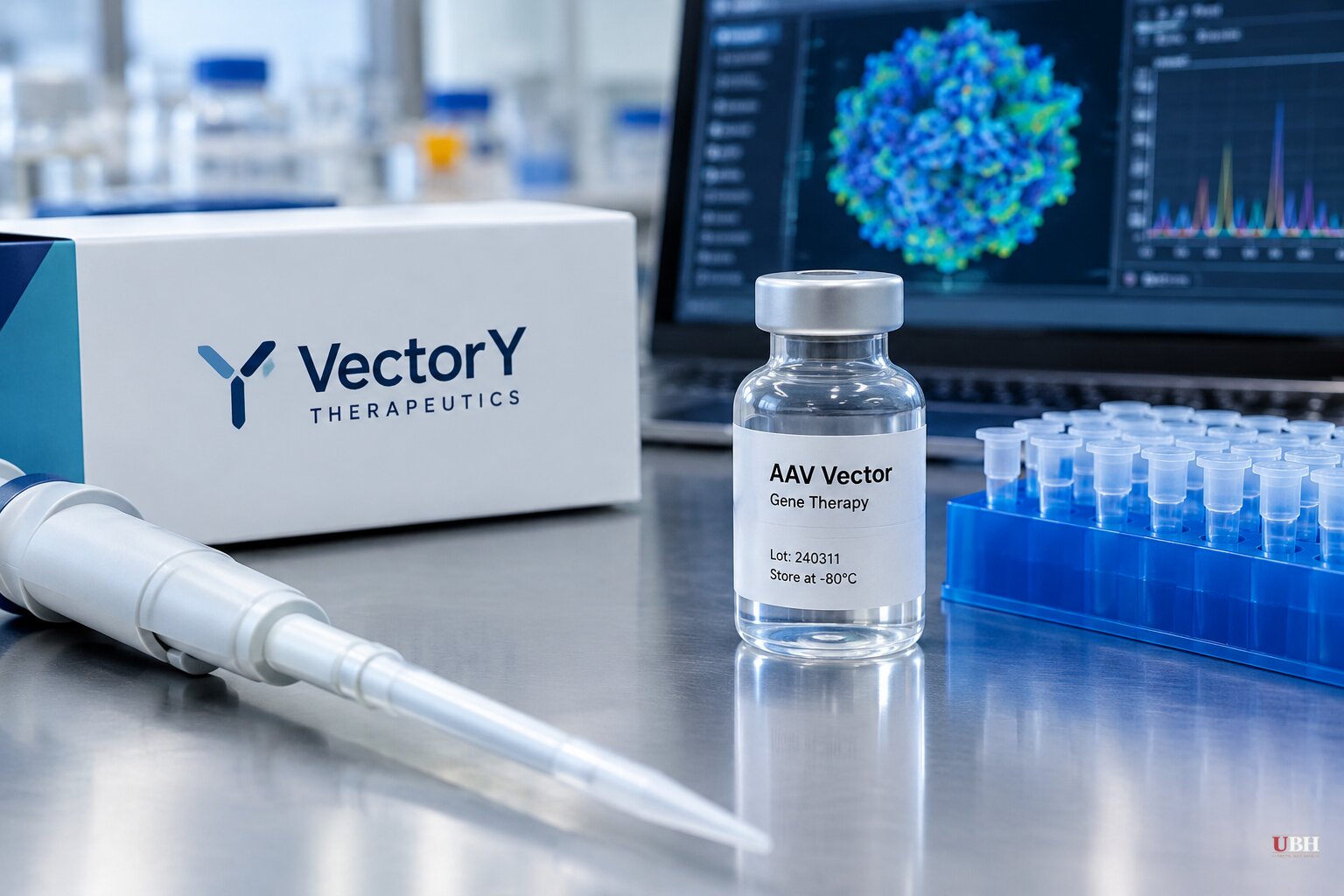
VectorY Therapeutics announced on Nov. 11 that it has secured €74.5 million ($83.5 million) in new financing for its lead ALS gene therapy and a pipeline of brain-disease programs.
The package is an extension of the company's Series A. It includes a €30 million convertible loan from the European Investment Bank, backed by the European Commission's InvestEU program. That makes part of this round public-sector money, not just venture capital.
Who is paying
New investors are Angelini Ventures and Invest-NL. Returning backers include Forbion, EQT Life Sciences, Eli Lilly, MRL Ventures, Insight Partners and BioGeneration Ventures.
The round builds on a €129 million Series A raised in November 2023 and a €31 million seed round in 2021. Total reported financing now stands at €234.5 million.
The company says the new cash will take VTx-002 through the final readout of its PIONEER-ALS study. VectorY has not said when that readout is expected.
What VTx-002 is
VTx-002 is a one-time gene therapy. An engineered adeno-associated virus delivers genetic instructions to cells in the central nervous system, which then produce a therapeutic antibody themselves. The idea is to get around a core problem with antibody drugs: ones made in a factory and injected have a hard time crossing into the brain.
The antibody targets abnormal TDP-43, a protein that accumulates in the motor neurons of up to 97% of ALS patients. The buildup, along with loss of TDP-43's normal function in the cell nucleus, is thought to contribute to neuronal damage. VectorY's hope is that clearing those aggregates preserves neurons and slows the disease.
That is a much wider target than the one behind the most recent approval. Tofersen (Qalsody), cleared in 2023, reduces SOD1 protein, and applies only to the roughly 2% of ALS patients who carry a SOD1 mutation. Riluzole was approved in 1995 and edaravone in 2017.
The trial so far
PIONEER-ALS began dosing patients in February 2026. In September, VectorY tripled planned enrollment from 12 to 36 patients, citing rapid recruitment and activation of clinical sites.
The study is open-label, meaning patients and doctors know what is being given. It tests two dose levels at sites in the U.S., Europe and the UK. The primary objectives are safety, tolerability and pharmacokinetics, with exploratory efficacy measures.
Researchers are also tracking neurofilament light chain (NfL), a biomarker of nerve damage, along with clinical measures such as muscle strength and respiratory function.
The September expansion was decided before any patient efficacy readout. Whether VTx-002 can safely reduce TDP-43 pathology and produce a meaningful clinical benefit is unproven.
Beyond ALS
The financing also funds other programs built on the same antibody-delivery approach:
- VTx-003: preclinical, targeting mutant huntingtin protein in Huntington's disease.
- VTx-004: an earlier-stage program for TDP-43 pathology in frontotemporal dementia.
- VTx-005: an earlier-stage program targeting phosphorylated tau in Alzheimer's disease.
Raising more money inside a Series A, rather than opening a new round, typically signals a company needs additional runway to reach its next milestone. Here, that milestone is clinical data.
What comes next
ALS kills the motor neurons that control movement, speech, swallowing and breathing. Most patients survive fewer than five years from diagnosis, and there is no cure.
A one-time treatment that works on the majority of patients, not a 2% slice, would be a real change. Open-label safety data from a 36-patient study will not show that on its own. Investors and patients will want to know when VectorY will publish the first numbers, and whether NfL and functional measures move in the right direction at either dose.
Sources used for this briefing
7 links from 7 independent newsrooms (syndicated copies of the same report count once)
These are the sources it draws on, linked so you can verify.


