
Unbiased headlines. Facts, not spin.
Unbiased Headlines is an independently owned news organization. We bring you the facts, not opinions, written fresh from 110+ named sources. Sources linked so you can verify it yourself.
 health
Major Story (8/10)
American Cancer Society Now Recommends PSA Prostate Screening Every Two Years for Men 50 to 69
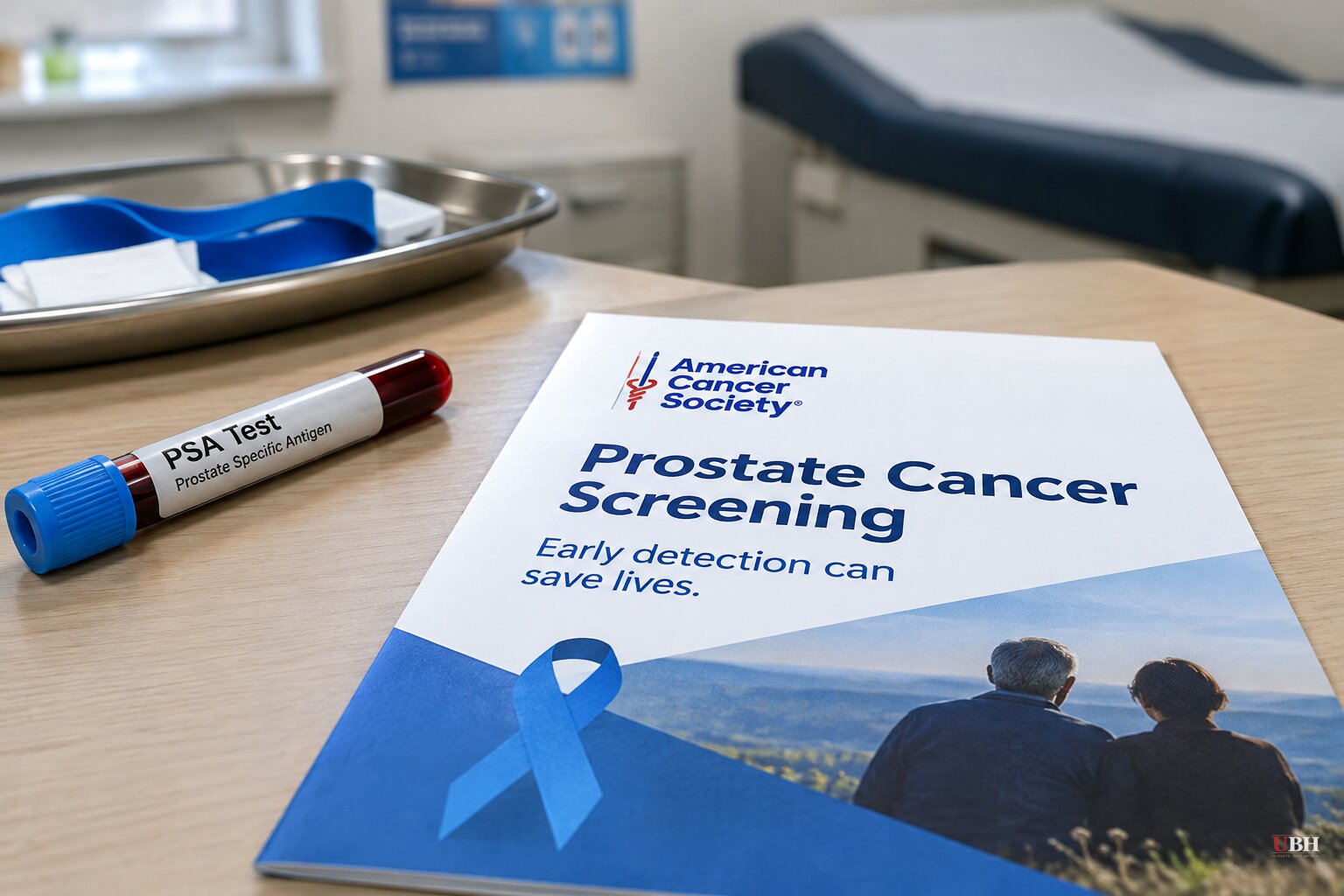
The American Cancer Society (ACS) dropped its hands-off approach to prostate cancer screening today, Nov. 12, issuing a guideline that tells most middle-aged men to get a PSA blood test.
The update, published in CA: A Cancer Journal for Clinicians, replaces a 2010 guideline that left the decision to each man and his doctor.
What the new guideline says
Average-risk men ages 50 to 69 should get a prostate-specific antigen (PSA) test every two years.
Black men and men with a strong family history should be tested every year, starting at 45. The family-history group includes men whose fathers or brothers were diagnosed before 65, or who have multiple affected relatives at any age.
Men 70 to 74 should talk with their doctors. The ACS says the balance of benefit and harm is less certain at those ages. Screening is not recommended for men 75 and older, though some very healthy men 75 to 79 may want to continue, especially if their PSA has been rising. It is not recommended for men 80 and older, or for anyone not expected to live another 10 years.
The guideline defines an abnormal PSA as 3 nanograms per milliliter or higher for men 69 and younger, and 6.5 ng/mL or higher for men 70 to 74.
Why the ACS changed course
Dr. William Dahut, the ACS chief scientific officer, said the 2010 version came out when it was unclear that benefits outweighed harms. "Back in 2010, we actually didn't have a strong opinion on whether or not one should be screened," he said.
Two things changed, Dahut said. Doctors have gotten better at limiting harms. And long-term European trial data show that men screened every two years have lower prostate cancer mortality. NBC News reported that the European randomized study now has more than two decades of follow-up.
The ACS says it conducted a systematic evidence review and commissioned a modeling study of screening strategies. Dr. Robert Smith, the ACS senior vice president for early cancer detection science and senior author of the report, called PSA testing "the cornerstone of detecting prostate cancer early."
The overdiagnosis problem
The fight over PSA testing has always been about overtreatment. The test can flag slow-growing tumors that would never have caused symptoms, and treating them can bring incontinence and impotence.
The new guideline tries to address that. Men should still get information on risks and benefits before testing. An elevated result now calls for a repeat blood test and an MRI before a biopsy is scheduled. Men diagnosed with low-risk disease should first be offered close monitoring rather than immediate treatment.
Dr. James Eastham, chief of urology at Memorial Sloan Kettering Cancer Center, told STAT News the 3.0 cutoff is an important clarification. Many U.S. lab reports list anything under 4.0 as normal, he said, "but it really should be under 3." He said he hopes it will help primary care physicians refer men sooner.
The numbers behind it
The ACS estimates 333,830 American men will be diagnosed with prostate cancer in 2026 and 36,320 will die of it. It is the second-leading cause of cancer death in men.
Black men have a 67% higher incidence and nearly double the mortality rate of white men, according to figures the ACS cited. Dahut said the earlier, more frequent screening for Black men is meant in part to reduce those disparities.
The prostate cancer death rate has fallen by half over three decades, but the decline has slowed overall and stabilized among men 55 to 69, according to the ACS findings as relayed by NBC News. The FDA approved the PSA test for cancer surveillance in 1986, and after broad screening use, late-stage diagnoses dropped by more than half.
Dr. Neeraj Agarwal, a medical oncologist at Dana-Farber Cancer Institute who was not involved in the guideline, said leaving it to each patient and doctor meant many men were never offered the test. "A clear recommendation fixes that," he said.
Federal panel still disagrees
The ACS is not the final word on what gets paid for. The U.S. Preventive Services Task Force, a federally appointed panel whose recommendations determine which preventive services insurers must cover, continues to recommend against routine population-wide PSA screening. It advises individualized decision-making instead.
That position has not changed since new evidence became available in 2025, according to STAT News. The panel has announced an upcoming update but has not said when it will arrive or what it will conclude.
That update is the next thing to watch. The ACS guideline will shape what doctors tell patients, but whether the task force moves toward the ACS position will decide whether insurance coverage for routine screening follows.
Sources used for this briefing
7 links from 5 independent newsrooms (syndicated copies of the same report count once)
These are the sources it draws on, linked so you can verify.


