
Unbiased headlines. Facts, not spin.
Unbiased Headlines is an independently owned news organization. We bring you the facts, not opinions, written fresh from 110+ named sources. Sources linked so you can verify it yourself.
 health
Major Story (7/10)
USDA Confirms Screwworm in Arizona Dog, Third State With a U.S. Case
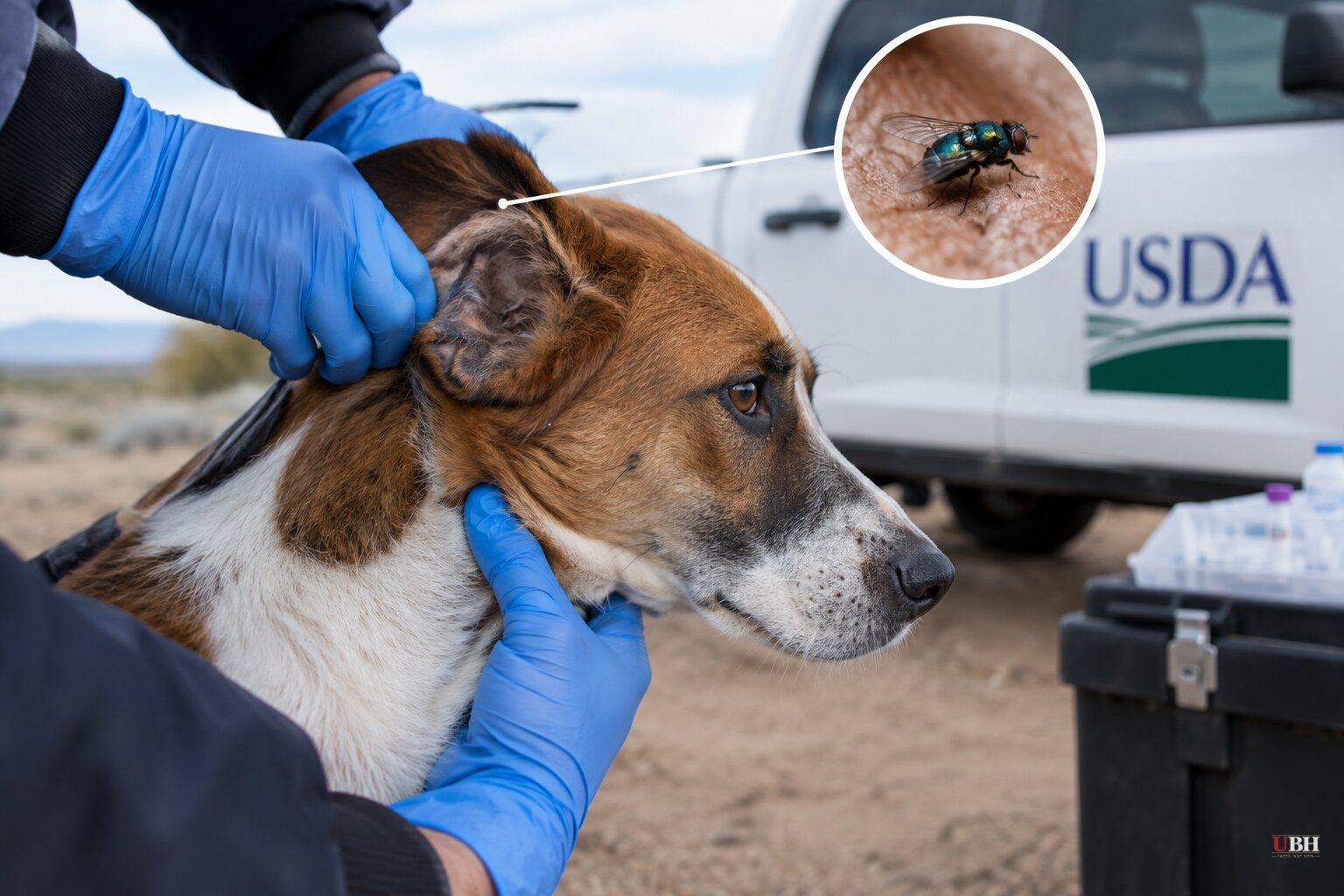
The flesh-eating parasite New World screwworm has reached a third U.S. state. The U.S. Department of Agriculture confirmed on Wednesday, Oct. 28, a case in a dog in Cochise County, Arizona. It is the first detection in the state.
A local veterinarian examined the dog Monday evening, Oct. 26, and found a wound on its back heavily infested with maggots, according to the Arizona Department of Agriculture. Samples were confirmed at the USDA's National Veterinary Services Laboratories in Ames, Iowa. The dog is under veterinary care.
USDA has not said where in Cochise County the dog was located. The county borders Mexico.
The numbers since June
The first U.S. case of this outbreak was a calf in Zavala County, Texas, confirmed June 3. That calf recovered and the case is now inactive. USDA's dashboard shows 71 animal cases nationwide since then, spread across Texas, New Mexico and now Arizona.
Eighteen of those cases are active. A month ago there were two.
Last week USDA confirmed the first case in U.S. wildlife, an elk in Texas found by a hunter. The Texas Animal Health Commission says the parasite was last eradicated from the United States in 1966.
The current outbreak began in Panama and Costa Rica in 2023. It has since moved through Central America and Mexico.
The response in Cochise County
Federal and state officials are following USDA's NWS Response Playbook. That means a 20-kilometer (12.4-mile) infested zone around the detection, animal movement controls in the area, more live-animal surveillance and trapping, sterile fly releases, and outreach to local producers, veterinarians and communities.
"We have been preparing for this possibility for a long while and are acting swiftly," said Dr. Ryan Wolker, Arizona's state veterinarian. The state agriculture department says it is working with the veterinarian and the dog's owner to build the epidemiological picture, and coordinating with neighboring states and Mexican partners.
USDA is asking animal owners in the area to check pets and livestock daily. The warning signs are draining or enlarging wounds, maggots or egg masses in wounds, signs of discomfort or irritability, and lesions around the ears, nose, genital area and umbilicus. Suspected infestations should go immediately to a veterinarian, state animal health official or USDA.
People can be infested too, though USDA says that is less common. The CDC says no human cases contracted in the U.S. have been reported and that the risk to people "remains very low."
Cattle trade is the pressure point
The U.S. halted most livestock imports from Mexico, which were mostly stopped in November 2024 after a screwworm case was confirmed in Mexico, to keep the parasite out. That halt helped tighten American cattle supplies and push beef prices to record highs for consumers.
Since August, USDA has resumed trade at three ports of entry in Arizona and New Mexico. The agency has said it next plans to restart livestock imports at Nogales, Arizona, on Nov. 30, if conditions for safe trade are in place.
That decision has drawn fire. Some ranchers, animal health experts and industry observers have criticized the administration for reopening portions of the border to cattle while outbreaks remain active on both sides of it. The Nogales date is conditional on safe-trade conditions being in place.
The detection is one more data point for that conditional. USDA has not said whether the Arizona case changes the Nov. 30 plan.
Drugs and tools
The FDA has also been widening the toolkit. It issued an Emergency Use Authorization for Bimectin, a generic ivermectin injection, to help prevent screwworm infestations in cattle. The drug can be given within 24 hours of birth, during castration, or when animals develop wounds that could attract flies.
It is the FDA's 14th emergency authorization tied to the parasite. "This authorization reflects the FDA's commitment to expanding generic drug options against New World screwworm," said Timothy Schell, director of the FDA's Center for Veterinary Medicine.
USDA updates its public dashboard at screwworm.gov daily at 6 p.m. ET. The next tally will show whether the Cochise County response contains the case or whether more detections follow. The Nogales reopening date, Nov. 30, is the next hard test of the trade policy.
Sources used for this briefing
6 links from 6 independent newsrooms (syndicated copies of the same report count once)
These are the sources it draws on, linked so you can verify.


