
Unbiased headlines. Facts, not spin.
Unbiased Headlines is an independently owned news organization. We bring you the facts, not opinions, written fresh from 110+ named sources. Sources linked so you can verify it yourself.
 health
Major Story (7/10)
Missouri Voters Weigh Permanent Ban on Minors' Gender Transition Care, Bundled With Abortion Ban
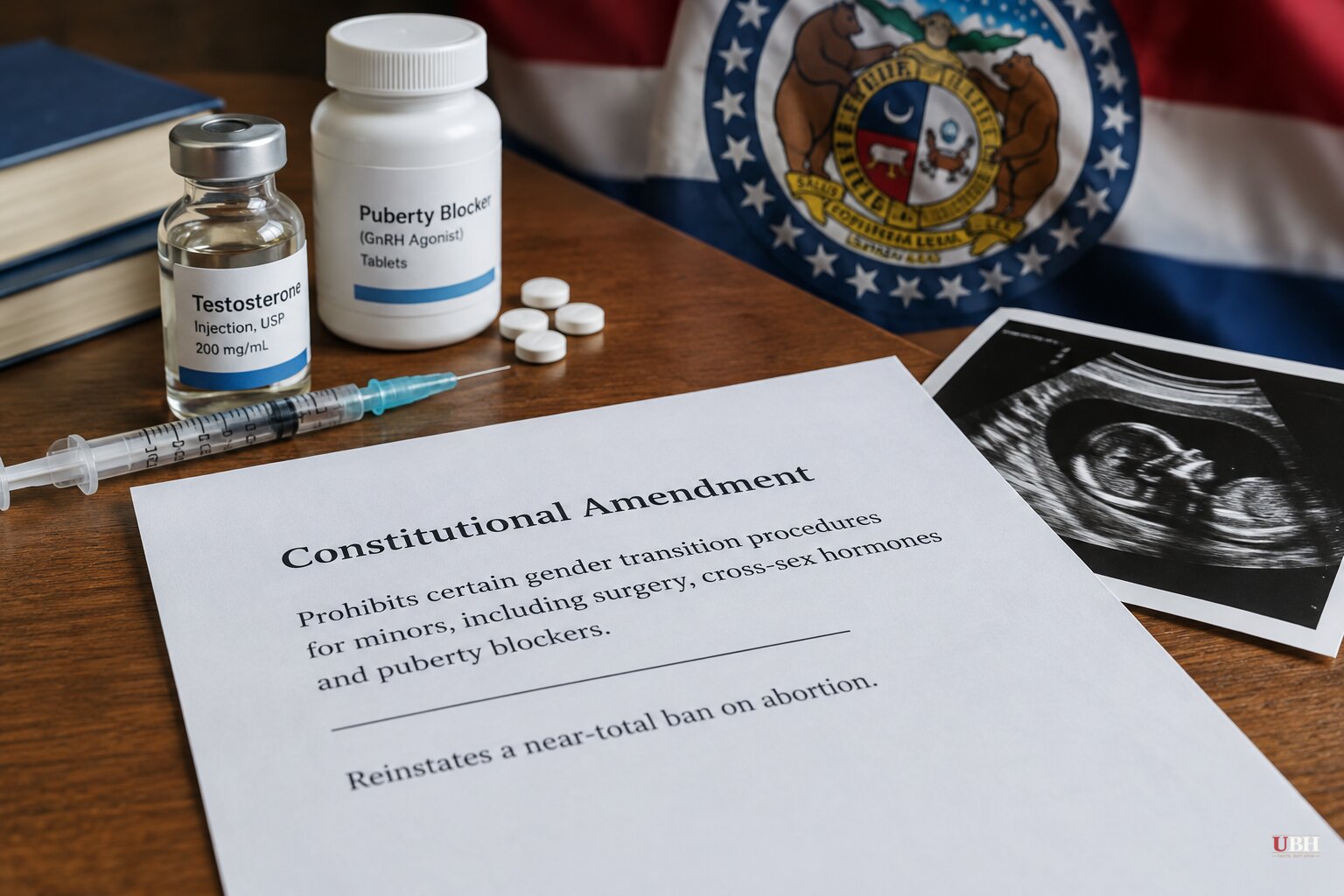
Missouri voters are weighing whether to write a ban on gender-transition treatment for minors into the state constitution.
The proposal would bar minors from gender-transition surgery, cross-sex hormone therapy and puberty blockers. It is not a standalone question. It is part of a proposed amendment to reinstate a near-total ban on abortion in the state.
That bundling matters for how people vote. Someone who supports one half and opposes the other gets one ballot choice.
What Missouri law already says
In 2023, the Republican-dominated legislature permanently blocked minors' access to gender-affirming surgeries. It also temporarily blocked new prescriptions for puberty blockers and cross-sex hormones for four years.
So the surgery ban is already permanent by statute, while the hormone and blocker restrictions were set for a limited period. This year's amendment would codify the ban on transgender health care for minors in the state's constitution.
Missouri is one of 27 states that have enacted restrictions on gender-affirming care for minors in the past five years.
Where the polling stands
The amendment is polling neck and neck. A recent poll found 43% supportive of the bans, 44% opposed and 13% undecided, against a margin of error of 4.09%. That poll did not ask separately about abortion and gender-affirming care, but polling from February showed stronger support for abortion access.
In 2024, an amendment adding abortion protections to the state constitution passed by fewer than 100,000 votes. Opponents argued that measure would also enable the state's ban on gender-affirming care for minors to be overturned.
The campaign against it
The main opposition effort comes from PROMO Missouri, an LGBTQ+ advocacy group. It set a goal of knocking on 100,000 doors across five of the state's largest metro areas before the election.
The group is using a method called "deep canvassing." That means long, open-ended conversations instead of quick pitches. About one in 10 knocks turns into a conversation, and the target is 10,000 conversations before Election Day. PROMO celebrated reaching 6,000 in early October.
Reneé Luckfield, 29, leads the St. Louis team. She is a transgender woman, and she described the work plainly. "Honestly, it's not something that I'm entirely comfortable with," she said while canvassing in Creve Coeur. "And it's not fair that we have to do this work."
The canvassers are trying to reach voters who are against banning abortion but more ambivalent on trans issues, rather than spending time on people who are already very opposed or very supportive of the bans.
The technique has a mixed record. It was used in a 2012 campaign that overturned a gay marriage ban in Maine. It was also used in a 2021 Minnesota police reform campaign that was defeated but triggered new debate.
PROMO's canvass began in 2024. That was the year President Donald Trump's campaign and pro-Trump groups spent millions of dollars attacking Democratic presidential nominee Kamala Harris over transgender issues.
Not just Missouri
Voters in four other states also face transgender-related questions this year. Colorado has a proposed ban on transgender health care for minors. Arizona, Colorado, Nebraska and Washington have proposed restrictions on transgender athletes in youth sports.
The sports question has also split Democrats in Senate races. In Texas, Democratic nominee James Talarico voted against House Bill 25 in 2021, which required public school athletes to compete based on the sex recorded on their birth certificates at or near birth. The bill became law anyway.
In a September Fox News interview, Talarico said he would oppose transgender athletes in girls' sports when participation threatened safety or fairness. He defended his earlier opposition as a response to overly broad legislation and said he favored letting local communities make eligibility decisions.
Campaign spokesperson JT Ennis said Talarico has "opposed trans athletes playing girls' sports when it jeopardizes safety or fairness." Ennis added that he will "always stand against discrimination." The campaign has not responded to questions on whether Talarico would vote for the federal Protection of Women and Girls in Sports Act.
His Republican opponent, Texas Attorney General Ken Paxton, sued the NCAA in December 2024. Paxton alleged that marketing competitions as women's events while permitting athletes of the male sex violated Texas consumer-protection law. He sought an injunction barring their participation in women's events in Texas or involving Texas teams, or requiring the NCAA to stop marketing those competitions as women's sports.
In Michigan, Democratic Senate nominee Abdul El-Sayed has previously advocated for transgender students' access to sports teams matching their gender identity.
What comes next
The Missouri result will show whether a measure pairing a minors' care ban with an abortion ban can pass as one package. With the polling split nearly evenly, undecided voters could decide it.
Sources used for this briefing
7 links from 4 independent newsrooms (syndicated copies of the same report count once)
These are the sources it draws on, linked so you can verify.


