
Unbiased headlines. Facts, not spin.
Unbiased Headlines is an independently owned news organization. We bring you the facts, not opinions, written fresh from 110+ named sources. Sources linked so you can verify it yourself.
 economy
Major Story (7/10)
Event date: October 22, 2026 ·
USCIS Starts Approving H-1B Petitions Filed Without the $100,000 Fee, Law Firm Says
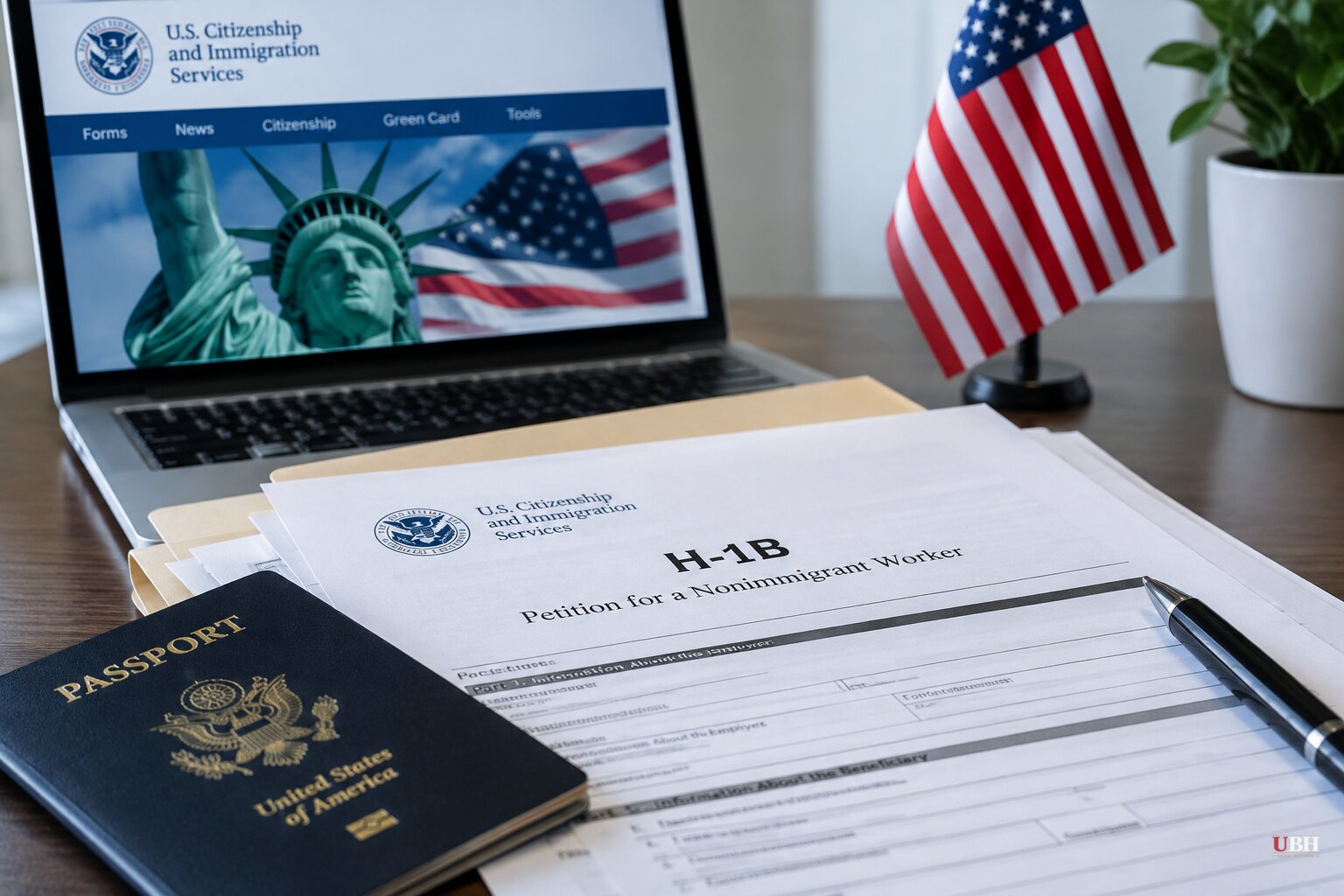
US Citizenship and Immigration Services has started approving H-1B petitions that employers filed without the $100,000 payment, immigration law firm Meltzer Hellrung said in an October 22, 2026 update. The firm described the movement as uneven.
The approvals follow weeks of stalled cases. Some petitions filed with premium processing sat past the 15-business-day deadline with no decision.
How the fee got blocked
President Trump imposed the $100,000 payment by proclamation in September 2025. It mainly hit new H-1B petitions for workers outside the United States. On September 18, 2026, Trump extended it through September 21, 2027.
Two federal courts have since stepped in.
On June 8, 2026, the U.S. District Court for the District of Massachusetts vacated the agency policies implementing the payment. The court found it amounted to a tax that the president lacked delegated authority from Congress to impose. On July 24, the First Circuit denied the government's request to pause that judgment during its appeal.
A second case, Global Nurse Force v. Trump, No. 4:25-cv-08454, came out of the Northern District of California. On September 30, 2026, Judge Haywood S. Gilliam Jr. found the agencies likely violated the Administrative Procedure Act.
The judge concluded the agencies created substantive policies that functioned as legislative rules without required notice-and-comment procedures. He also found likely failures to weigh alternatives and employers' reliance interests, to explain the implementation framework, and to show reasoned decision-making. He vacated and remanded the policies and barred federal agencies from enforcing them, including under the September 2026 extension.
The government has appealed the California ruling to the Ninth Circuit. That appeal remained pending as of the firm's October 22 update.
What USCIS says and what employers are doing
USCIS has said it is complying with the court orders. It has also said it would collect the fee if those orders are lifted.
Employers filed without paying, relying on the rulings. Many of those petitions then sat at service centers past the premium-processing window.
Meltzer Hellrung says it organized a multi-company mandamus action, a lawsuit to force USCIS to decide the delayed cases. According to the firm, approvals started arriving after it publicized the effort and before any suit was filed. That account comes from the firm alone. USCIS has not commented on why the cases began moving.
The firm advises employers to review every pending fee-subject petition. A case filed with premium processing and waiting beyond 15 business days may need direct follow-up, it said.
Who could benefit
The firm says approvals could reopen hiring for candidates abroad whom employers had dropped from consideration because of the fee. Premium processing speeds up a decision but does not guarantee approval.
A worker with a valid, unexpired H-1B visa stamp can generally travel on a new employer's approval notice, often without another consular interview, the firm said. The employer should confirm the stamp is still valid and check for status problems from a prior stay.
A worker previously counted against the cap, with time left on the six-year limit, can usually be petitioned without a new lottery selection. That worker cannot start the job before approval.
H-1B portability is not available to someone outside the country. While a petition is pending, the firm said, an employer may be able to engage the person as a contractor or through an employer of record abroad.
The fee's effect, and the political fight
A Congressional Research Service report found that during the first eight months the fee was in effect, initial H-1B petitions for consular processing from cap-exempt employers fell 91% from the prior-year period.
Supporters of tighter H-1B limits want that kind of pressure on the program. Florida Gov. Ron DeSantis has urged states to stop hiring foreign workers through H-1B at universities. He has called for jobs to be protected for young Americans. The court rulings, as described in the filings, turn on congressional authority and rulemaking procedure, not on the merits of that argument.
The fee is one piece of a broader tightening. According to the CRS report, the administration moved in February to a weighted lottery favoring higher-paid, higher-skilled workers. In March, the Labor Department proposed raising prevailing-wage floors, including lifting the Level IV floor from about the 67th to the 88th percentile. Labor estimated that would add about $1.46 billion in H-1B employer costs in the first year.
In August, DHS proposed a separate $103,265 fee on each cap-subject petition. It also finalized a rule extending the $4,000 biometric fee to H-1B and L-1 extension petitions through September 30, 2027. A September executive order told agencies to weigh an employer's layoffs when processing H-1B petitions. In October, DHS ended automatic work-authorization extensions for H-1B spouses, effective October 14.
The prevailing-wage rule and the $103,265 fee rule are proposed, not final.
On October 14, DHS also proposed ending USCIS's long-standing deference to prior approvals when reviewing extension petitions. Deference has been the practice since 2004, apart from a stretch in the first Trump administration. Comments are due November 13.
What comes next
The Ninth Circuit's handling of the California ruling is the key open item. The First Circuit appeal of the Massachusetts vacatur is also unresolved. If either order is lifted, USCIS has said it will resume collecting the fee, which would leave employers who filed without paying in an uncertain position.
Sources used for this briefing
7 links from 7 independent newsrooms (syndicated copies of the same report count once)
These are the sources it draws on, linked so you can verify.


