
Unbiased headlines. Facts, not spin.
Unbiased Headlines is an independently owned news organization. We bring you the facts, not opinions, written fresh from 110+ named sources. Sources linked so you can verify it yourself.
 economy
Notable (6/10)
Economist Tells MPs Canada's Counter-Tariffs Cost Consumers About $100 Million a Week
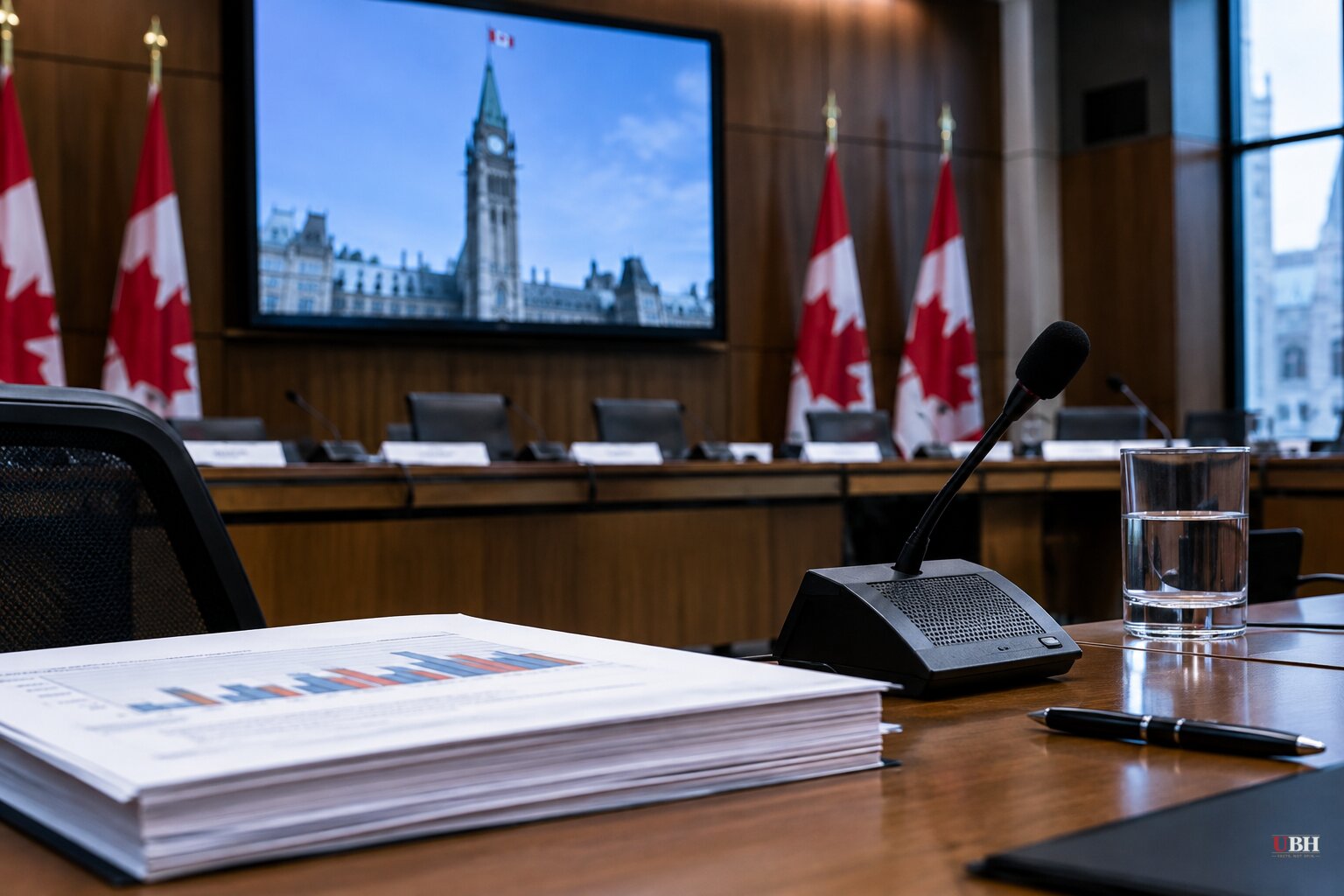
Canada's retaliatory tariffs on American goods are costing consumers an estimated $100 million a week, University of Calgary economist Trevor Tombe told the House of Commons foreign affairs committee on Wednesday, Oct. 21.
He put the price effect at about 0.25 percent "across the board." He said the tariffs cut half a percentage point from the disposable income of Canadians earning under $30,000 a year.
"Just for consumers, not even for businesses, it's about $100 million per week of additional costs," Tombe said.
What Ottawa imposed
Ottawa put counter-tariffs on $28 billion of American imports on Sept. 8. That was a response to U.S. tariffs that took effect Aug. 22.
The rates run from 15 percent on U.S. farm equipment and appliances to 25 percent on construction supplies. Smartphones, furniture, aluminum and steel face 50 percent.
Tombe said the economic case for retaliation is thin. "Those costs might be worth paying if one is making an argument that there are non-economic objectives that these tariffs achieve," he said. "I don't know what those might be."
He told MPs there is no evidence Canada's counter-tariffs have changed Washington's course. A small country's tariffs rarely hurt a target economy as large as the United States, he said.
Tombe's read on the U.S. side
Tombe called the U.S. tariff increases the largest trade policy change in the country's 250-year history. By his numbers, the average U.S. tariff was 2 percent in 2024. It jumped to 30 percent in 2025, then fell to an average of 11 percent.
He put the average U.S. tariff on Canadian goods at 8 percent. That is lower than the rate faced by 93 other countries.
His conclusion: this may be less a trade war with Canada than a basic change in how the United States runs its economy. He described a tariff as a domestic consumption tax plus a production subsidy of the same rate, and said the U.S. tariffs are better understood as domestic policy than as a bilateral dispute.
He also said Canada's 2025 retaliatory tariffs raised $4 billion in federal revenue over six months.
The government's stated reasoning
The federal government rejects the idea that retaliation is pointless. It has said the counter-tariffs shield domestic producers and pressure the White House to drop its tariffs.
"We're also targeting products that will target states in the U.S.," Industry Minister Mélanie Joly said in August. "We're being wise and strategic to put political pressure, and that's why we think it's the right thing to do right now."
Tombe's testimony goes directly at that claim. He says the pressure has not shown up in U.S. policy. Ottawa has not produced evidence to the contrary in the testimony reported here.
Small business left outside the relief programs
Dan Kelly, president and CEO of the Canadian Federation of Independent Business, appeared alongside Tombe. His complaint was about the help, not the tariffs themselves.
Almost every federal program, delivered through regional development agencies and the Business Development Bank, requires at least $1 million in sales. "At the moment, most small businesses in Canada are ineligible for any of the supports that are offered to their larger counterparts," Kelly said. He called that "quite insulting" to small business.
He said ACOA, the Atlantic agency, is the only regional development authority that does not apply the threshold. A Winnipeg firm under $1 million in sales gets nothing, he said. Kelly said he has urged Joly to change that.
Kelly also went after the tariff remission process, which is meant to exempt goods with no Canadian or international substitute. "Our tariff remission process is a joke," he said. He said members have active files that have sat in Ottawa for a year "without a single piece of any evidence" that anyone has looked at them. He described the government's tools as "two bureaucrats and a box of pencils."
The CFIB has proposed that the Canada Revenue Agency rebate part of the tariffs paid by the smallest firms, about $50,000 U.S. or $70,000 Canadian, funded from counter-tariff revenue.
Members backed the strategy, with limits
Kelly did not say his members oppose retaliation outright. Liberal MP Abdelhaq Sari asked whether CFIB members supported leaving the negotiating table and imposing counter-tariffs. Kelly confirmed a majority did. He added that support shifts when a firm's survival is on the line.
Sari suggested the disagreement was about execution rather than strategy and that adjustments could be raised with the department. Kelly answered that the CFIB has been lobbying for months. "A year and a half into the trade war," he said, those changes have not come.
Liberal, Conservative and Bloc Québécois MPs all questioned the witnesses as part of the committee's study of the Canada-U.S. relationship.
It remains to be seen whether Ottawa will act on the narrower fixes. That means dropping the $1 million sales threshold, clearing the remission backlog, or sending some of the counter-tariff revenue back to small firms. Joly has not announced any of those changes.
The committee's study continues.
Sources used for this briefing
7 links from 5 independent newsrooms (syndicated copies of the same report count once)
These are the sources it draws on, linked so you can verify.


