
Unbiased headlines. Facts, not spin.
Unbiased Headlines is an independently owned news organization. We bring you the facts, not opinions, written fresh from 110+ named sources. Sources linked so you can verify it yourself.
 economy
Notable (6/10)
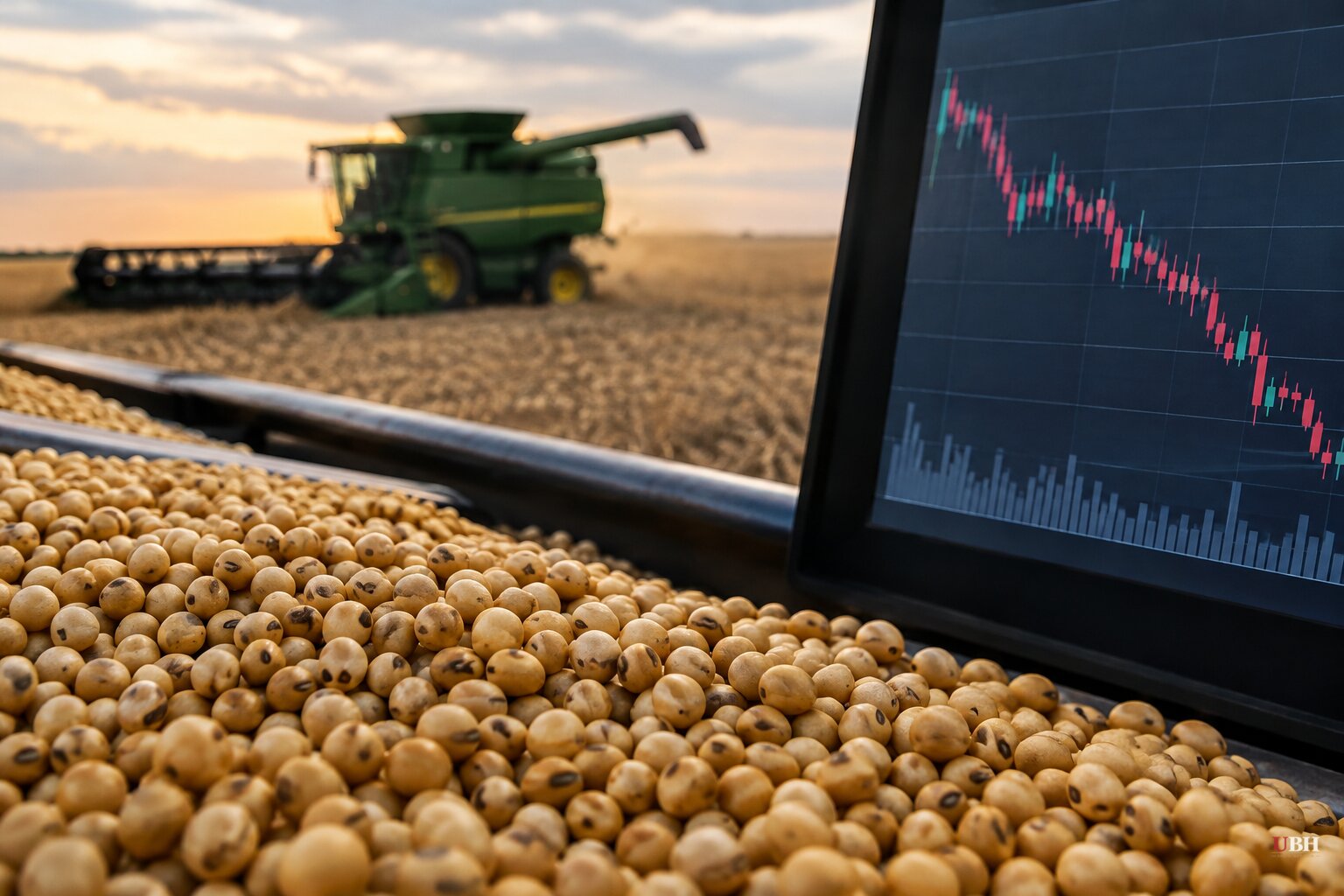
Soybean Futures Fall to Two-Month Low After Lula Win, With Record U.S. Harvest Also Weighing
Since Brazil's electoral court declared Luiz Inácio Lula da Silva the runoff winner on Sunday, Oct. 25, the first market readings have come in. Two of them matter to American farmers: Chicago soybeans and the Brazil-China trade relationship.
Soybeans slide to the lowest since late August
The most-active soybean contract on the Chicago Board of Trade lost 1.2% to $12.41-1/4 a bushel as of 0338 GMT on Monday, Oct. 26. That was the weakest level since Aug. 26. Corn fell 1.1% to $4.51 a bushel. Wheat slipped 0.4% to $6.22-3/4.
Why the beans fell is where the explanations split.
Bloomberg's market reporting ties the move to Lula's win. Its account says expectations of closer ties with China could erode the U.S. share of the world's biggest soybean import market. It adds that Lula's emphasis on "pragmatic engagement" with Beijing could further entrench Brazil as China's top soybean supplier.
Market reports from Asian trading give a different cause. "We are seeing seasonal pressure on soybeans as US harvest is gathering pace," one Singapore-based trader said. "There are not many supportive factors for prices." Those reports also cite a record U.S. harvest entering the market and lower crude oil prices. Crude had surged to near six-month highs late last week, and oil often steers grain markets because of biofuel demand.
Both things happened on the same day. No named trader or analyst has said how much of the decline belongs to each.
China is still buying American beans
The demand picture is not one-directional. The U.S. Department of Agriculture reported Thursday that net export sales of U.S. soybeans for the week ended Oct. 15 came to 2.8 million metric tons. That was near the top end of market estimates, and a run of Chinese purchases lifted the total.
That sits next to a September report from the USDA Foreign Agricultural Service. It noted that China's retaliatory tariff on U.S. soybeans had encouraged commercial buyers to favor South American origins.
Beijing is buying American beans while the tariff pushes commercial buyers elsewhere. That leaves U.S. growers dependent on Chinese purchasing decisions they do not control.
Brazil's China business is already at record levels
The trade relationship Lula inherits is large. Data from the Brazil-China Business Council show two-way trade hit a record $142 billion by September 2026. Brazil runs a $26.1 billion surplus with China.
Soybeans make up 35.4% of Brazil's exports to China. Oil is now 25.8%, with record oil sales of $21.8 billion, up 49% from a year earlier. China is buying half of Brazil's oil exports, over a million barrels a day and at times above 1.6 million. India takes about 238,000 barrels a day.
The oil surge followed China's loss of Persian Gulf supply during the Strait of Hormuz crisis. Brazilian crude is compatible with Asian refineries, and Japan and South Korea have said they want more of it.
The oil gains appear to be tapering. Gulf exports have recovered in recent months and Hormuz traffic has picked up. Whether renewed Iranian attacks on shipping swing Chinese buying back toward Brazil remains to be seen.
Brazilian beef is the weak spot. Exports to China slid 8.5% under Chinese caps and punitive tariffs designed to protect China's domestic producers.
Brazilian assets take a hit in thin Tokyo trade
Lula won a fourth term, defeating Flávio Bolsonaro in a political upset. Investors who had backed Bolsonaro to rein in Brazil's deficit were on the wrong side of the result, Bloomberg's reporting notes. XTB puts the vote at roughly 52% to 48%, a margin of over 4 million votes, and says a Bovespa-tracking ETF listed in Tokyo fell nearly 15% in Asian trading.
That is a price decline in one fund, not a measure of what any investor lost. XTB itself says the move came on very low volume and should be treated as "extremely exaggerated," likely an upper bound for ETFs listed in the U.S. and Europe.
XTB also cites a Goldman Sachs warning of a potential 10% rise in the dollar against the real in an extreme scenario. XTB stresses that Goldman calls it an extreme case, not a baseline forecast. XTB adds that a 200-basis-point jump at the long end of Brazil's yield curve would bring the fiscal risk premium back into play. The currency could return to around 5.2 per dollar, the brokerage says.
What comes next
The local market in São Paulo is the real test. XTB says liquidity there is far deeper than in Tokyo. Whether a drop near 15% holds or buyers step in on a view that the selloff went too far remains open.
On soybeans, the harvest keeps advancing. If prices stay near $12.40 without a fresh Chinese buying run, the harvest explanation looks stronger. If Beijing keeps booking U.S. cargoes while Brazilian shipments dominate, the policy explanation will be harder to prove either way.
Sources used for this briefing
7 links from 7 independent newsrooms (syndicated copies of the same report count once)
These are the sources it draws on, linked so you can verify.


