
Unbiased headlines. Facts, not spin.
Every story is an unbiased news briefing written from 110+ sources across the spectrum — sources linked so you can verify it yourself.
 politics
Low Interest (3/10)
June 14, 2026 at 01:13 AM
politics
Low Interest (3/10)
June 14, 2026 at 01:13 AM
USA Beats Paraguay 4-1, Empty Seats Hit Santa Clara, and a Mexican Official Is Fired for a Racist Gesture. Three Days In, the World Cup Is Already a Mixed Picture.
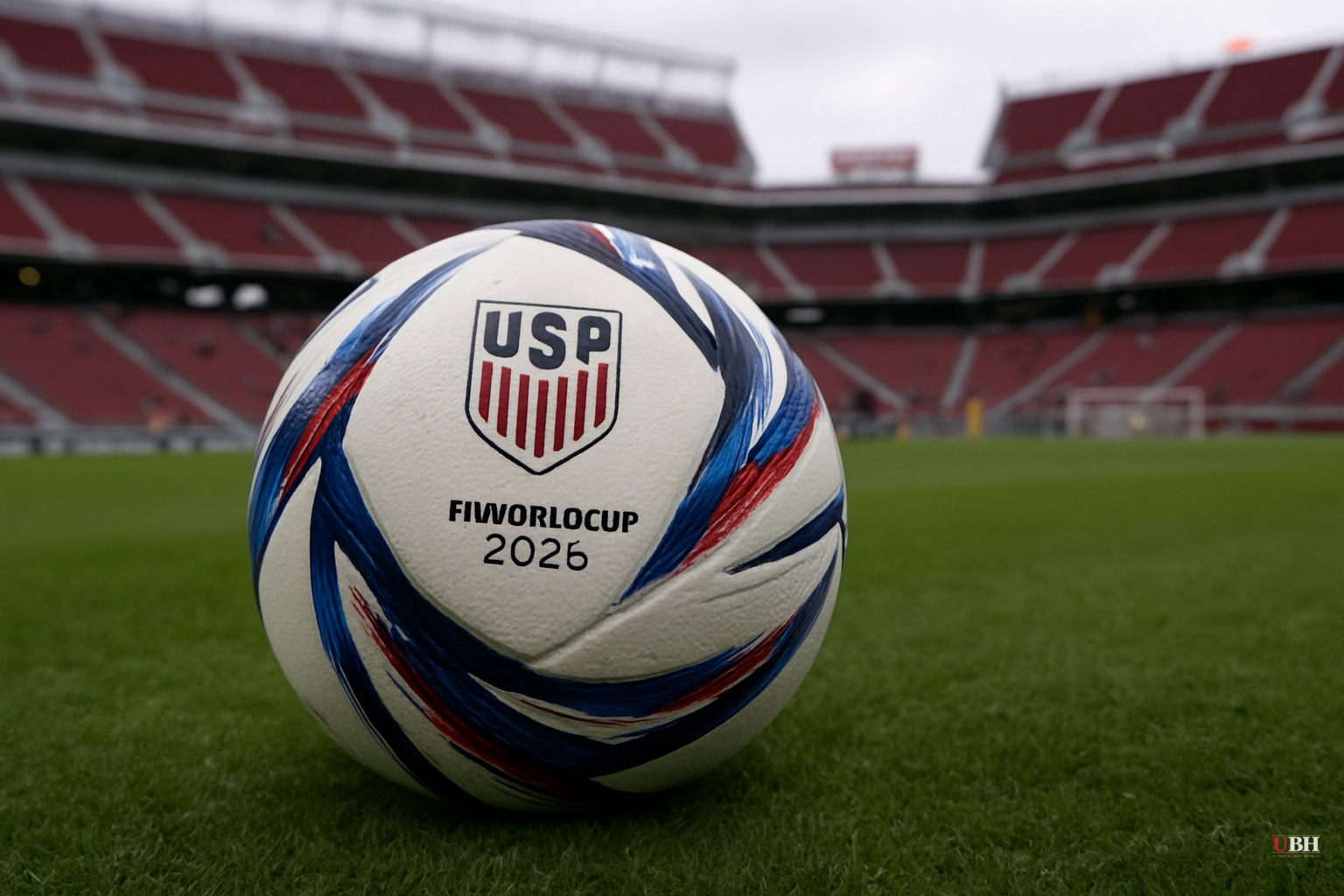
Since the 2026 World Cup kicked off Thursday in the United States, the tournament has produced both a marquee American win and a pair of problems FIFA would rather not be talking about.
The U.S. Result
Friday night in Los Angeles, the U.S. men's national team beat Paraguay 4-1 in its Group D opener. Brooklyn-born striker Folarin Balogun scored twice, including a left-footed shot into the upper-left corner before halftime. The U.S. led 3-0 at the break, per reporting by the New York Post.
The opening goal came off a Paraguay defender's own foot in the seventh minute. By halftime, bars near Madison Square Garden in New York, where the Knicks are simultaneously deep in a playoff run, were chanting "U-S-A" loud enough to carry through the plaza below, according to the New York Post's on-the-ground account.
Balogun is the player to watch going forward. Two goals in a World Cup opener against a South American side is not a small thing.
Fan Energy Is Real
The crowd scenes elsewhere have been genuinely striking. Brazilian fans took over Times Square before Brazil faced Morocco on Friday, waving flags and breaking into song, per the New York Post. Scotland supporters have been the loudest and most chaotic fanbase in the tournament's early days, with videos going viral of them partying through downtown Boston and sailing toward Gillette Stadium in Foxborough for their match against Haiti, scheduled for Saturday afternoon.
A Boston police officer joined in, kicking a soccer ball to himself while Scotland fans cheered. Whatever you think of viral moments, that one landed.
The overall atmosphere across multiple countries, genuine noise, and packed public spaces is what FIFA and the host cities promised. In New York and Boston, they are delivering it.
The Empty-Seat Problem Is Real Too
Levi's Stadium in Santa Clara told a different story Saturday. Qatar vs. Switzerland drew a visible sea of empty red seats. The stadium's red chairs blended with Swiss red shirts but more importantly stood in for fans who simply were not there. Social media images circulating from the match showed the problem was pronounced, though the exact number of unfilled seats, based on fan accounts posted to X, remains disputed. The capacity for World Cup play at Levi's is 70,000. Empty seats were also reported during the South Korea vs. Czech Republic match Thursday. FIFA attributed that to fans congregating in the concourse rather than sitting down, according to the California Post.
That explanation may be partially true, but it does not account for the Qatar match images. Qatar is not a traditional soccer powerhouse, and Switzerland is geographically distant. Neither fanbase was going to travel in numbers comparable to Brazil or Scotland. FIFA scheduled that matchup, knew the demand dynamics, and took the ticket-price gamble anyway.
President Trump told the New York Post before the tournament began that he would not pay the $1,000 ticket prices. That is not a political statement. It is a straightforward description of the pricing barrier that is keeping seats empty.
The fair counterpoint: early tournament matches for lower-profile groups historically draw sparse crowds at any World Cup. The 2014 and 2018 tournaments both had empty-seat complaints in the opening week. FIFA's defenders would argue the tournament fills in as it progresses and higher-stakes matches approach. That argument has merit. Whether it holds for a 48-team, month-long tournament spread across 16 host cities is genuinely unresolved.
The Incident in Jalisco
The ugliest moment of the tournament's first days did not happen in the U.S. South Korean influencer Yoon Su-jin, who goes by Incocat_t and has nearly 9 million combined followers on TikTok and YouTube, was filming herself celebrating South Korea's opening win over Czechia in Jalisco, Mexico, when Ulises Bernal, president of the College of Topographic and Geomatic Engineers of Jalisco, made a slanted-eye racist gesture behind her on camera.
Yoon posted the clip and wrote in Korean: "I came all the way to Mexico for the World Cup, but… am I being too sensitive?"
She was not. The clip went viral. The trade association's spokesperson confirmed to the New York Post that the organization's Honor and Justice Committee met the same day and that Bernal would be "removed from office." The association said it was "deeply saddened" by the incident.
Some commenters online defended the gesture as cultural banter. The gesture has a documented history as a racial slur targeting East Asian people, and the context—a foreign visitor, on camera, visibly stunned—removes any ambiguity about how it landed.
Bernal's removal was swift. Whether FIFA or Mexican football authorities issue any additional response, beyond the trade association's action, has not been announced as of June 13.
What's Next
The first genuinely interesting tactical matchup of the early tournament arrives Sunday: Turkey vs. Australia at midnight ET in Vancouver. Turkey's 21-year-old pair of Arda Guler and Kenan Yildiz are the tournament's most-watched young players in the bracket. Australia will try to absorb pressure and counter. The New York Post's betting analyst Michael Leboff rates the draw at +270 on FanDuel as the value play, based on Turkey's likely reluctance to overcommit against a physical Australian side.
The open question heading into the second week: whether FIFA can push ticket prices down or increase turnout mechanisms for matches involving smaller national fanbases, before empty seats become the story that overshadows everything else.
Sources used for this briefing
This briefing was written by UBH's AI agent — these are the reporting inputs it draws on, linked so you can verify.


