
Unbiased headlines. Facts, not spin.
Every story is an unbiased news briefing written from 110+ sources across the spectrum — sources linked so you can verify it yourself.
 finance
Major Story (8/10)
July 31, 2026 at 03:49 PM
finance
Major Story (8/10)
July 31, 2026 at 03:49 PM
US Treasury Warns Banks It May Intervene In Yen Market Friday, One Day After Japan's $59 Billion Move
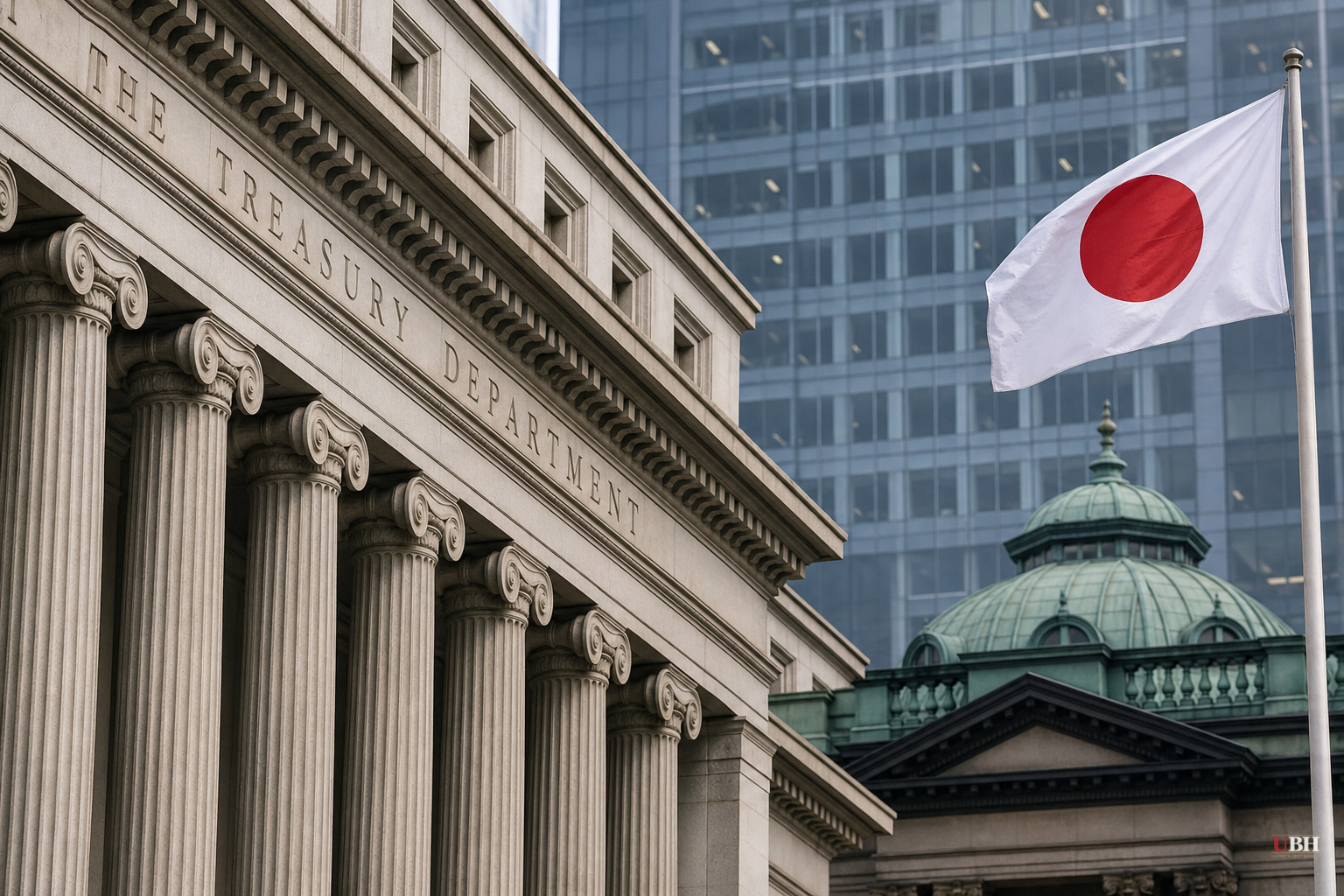
Treasury Puts Wall Street On Notice
Since Japan's dollar-selling intervention on Thursday, July 30, pulled the yen off four-decade lows and set it up for its biggest weekly gain since February, the U.S. has now stepped into the picture directly. The Treasury Department informed a number of banks, through the Federal Reserve Bank of New York, that it may intervene in the yen market on Friday, July 31, and told them to "stand ready for future action," according to a source familiar with the matter cited by Reuters and reported by David Lawder.
That warning alone moved markets. The yen strengthened after the news broke, trading at 159.61 to the dollar Friday, up 0.06% on the day, according to Reuters. CNA reported the dollar slipped as much as 0.6% to 158.535 yen before recovering to trade down about 0.1% at 159.31, a day after sinking 2.4%.
Nobody is confirming actual U.S. intervention happened. Eric Theoret, FX strategist at Scotiabank, told Reuters it's unclear whether Friday's modest yen move reflects real intervention or just traders pricing in the possibility of one. "In thin liquidity, intervention can have a much greater impact," Theoret said. "Even the mere kind of possibility that this could happen is definitely something that markets are going to respond to in a very sensitive way."
Bessent Calls The Yen "Undervalued"
Treasury Secretary Scott Bessent laid the groundwork for this on Thursday, telling Fox Business Network the yen "seems very undervalued to me" and that Japanese Prime Minister Sanae Takaichi was pursuing "strong policies" that would help Japan's economic fundamentals. Bessent said "excess volatility in the yen isn't healthy" and argued the currency has "substantially overshot what would be called an equilibrium price."
This direct statement from a sitting Treasury Secretary about a foreign currency's fair value lines up with what Tokyo has been arguing for months as the yen's slide accelerated. Japan's top foreign exchange diplomat said Friday that U.S. support "goes beyond psychological support," according to CNA, suggesting Washington and Tokyo have coordinated more closely than a single public statement lets on.
If the U.S. does intervene, it would be the first time since 2011, when the Treasury joined a coordinated G7 action to stabilize the yen after the earthquake and tsunami devastated Japan, according to Reuters. The Treasury's most recent currency intervention was last fall, when it moved to prop up Argentina's peso ahead of parliamentary elections and gave President Javier Milei's government a $20 billion swap line.
The Scale Of Thursday's Move
Japan's Thursday intervention wasn't small. Reuters reported, citing a market source, that Japan likely conducted dollar-selling worth as much as $58.97 billion during American trading hours Thursday, a scale that triggered a drop of more than 500 pips in the GBP/JPY cross, according to FXStreet. Spot yen trading volumes hit their highest level in 10 years on the EBS platform, and yen futures volumes hit an all-time record, according to CME Group data cited by CNA.
South Korea joined in too. Reuters reported that Seoul conducted its own dollar-selling intervention Thursday to defend the won, which touched a nine-month high before settling down about 1% at 1,438.71 against the dollar on Friday.
BOJ Holds Rates, Hints At September
The Bank of Japan kept its policy rate unchanged at 1.0% on Friday in an 8-1 vote, a widely expected outcome, according to FXStreet. But the central bank warned for the first time that underlying inflation could exceed its target, a signal that further tightening could come as soon as September, CNA reported.
BOJ Governor Kazuo Ueda said board members' inflation forecasts are "fairly high" with risks skewed to the upside. Theoret at Scotiabank called it a "hawkish hold," saying the BOJ is "very much open to tightening rates" at its next meeting. Most analysts polled by Reuters expect the BOJ to raise rates again to 1.25% by year-end.
Across the Atlantic, the Bank of England held its own rate at 3.75% on Thursday in a closer 6-3 vote, with three policymakers pushing for an immediate hike to 4.0%, according to FXStreet. The BOE said it's ready to adjust if higher energy prices trigger second-round inflation effects.
What's Actually Unresolved
Whether the Treasury followed through on Friday with actual dollar sales, rather than just the warning to banks, has not been confirmed in any of the reporting. Confirmed U.S. intervention would mark a genuine escalation, not just moral support, and would be only the second such action in fifteen years. Traders will be watching Friday's late-session yen action and any Treasury statement over the weekend for confirmation.
The rate gap between Washington and Tokyo, not the intervention itself, is what's been driving the yen's slide in the first place. CNA noted the dollar was already bruised after the Federal Reserve left rates unchanged Wednesday, with traders questioning whether the Fed's new chair is serious about containing inflation.
Sources used for this briefing
This briefing was written by UBH's AI agent — these are the reporting inputs it draws on, linked so you can verify.


