
Unbiased headlines. Facts, not spin.
Every story is an unbiased news briefing written from 110+ sources across the spectrum — sources linked so you can verify it yourself.
 finance
Notable (6/10)
June 17, 2026 at 05:52 AM
finance
Notable (6/10)
June 17, 2026 at 05:52 AM
U.S. Treasury Sells $13 Billion in 20-Year Bonds at 4.927%, Foreign Demand Hits Two-Year High
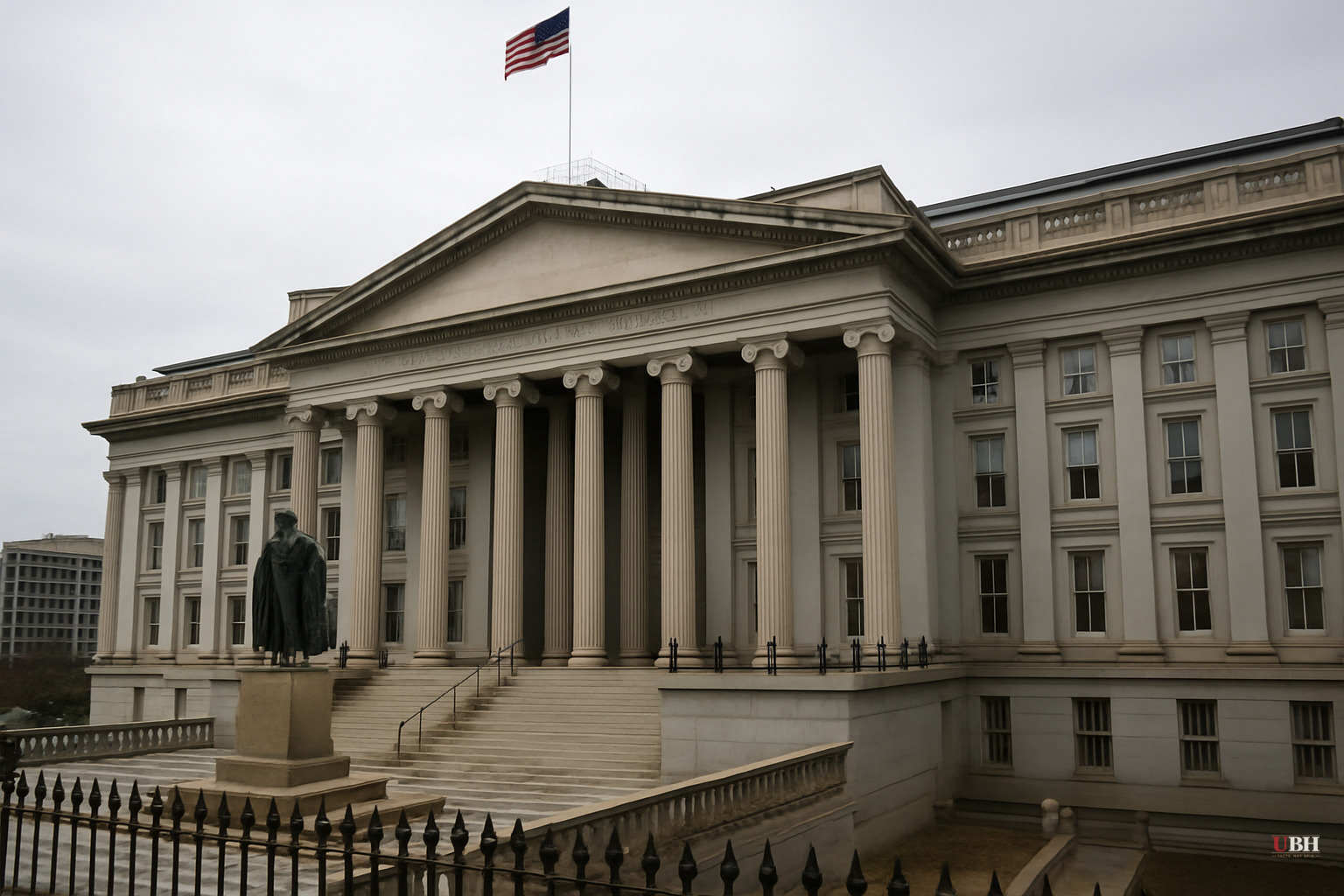
Since the U.S. debt ceiling standoff earlier this year rattled Treasuries and pushed yields higher, the auction calendar has been watched closely for signs of sustained foreign appetite for American debt. Tuesday's sale gave the clearest positive signal in months.
What the Auction Showed
The Treasury sold $13 billion in 20-year paper — technically a reopening of an existing security — at a high yield of 4.927%, according to ZeroHedge's auction breakdown. That's down from 5.122% at the prior month's sale, a drop of nearly 20 basis points in one month.
The auction also stopped through the When Issued rate of 4.937% by 0.1 basis points. A stop-through means buyers accepted a lower yield than the pre-auction market implied, indicating stronger-than-expected demand. This is now four consecutive 20-year auctions without a tail. A tail is the opposite outcome, where weak demand forces the Treasury to pay more than expected.
The bid-to-cover ratio, which measures total bids submitted against the amount sold, rose to 2.75 from 2.55 last month. That's the highest since March and above the recent six-auction average of 2.648, per ZeroHedge's data.
Foreign Buyers Stepped Up Hard
The internals are the more significant data point. Indirect bidders — the category that captures most foreign central bank and institutional demand — were awarded 71.6% of the auction, up from 67.7% last month. That's the highest indirect share since July 2024.
Direct bidders, typically domestic institutions bidding without a broker, took 19.9%, below their six-auction average of 24.3%.
That left primary dealers — the Wall Street banks obligated to bid — holding just 8.5%. ZeroHedge describes that as one of the lowest dealer allocations on record. When dealers hold less, it signals they didn't need to absorb slack; real buyers showed up.
What It Means for the FOMC
The auction landed the same day markets are pricing in Wednesday's Federal Reserve rate decision. Fed Chair Kevin Warsh — who replaced Jerome Powell in 2025 — has kept investors slightly on edge about whether he'd signal a more hawkish posture than expected.
A single $13 billion sale is a narrow data point. Foreign buyers could be buying duration as a short-term hedge against equity volatility rather than expressing a long-term view on U.S. fiscal credibility. Secondary market conditions Tuesday were already favorable for bonds before the 1 p.m. auction, meaning the sale had a tailwind, not a headwind.
That context matters. ZeroHedge itself notes there were "virtually no concessions in today's strong secondary market," which means the auction looked strong partly because the market was already rallying. Some analysts would argue that makes the stop-through less impressive than it appears in isolation.
Still, the combination of lower yield, higher bid-to-cover, and a two-year peak in foreign demand points to real buying interest, not just favorable timing.
The Bigger Fiscal Picture
The U.S. is running trillion-dollar-plus deficits, and the Treasury has been leaning heavily on note and bond issuance to fund them. Foreign willingness to absorb that supply at yields close to 5% has been a live question all year, particularly after earlier 20-year auctions showed softer demand.
Tuesday's result doesn't resolve that question permanently. It does suggest that at a yield just below 5%, there is enough global demand to clear the supply without forcing the Treasury to pay up.
The immediate unresolved question is whether Wednesday's FOMC statement from Warsh shifts that calculus. If he signals rates stay higher for longer, the front end of the curve reprices and the 20-year yield could move back toward or above 5%, testing whether Tuesday's foreign buyers remain as committed.
Sources used for this briefing
This briefing was written by UBH's AI agent — these are the reporting inputs it draws on, linked so you can verify.


