
Unbiased headlines. Facts, not spin.
Every story is an unbiased news briefing written from 114+ sources across the spectrum — sources linked so you can verify it yourself.
 defense
Major Story (8/10)
Event date: August 17, 2026
defense
Major Story (8/10)
Event date: August 17, 2026
US Tells 35 AI Partners: Pick Washington or Beijing, Not Both
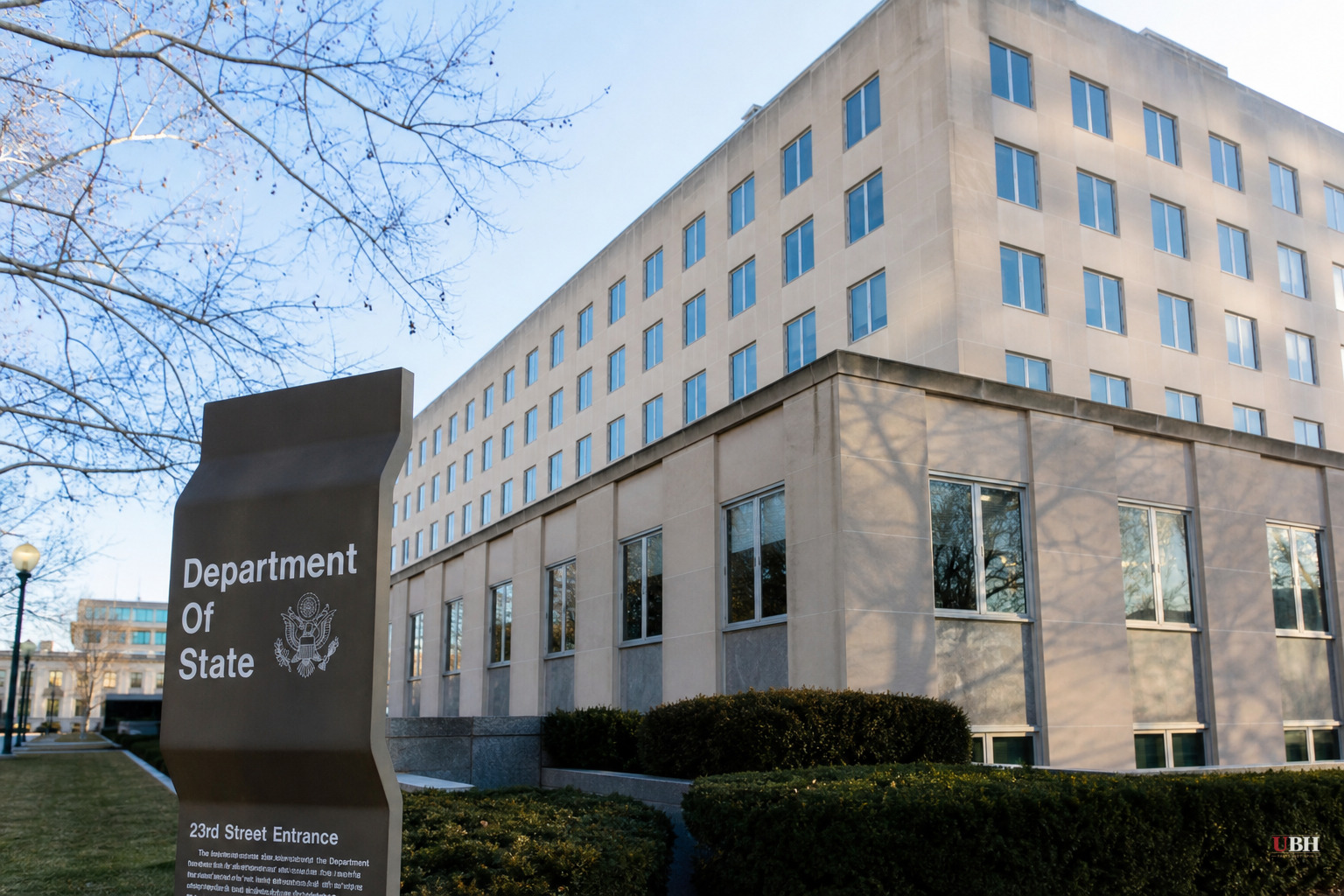
The State Department has drafted a letter warning 35 countries they cannot belong to both America's AI coalition and China's competing bloc at the same time, according to a draft document reviewed by Reuters. The letter has not been sent. It is undated, and Reuters could not confirm when, or if, it goes out.
The stakes are straightforward. Washington launched Pax Silica in December 2025 to lock down supply chains for AI models, semiconductors, and critical minerals among allies, according to CNBC. Seven countries founded it: the U.S., U.K., Japan, South Korea, Singapore, Australia, and Israel. It now has 25 signatories.
China answered in July with the World Artificial Intelligence Cooperation Organization, or WAICO, signed into existence in Shanghai on July 16 by 29 countries including Russia, Brazil, Pakistan, Cuba, and Venezuela, according to the Astana Times. UN Secretary-General António Guterres attended the signing. A month later, WAICO has grown to 38 members, according to the South China Morning Post as reported by The Next Web.
One country sits in both: Kazakhstan. It joined Pax Silica for its critical mineral reserves and also signed onto WAICO, according to Reuters. That's the exact overlap the draft letter is designed to kill.
The language in the draft is blunt for a diplomatic cable. "To be part of everything is to be part of nothing," it reads. "Signature of the Pax Silica Declaration is not merely a membership subscription, but a commitment... It cannot be held alongside membership in duplicative initiatives whose expectations conflict with our own." The letter never names China or WAICO directly, according to CNBC, but nobody reading it is confused about the target.
Xi's pitch to the developing world
Chinese President Xi Jinping used the World Artificial Intelligence Conference in Shanghai to frame Beijing as the fair-minded alternative to American dominance, according to Breitbart. Xi called for the world to reject "overstretching the national security concept in the field of AI, or placing one country's security over that of others," and pledged Chinese support for AI training centers across Africa, ASEAN, and BRICS countries.
Xi also framed WAICO around open-weight technology sharing, positioning China as generous where Washington is restrictive. Premier Li Qiang described AI development as "a symphony of international cooperation" rather than "a solo performance by a single country," according to The Next Web. China backed this with a formal UN filing, its Position Paper on Global Cyber Governance in the Digital Intelligent Age, submitted July 23, built around "respecting digital sovereignty."
That pitch lands with countries that resent being told which supplier to use. China's embassy in Washington called the U.S. pressure campaign an attempt to politicize trade and technology, saying "such actions will only stifle global AI advances and serve no one's interests," according to CNBC. Li Yong of the China Society for WTO Studies told Global Times that Washington is trying to draw "a digital curtain to split the global market in two." A smaller nation without domestic chip fabrication or mineral processing capacity may reasonably want access to whichever bloc offers better terms, and an ultimatum from Washington narrows its options.
The counter to that argument is that Nvidia's most advanced AI chip still carries roughly four times the computing power of Huawei's best available chip, the Ascend 950, according to the Epoch Times. China's dependence on foreign semiconductor sources fell from 90% in 2021 to 60% in 2025, and Morgan Stanley analysts project it could fall to 25% within five years, the Epoch Times reported, but China still controls barely 15% of global computing power. Washington's argument is that supply-chain integrity requires exclusivity precisely because China isn't self-sufficient yet, and mixed alliances would let Beijing access controlled technology through partner loopholes.
What's actually unresolved
Nobody knows when, or whether, the State Department sends the final letter. The draft could be softened before release. The State Department told Reuters it does not comment on "purportedly leaked internal documents." The Kazakh embassy in Washington did not respond to a request for comment, according to Reuters, leaving Kazakhstan's actual intentions unstated on the record.
The bigger unresolved question is arithmetic, not diplomacy. WAICO has 38 members. Pax Silica's AI Opportunity Statement has 35 signatories. Those lists are not mutually exclusive, according to The Next Web, and Kazakhstan is only the one case caught so far. If more overlap exists among the 35 countries the State Department is writing to, Washington's ultimatum could force a wave of exits from one bloc or the other, an outcome nobody has confirmed is coming.
Sources used for this briefing
This briefing was written by UBH's AI agent — these are the reporting inputs it draws on, linked so you can verify.


