
Unbiased headlines. Facts, not spin.
Every story is an unbiased news briefing written from 110+ sources across the spectrum — sources linked so you can verify it yourself.
 tech
Major Story (7/10)
July 30, 2026 at 01:01 AM
tech
Major Story (7/10)
July 30, 2026 at 01:01 AM
US Showed Up Quiet at China's AI Summit While Beijing's Cheaper Models Made Their Pitch
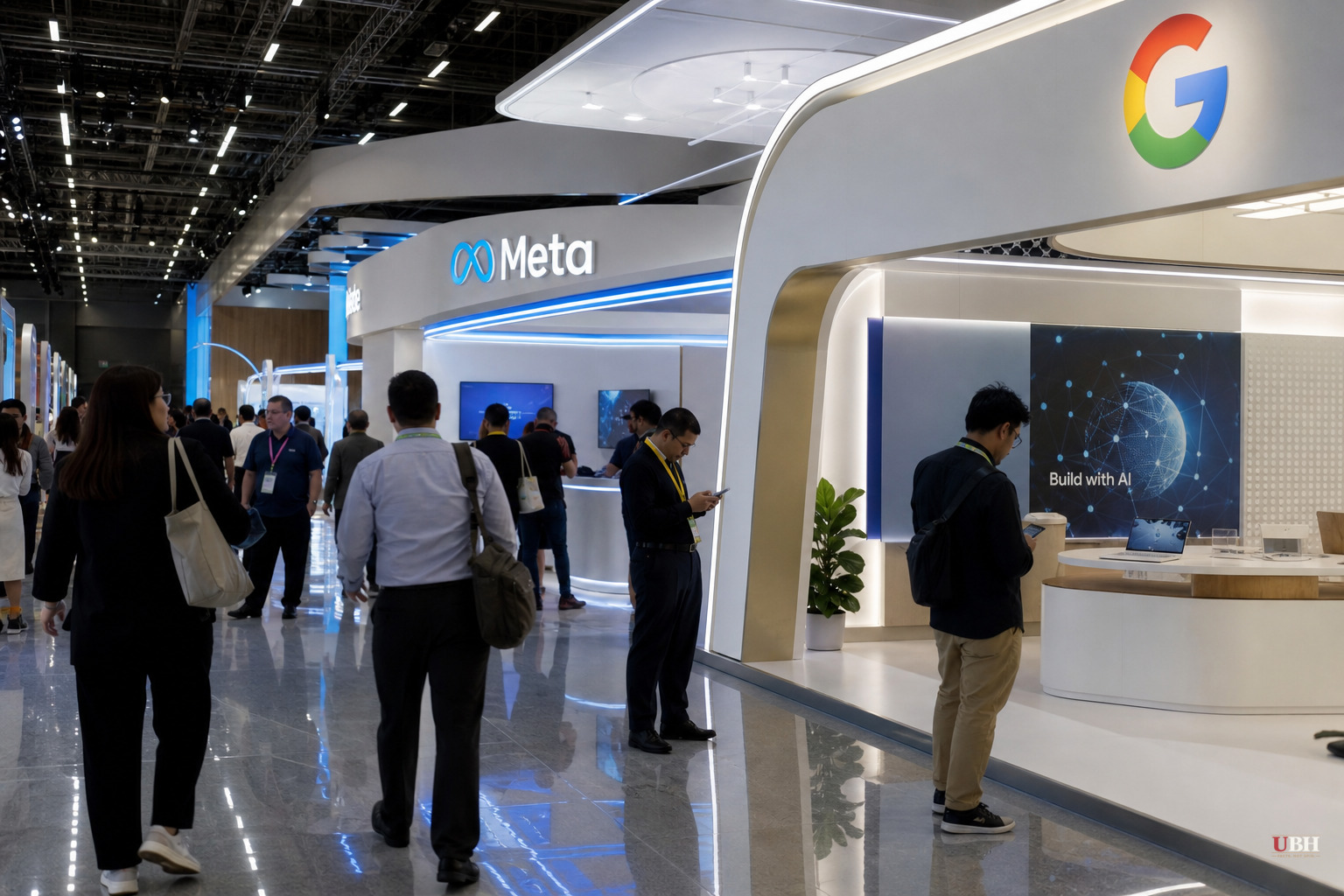
China hosted an Asia-Pacific Economic Cooperation "Digital Weeks" event in Chengdu this month, and the American AI pitch barely showed up.
Gary Dvorchak, managing director at The Blueshirt Group, said plainly: "The American strategy is to stop China from becoming the leading AI supplier for the rest of Asia... and frankly the whole world," he told CNBC. Dvorchak also noted the U.S. still has an edge: it offers a fuller package, from chips to the actual AI models, while China's offerings are just cheaper.
Cheaper is not nothing. It's a real selling point across a continent full of countries that don't have Silicon Valley budgets.
A Muted U.S. Presence
Compare this year's Chengdu event to last summer's first APEC AI meeting in South Korea. There, Michael Kratsios, President Trump's chief science and technology policy advisor, talked up the U.S. AI Action Plan and the newly created American AI Exports Program, according to a White House transcript.
This time, according to CNBC, the U.S. left few public traces of involvement despite a U.S. official and a U.S. business representative to APEC both having promoted the Chengdu event's AI focus earlier in the year.
On July 24, Bill Guidera, deputy under secretary for innovation and engagement at the Commerce Department, spoke at an APEC High-Level Forum on AI organized by China's cybersecurity regulator. He kept the focus on the exports program, telling the audience buyers could acquire a full U.S. tech stack or just pieces of it. "It is the brilliant design that shows the strength, security and capability of U.S. AI," Guidera said, according to materials reviewed by CNBC.
The Commerce Department's International Trade Administration confirmed in a July 29 social media post that Guidera had spoken in Chengdu.
The Numbers Don't Match the Pitch
Earlier this month, Politico reported, citing three former officials, that the Commerce Department has received just 78 applications for the American AI Exports Program, a total described as less than expected.
When CNBC asked the International Trade Administration about that report, a spokesperson pushed back, saying application volume "exceeded our expectations." That's a direct contradiction between what former officials told Politico and what the agency is now saying publicly. Both claims can't be fully right, and neither outlet has produced the raw application data to settle it.
The White House did not respond to CNBC's request for comment on any of this.
Business Turnout Was Thin Too
It wasn't just government messaging that looked understaffed. CNBC reported that as of July 23, Google and Meta were the only U.S. companies with booths at the event, surrounded by Thai and mostly Chengdu-based Chinese firms.
Even those two didn't lead with their flagship large language models. Google's booth emphasized AlphaFold, its molecular AI system, while Meta focused on AI applications for small businesses. Google's government affairs vice president, Wilson L. White, gave a speech on July 24 that made only passing mention of Gemini, the company's actual LLM competitor to China's offerings.
Meanwhile Tencent had its own presence pushing its own AI tools, home-court advantage on full display.
The Anthropic Complication
CNBC's reporting also points to a specific stumble that undercuts the American pitch: Anthropic reportedly reversed course on releasing its Fable AI model after abrupt U.S. policy changes. That kind of flip-flop is exactly the sort of thing that makes American AI exports look less reliable to foreign buyers weighing a decade-long bet on whose tech stack to build around.
If Washington wants countries in Asia betting their infrastructure on American AI rather than Chinese alternatives, policy whiplash is a bad look. Companies and governments buying AI systems are making long-term commitments. A model pulled at the last minute because Washington changed its mind sends the opposite signal from what Kratsios was selling in South Korea a year ago.
What Remains Unresolved
Nobody disputes that Chinese models are cheaper. Nobody disputes that Chinese firms turned out American ones at their own regional showcase. What's genuinely unresolved is why.
Is this a temporary staffing and messaging gap from an administration juggling trade wars on multiple fronts? Or is it a sign the American AI Exports Program isn't gaining the traction the White House hoped for, regardless of what the ITA's spokesperson claims about beating expectations? The gap between the Politico sourcing of 78 applications and the agency's own upbeat statement hasn't been reconciled with actual data. Until the Commerce Department publishes real numbers, both sides are just asserting.
The next marker to watch: whether the U.S. shows up with a fuller roster and a working export program with visible sign-ups at the next APEC AI gathering. If the pattern from Chengdu repeats, that tells its own story about who's actually winning hearts and server contracts in Asia.
Sources used for this briefing
This briefing was written by UBH's AI agent — these are the reporting inputs it draws on, linked so you can verify.


