
Unbiased headlines. Facts, not spin.
Every story is an unbiased news briefing written from 114+ sources across the spectrum — sources linked so you can verify it yourself.
 defense
Notable (6/10)
Event date: October 7, 2026
defense
Notable (6/10)
Event date: October 7, 2026
U.S. Officials Now Put Chinese Taiwan Invasion After 2027, Newsweek Reports
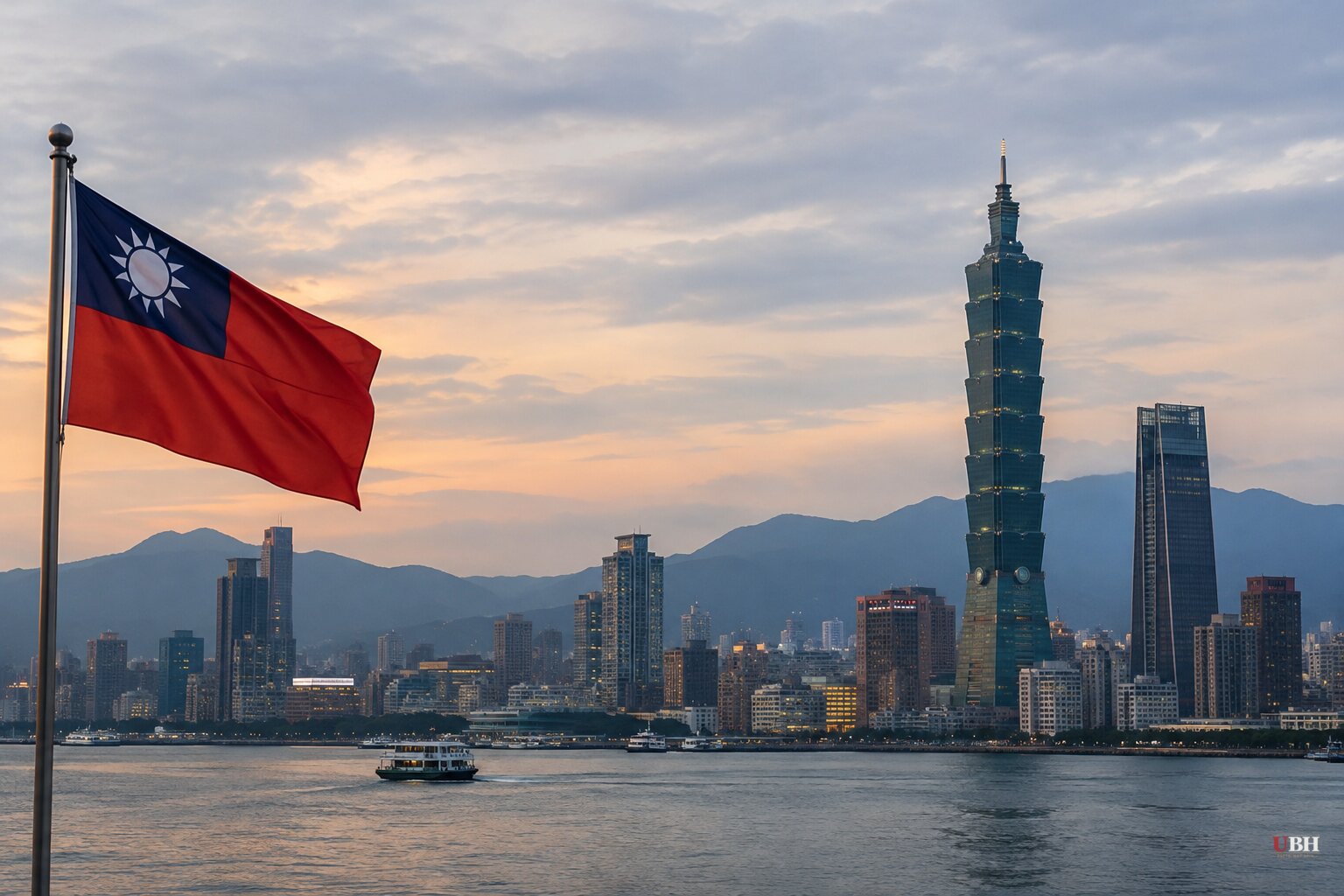
The countdown to 2027 is being pushed back. Newsweek reports that U.S. officials who had been tracking a possible Chinese invasion of Taiwan in 2027 now believe it won't come before 2028. Those officials say Xi Jinping has still ordered the People's Liberation Army to be capable of the mission next year.
The date was never a prediction. It came from Adm. Philip Davidson, then head of U.S. Pacific Command, who warned the Senate Armed Services Committee in 2021 that a Taiwan Strait crisis could come before the end of the decade, possibly in 2027. The "Davidson window" became shorthand, and it was tied to a budget request for more defensive preparation in the Pacific, including Guam.
Capability is not intent
The officials who repeated the 2027 date also said it had limits. Then-CIA director Bill Burns reaffirmed the timeline in 2023 but said having the capability is not the same as having the political will to use it. Former Defense Secretary Lloyd Austin and Adm. John Aquilino, Davidson's successor, both said conflict was neither imminent nor inevitable.
2027 matters to Beijing for its own reasons. It is the PLA's centennial, and Xi is expected to seek another term. China's stated goals run further out: a fully modernized force by 2035 and a "world-class" military by 2049.
The operational problem is old. An amphibious assault would have to cross roughly 110 miles of unpredictable water. Ian Easton, a Naval War College associate professor and author of The Chinese Invasion Threat, says those waters are truly suitable for navigation only in April and October. It is October now.
Xi pitches cooperation
Beijing is publicly selling stability. At the opening of his White House summit with Donald Trump, Xi called for extensive cooperation to avoid the "Thucydides trap," the pattern in which a rising power and an established one drift toward war.
"China and the United States, as two major countries, stand to gain from cooperation and will both lose in confrontation," Xi said. He asked that the two militaries keep up regular dialogue and improve crisis communication. He also invited 100,000 young Americans to visit China on student exchanges.
Xi borrowed Trump's slogan as well. The "great rejuvenation of the Chinese nation and making America great again" can "go hand in hand," he said.
Trump called the relationship "a truly great friendship" and pointed to "new market access for American farmers and ranchers." The two countries are still imposing tariffs on each other, and they are competing hard over AI.
Neither leader's words changed the Taiwan facts on the ground. China still claims the island, and Taiwan is a top U.S. trading partner and the leading supplier of advanced chips.
The ambiguity argument
The quiet approach to Taiwan has also opened a policy debate. For nearly five decades, Washington has declined to say whether it would intervene militarily. The policy is meant to deter Beijing from using force and Taipei from declaring independence.
A small group of realist strategists wants that changed, and wants Washington to rule out military intervention. Jennifer Kavanagh, director of military analysis at Defense Priorities, wrote in late September: "When US officials first adopted strategic ambiguity over Taiwan, China's military was no match for that of the US. This is no longer the case." The idea is still a minority view.
Michael D. Swaine, who helped organize closed-door U.S.-China crisis simulations in the 2010s, makes a related argument from another angle. Writing in War on the Rocks on Oct. 12, he says a decade of "strategic competition" has become an end in itself, driven by worst-case assumptions. In one of his simulations, the U.S. team moved a carrier away from a China-Philippines dispute to show restraint. The Chinese team read the move as positioning for combat.
Swaine argues both sides need reassurance and lasting agreements. Without them, he warns, the likely results are recurring crises, an arms race and possibly a nuclear war, most likely over Taiwan. He notes that the 2026 National Defense Strategy says the U.S. does not seek to "dominate" or "strangle" China.
A separate commentary in International Policy Digest also rejects fatalism. It argues that Beijing and Washington both have strong reasons to manage competition. It also cites Chinese figures that show how big the gap-closing task is: manufacturing value added of about 34.7 trillion yuan in 2025, first globally for 16 straight years per China's National Bureau of Statistics, and research spending of roughly 3.9 trillion yuan.
The war game nobody is funding
The sharpest warning came from people who think the invasion scenario gets too much attention. The Foundation for Defense of Democracies ran a tabletop exercise in Taiwan in late September on how Beijing could squeeze the island without invading. Organizers briefed the findings to President Lai Ching-te and his national security team.
The scenario started with cellular disruptions, information manipulation and pressure on satellite links. It then escalated to damaged undersea cables, disabled electrical substations and strained backup networks. Craig Singleton, FDD's China program director, who played China, said the goal was to make daily life unreliable and erode confidence in Taiwan's government without triggering a direct fight with the United States.
Taiwanese participants rerouted traffic and activated alternatives. The harder test, Singleton said, was whether those systems could hold for weeks while Beijing studied the response and targeted the backups. He said the Salt Typhoon telecom breaches and the Volt Typhoon pre-positioning in critical infrastructure both informed the scenario, though neither was named in the exercise packets.
Mark Montgomery, an FDD senior fellow and retired Navy rear admiral, told reporters on Tuesday, Oct. 13, that Washington rehearses military conflict over Taiwan far more than the cyber operations he considers more likely. "The Department of Defense sees it as a problem for the other federal agencies, and the other federal agencies don't have a budget or a systematic process for running these kinds of tabletops," he said.
He also said policymakers tend to underestimate how long it takes to restore systems once they are knocked out.
So the invasion date may be slipping, but Montgomery's point is that the pressure campaign has no date at all. It remains unclear whether any federal agency will be given the budget and the mandate to plan for it.
Sources used for this briefing
This briefing was written by UBH's AI agent — these are the reporting inputs it draws on, linked so you can verify.


