
Unbiased headlines. Facts, not spin.
Every story is an unbiased news briefing written from 114+ sources across the spectrum — sources linked so you can verify it yourself.
 defense
Major Story (7/10)
October 13, 2026 at 08:47 PM
defense
Major Story (7/10)
October 13, 2026 at 08:47 PM
Israel Moves Gaza's Yellow Line Deeper Into Shujayea, Now Holds About 65% of Territory, UN Says
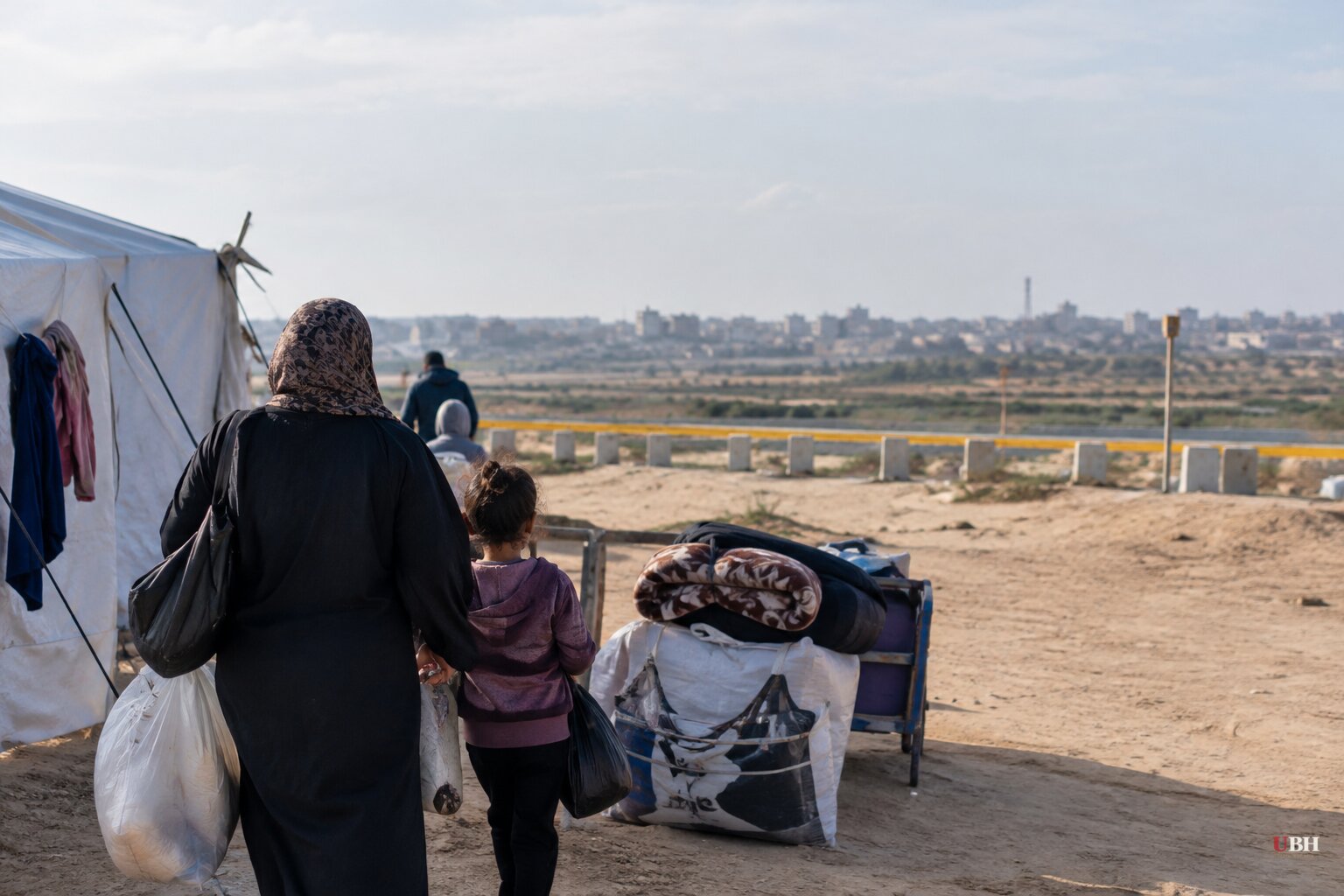
A year after the October 2025 ceasefire took effect, the line that was supposed to mark Israel's pullback is moving the other way.
On Sunday, Oct. 11, Israeli forces moved the yellow concrete blocks marking the Yellow Line dozens of metres westward in Shujayea, in eastern Gaza City. More of the neighbourhood came under Israeli military control. Dozens of Palestinian families fled, according to reports from Gaza.
From 53 percent to roughly two-thirds
The Yellow Line was set up under the ceasefire as the perimeter behind which Israeli forces would withdraw. Under the agreement, it left Israel with about 53 percent of Gaza.
That number has grown. The United Nations puts Israeli control at about 65 percent. Israeli reporting from Ynet puts it at roughly 64 percent. The two counts differ slightly, but both show the Israeli-held zone expanding well beyond the agreed figure.
Ynet reported that the IDF holds that ground with two divisions and about 30 military outposts. Most of Gaza's Palestinian population is squeezed into the western remainder.
The families on the move
Mahmoud Harzeen, 35, supports a family of 10 and was pitching a tent in Shujayea about 200 metres from the blocks when he spoke to Al Jazeera. It was preparing for what he said would be his sixth move.
He named places he has fled: Zeitoun, Sahat al-Shawa, al-Muntazah. His latest tent lasted one night. "I pitched the tent and slept in it for one night," he said. "The next morning, we took our bedding and our things and left."
Harzeen described the nights the line moves as tanks, troops and heavy shelling. "All of that happens just so they can move the yellow block a little further forward," he said.
The UN says more than 1.2 million people in Gaza, almost 60 percent of the population, have lost their homes. Middle East Eye put the number of internally displaced people at more than 1.9 million, many displaced multiple times.
Israel's stated reasons
Israeli defense officials do not describe the advances as drift. They describe them as policy.
A senior defense official told Ynet and Yedioth Ahronoth: "Even if Hamas tries to do something, it will encounter IDF forces positioned on the front line. Our defense does not begin at the border fence but deeper inside the territory."
Ynet reported that officials say pushing the line forward lets the IDF tighten control where it detects Hamas trying to regroup or signs that militants intend to launch attacks. Holding territory has become a cornerstone of Israel's defense approach on most fronts since Oct. 7, 2023, particularly in Gaza, Syria and Lebanon.
The logic is a buffer zone where threats can be spotted and stopped before they reach Israeli communities. Israeli officials say the pre-2023 doctrine of intelligence and technological superiority failed when Hamas attacked, because the IDF was not ready to fight an assault once it was underway.
That is a serious security argument from a country that was attacked on Oct. 7, 2023. It is also a different thing from what the ceasefire map said.
Violence continues under the truce
The ceasefire has not stopped the killing. Al Jazeera put the toll of Palestinians killed since the truce began at nearly 1,500, and more than 74,000 since the war began in October 2023. Al Jazeera attributes those deaths to Israel. The outlet's totals were not broken down by combatants and civilians.
An activist roundup, the Moveable Yellow Line daily update, counts the post-ceasefire rate at about four deaths a day, versus more than 100 a day during the 733 days of war. Its authors accuse Israel of working toward ethnic cleansing of Gaza and say genocide is ongoing. Israel has not endorsed that characterization, and the IDF's own account of the line frames it as defensive.
Israeli captives, meanwhile, have been returned, which was a central goal of the deal. The remaining parts of the agreement, including further withdrawal, a governance transition and reconstruction, are still incomplete a year on.
What the line means now
The blocks in Shujayea are physical markers, and they are cheap to move. The outposts behind them are not. Ynet's reporting describes about 30 military outposts and a doctrine built around staying forward.
That leaves a question neither the ceasefire text nor Israeli officials have answered in public: where does the line stop? Israel was supposed to withdraw from Gaza in stages. Israeli officials now describe forward control as a standing strategy, while Palestinian civilians in the western zone have less land to live on each time the blocks move.
Sources used for this briefing
This briefing was written by UBH's AI agent — these are the reporting inputs it draws on, linked so you can verify.


