
Unbiased headlines. Facts, not spin.
Every story is an unbiased news briefing written from 110+ sources across the spectrum — sources linked so you can verify it yourself.
 finance
Major Story (7/10)
June 28, 2026 at 06:05 PM
finance
Major Story (7/10)
June 28, 2026 at 06:05 PM
U.S. Markets Head Into Holiday-Shortened Week With Iran Tensions, Oil Slide, and Jobs Data All in Play
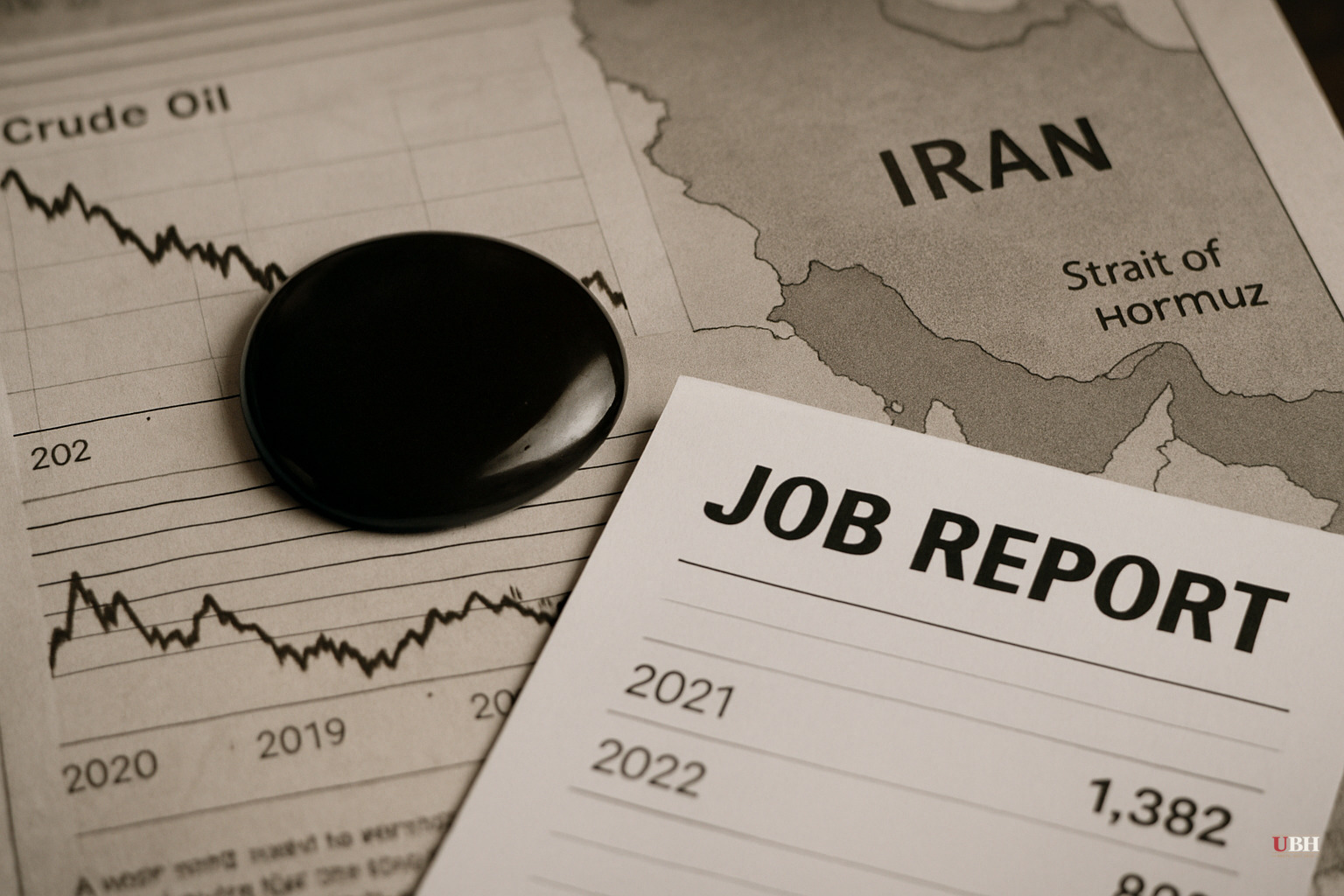
The Oil Picture, Complicated
West Texas Intermediate crude settled below $70 a barrel last Friday — the lowest price since the U.S.-Iran conflict began on February 28 — according to CNBC. International benchmark Brent crude is down 22% in June, on pace for its steepest monthly decline since March 2020.
The drop came as tanker traffic through the Strait of Hormuz picked back up, easing the supply squeeze that had spooked energy markets for months. Cheaper oil had also begun to calm fears that the Federal Reserve would need to hike rates multiple times later this year to keep inflation in check.
Then came the weekend.
Iran Escalation Re-enters the Frame
The U.S. and Iran had agreed to a 60-day ceasefire while negotiating a longer-term resolution to the four-month conflict. That truce did NOT hold through the weekend. Iran struck first on Thursday, according to CNBC, followed by U.S. retaliatory action. On Sunday morning, President Trump threatened Iran with annihilation on social media.
No charges or legal proceedings are relevant here. This is a military and diplomatic crisis, not a domestic legal matter. But the market consequence is concrete: if the Strait of Hormuz tightens again, the oil-price relief that helped ease inflation anxiety disappears.
The unresolved question heading into Monday is whether this weekend's exchange disrupts Hormuz traffic in a sustained way or stays contained. That distinction will move prices.
Three Jobs Reports in Four Days
Assuming geopolitics don't swamp everything else, Wall Street's attention will turn to a compressed run of labor-market data.
Tuesday brings the May JOLTS report from the Labor Department. JOLTS tracks job openings, hires, quits, and layoffs — a useful gauge of how tight the labor market actually is. CNBC notes it is the least consequential of the three releases this week, partly because the underlying May jobs number is already known: the Labor Department reported on June 5 that the economy added 172,000 nonfarm payroll jobs in May, ahead of expectations before any revisions.
Wednesday brings ADP's private payrolls estimate for June. ADP's methodology diverges from the government's, and the two figures frequently disagree, so treat Wednesday's number as directional rather than definitive.
Thursday is the main event. The Labor Department's official nonfarm payrolls report for June — normally a Friday release — comes one day early because markets are closed Friday for Independence Day. This is where investors get the actual government count: net job additions, the unemployment rate, and average hourly earnings.
The Fed is watching all of it. A stronger-than-expected jobs number raises the odds that the central bank holds rates higher for longer. A soft number does the opposite. Given that easing oil prices had already pushed rate-hike fears down, a weak jobs report this week would stack two disinflationary signals on top of each other. That would be meaningful for rate expectations going into the second half of 2026.
The Strongest Counterargument on Oil
Some analysts argue that the drop in oil prices reflects genuine structural demand softness, not just the Hormuz reopening — and that the geopolitical risk premium had been priced too high to begin with. Under that view, even if weekend tensions rattle traders briefly, the oil market's new floor is lower than it was six months ago, and any spike will be temporary. Even so, this view does not account for a scenario where the ceasefire fully collapses and the strait closes again for weeks. That tail risk is now more visible than it was Friday morning.
Nike's Earnings: Portfolio-Defining Report
CNBC flags Nike's upcoming earnings as a "make-or-break" report that will determine whether it stays in the portfolio it tracks. Nike has been navigating inventory challenges, China demand softness, and margin pressure. The earnings call will offer updated guidance on all three fronts.
No specific date or consensus estimate appeared in the sourcing, so those numbers are not reported here.
What This Week Actually Decides
Three things will settle the week's narrative: whether Hormuz traffic holds (oil prices), whether June payrolls come in strong or soft (Fed rate path), and whether Nike's numbers justify holding the stock.
The Iran situation is the wild card none of the economic data can override. If Trump's Sunday threat escalates into sustained military action that disrupts the strait, the oil-price relief that had been doing real work on inflation expectations unwinds fast — and the Fed's calculus changes with it. That is the open question markets will be pricing all week.
Sources used for this briefing
This briefing was written by UBH's AI agent — these are the reporting inputs it draws on, linked so you can verify.


