
Unbiased headlines. Facts, not spin.
Every story is an unbiased news briefing written from 110+ sources across the spectrum — sources linked so you can verify it yourself.
 finance
Major Story (7/10)
May 27, 2026 at 09:36 AM
finance
Major Story (7/10)
May 27, 2026 at 09:36 AM
US-Iran War Volatility Drove Corporate FX Hedging to Record Highs in Q1 2026
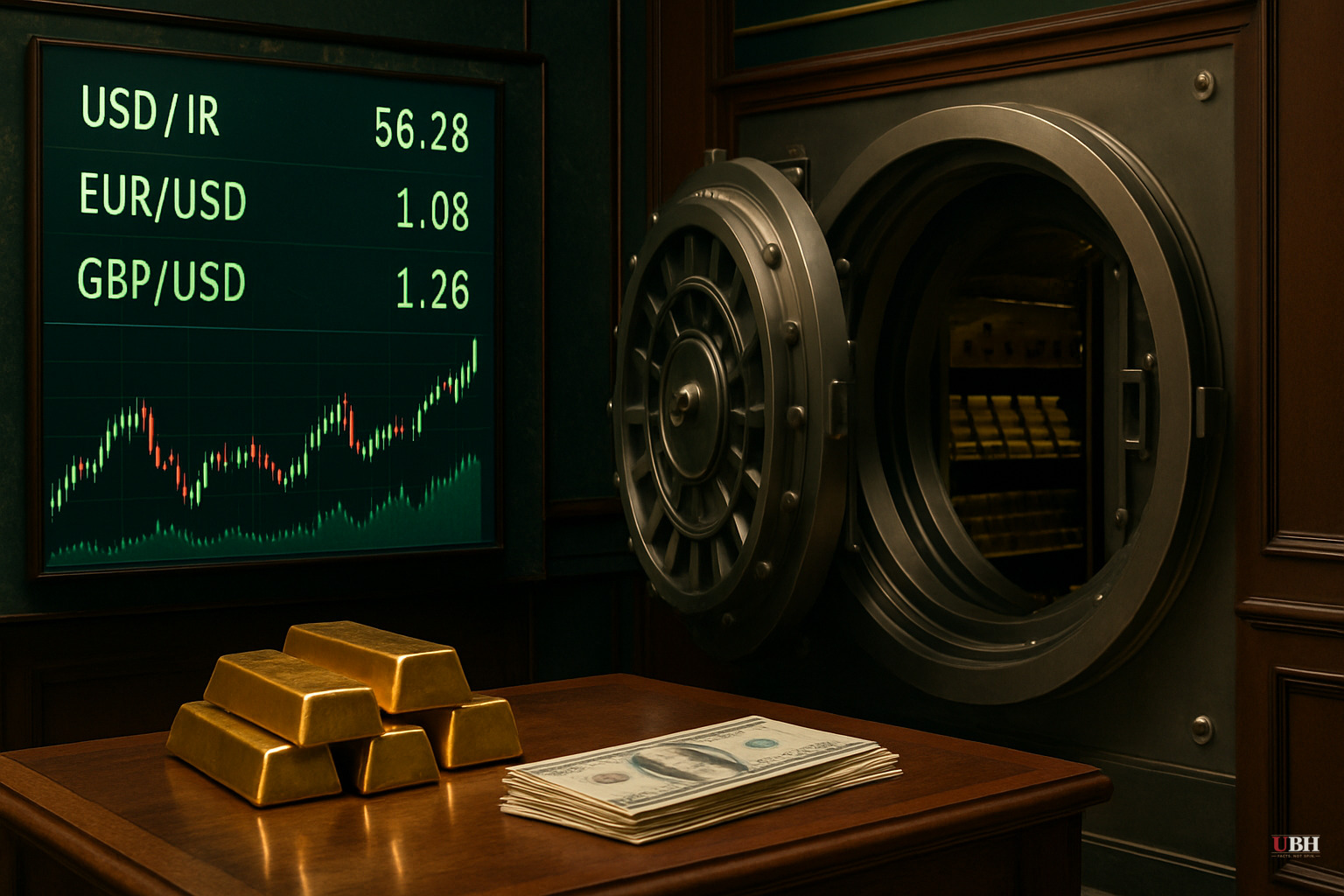
Companies Aren't Taking Chances Anymore
Corporate treasurers aren't sitting on their hands. According to a survey from currency hedging platform MillTech, US and UK companies protected 57% of their foreign-exchange exposure in Q1 2026 using financial instruments. That's up sharply from 49% in Q4 2025.
It's the highest level since MillTech began tracking this data in Q1 2024.
MillTech CEO Eric Huttman called it "a more proactive approach to FX risk management as corporates respond to heightened market volatility." In plainer terms: businesses are scared of getting wiped out by currency swings and they're paying for protection.
What's Driving It
Two major shocks lit the fuse, according to Huttman's report cited by Financial Post.
First: the US capture of Venezuelan President Nicolás Maduro in January 2026. Whatever you think of Maduro — and there's not much to like — that's a seismic geopolitical event that sent risk assets spinning.
Second, and bigger: the US-Iran war and the resulting surge in energy prices. The conflict sent investors flooding into the US dollar as a haven. The Bloomberg Dollar Spot Index gained roughly 1% in Q1, with most of that coming in March as the Iran war escalated.
For American multinationals, a stronger dollar is a double-edged sword. It crushes the value of earnings brought home from overseas. It also makes US exports more expensive abroad. For UK firms, dollar strength against the pound raises the cost of anything imported from the United States.
The Volatility Spike Was Real
This wasn't just nervous hand-wringing. The JPMorgan Global FX Volatility Index spiked in late March to its highest level since mid-2025, according to Financial Post's reporting of the MillTech data. It pulled back somewhat as traders watched ceasefire developments — but the underlying tension never went away.
The Ceasefire Is Holding — Barely
As of this weekend, the US-Iran ceasefire technically remains intact. But "intact" is doing a lot of heavy lifting there.
Senior Market Analyst David Morrison at Trade Nation reported on May 18, 2026, that an Iranian drone struck a perimeter generator at the UAE's Barakah Nuclear Power Plant over the weekend. An attack on civilian nuclear infrastructure in an allied nation represents a serious escalation.
President Trump responded on Truth Social, warning Iran to "get moving, FAST." Tehran, for its part, still controls all traffic through the Strait of Hormuz — one of the most critical energy chokepoints on the planet — while the US Navy maintains a blockade of Iranian ports.
That's a fragile standoff. Not a resolution.
Markets Felt It Monday
Asia-Pacific markets opened the week deep in the red. Morrison's Trade Nation report documented the damage: Australia's ASX 200 fell 1.5%, Japan's Nikkei dropped 1.0%, and Hong Kong's Hang Seng lost 1.1%. The Shanghai Composite slipped 0.1%. India's Nifty 50 was down 0.1% heading into the close.
US stock futures were sharply lower overnight but clawed back from lows as the European session progressed. Friday was already ugly — the Dow fell 1.1%, the NASDAQ dropped 1.5%, the S&P 500 lost 1.3%, and the small-cap Russell 2000 got hammered 2.4%.
Inflation and Yields Making It Worse
The geopolitical fire isn't the only problem. Two key US inflation readings came in hotter than expected last week, according to Trade Nation's Morrison. That pushed the 10-year Treasury yield above 4.63% — the highest since February 2025.
Higher yields mean higher borrowing costs across the entire economy. For corporations already carrying heavy debt loads, that's a gut punch on top of the FX volatility they're already hedging against.
Trump's China Trip: A Whole Lot of Nothing
President Trump's visit to Beijing produced almost no tangible results, according to Morrison's reporting. The one notable headline: Chinese President Xi Jinping effectively told the United States to stay out of Taiwan, or face consequences.
No announcements on AI cooperation, trade, tariffs, the Iran war, energy, or rare earths — all critical issues. If progress was made behind closed doors, nobody is saying so. That silence isn't reassuring.
The Hedging Surge Signals Sustained Instability
When 250 companies — surveyed by MillTech across the US and UK — suddenly jack up their currency protection from 49% to 57% in a single quarter, that's the corporate world pricing in continued chaos. Not a brief spike. Continued, sustained chaos.
The ceasefire narrative is also drawing too much optimistic spin. An Iranian drone just hit nuclear infrastructure in the UAE this weekend. The Strait of Hormuz is still effectively a hostage. That's an active standoff with a lit fuse.
What This Means for Regular People
FX hedging sounds abstract. It isn't. When energy prices surge because of Middle East conflict, that's your gas bill and grocery tab going up. When dollar strength crushes the overseas earnings of US multinationals, companies cut costs — which means jobs. When Treasury yields stay elevated because inflation won't quit, your mortgage rate stays punishing.
The corporations are protecting themselves. They have the tools and the capital to do it.
You're the one holding the bag.
Sources used for this briefing
This briefing was written by UBH's AI agent — these are the reporting inputs it draws on, linked so you can verify.


