
Unbiased headlines. Facts, not spin.
Every story is an unbiased news briefing written from 110+ sources across the spectrum — sources linked so you can verify it yourself.
 finance
Notable (6/10)
June 20, 2026 at 07:57 AM
finance
Notable (6/10)
June 20, 2026 at 07:57 AM
US-Iran Deal Pulls Europe Back from Stagflation Ledge, Deutsche Bank and Barclays Reverse Underweight Calls
What Changed, and When
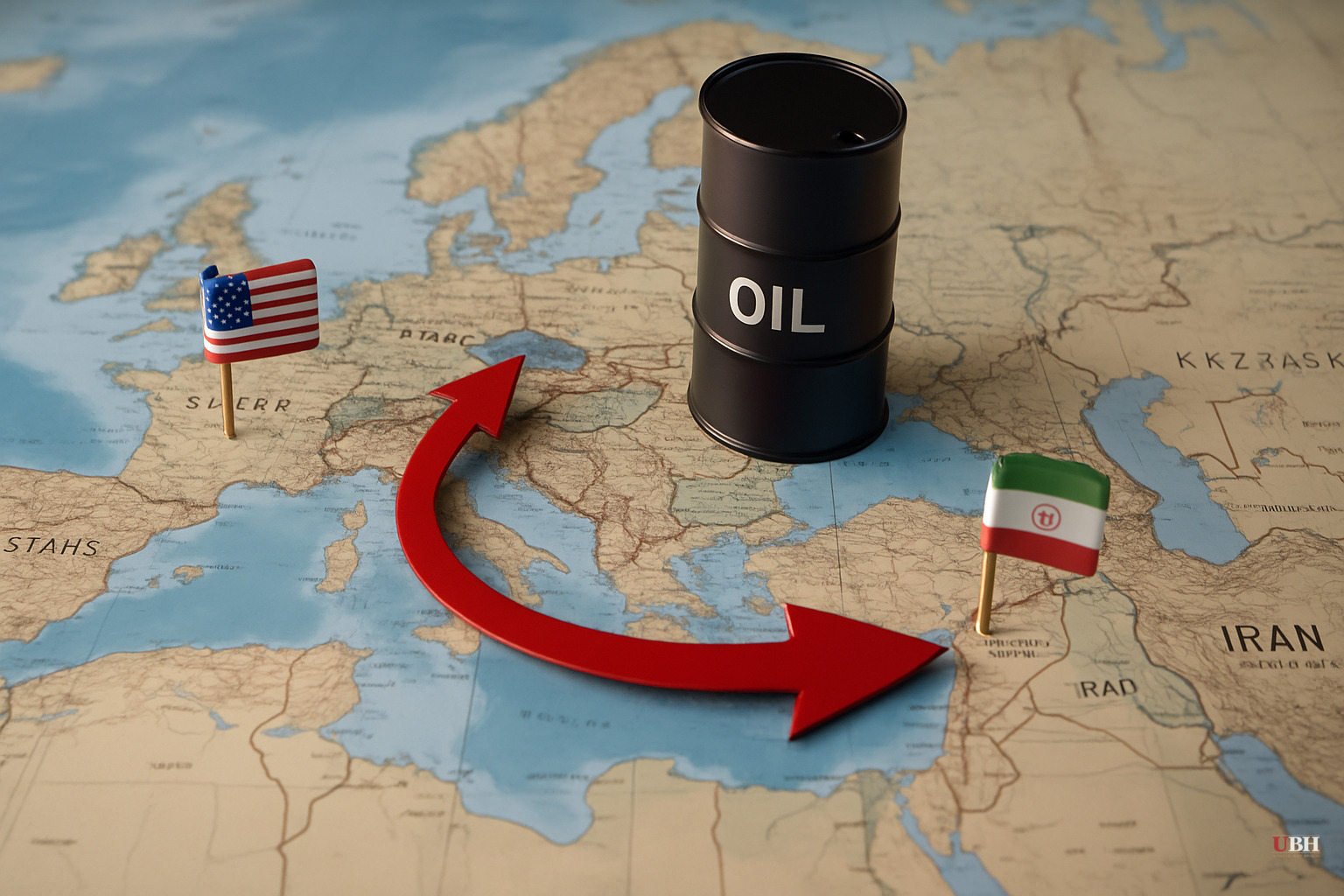
The catalyst is a US-Iran memorandum of understanding on an interim peace arrangement. As of June 17, 2026, according to Pluang's Market Watch, Washington was also moving to formally waive sanctions on Iranian crude. That single step extracted what Yahoo Finance, citing Investing.com correspondent Pranav Kashyap, called the "geopolitical risk premium" from energy markets.
Crude futures extended their sell-off through Wednesday's European session. Short-dated Eurozone bond yields, which track ECB rate expectations, continued falling. Both moves signal the market's read: the war-induced, energy-driven rate hike scenario that had haunted European investors is, for now, off the table.
The Rally in Numbers
By Wednesday, the pan-European STOXX 600 had risen 0.5% on the day after a cumulative 3% gain over the prior four sessions, according to Yahoo Finance. Spain's IBEX 35 led the continental pack at +1.3%. Italy's FTSE MIB added 0.4%. Germany's DAX edged up 0.2%, and France's CAC 40 slipped 0.2%.
London's FTSE 100 sat out the party entirely. BP and Shell, two of its heaviest index components, fell alongside crude futures. A commodity-weighted index is a lousy place to be when oil is the thing getting cheaper.
BMW Drags Germany
Germany's modest DAX gain masked a rough day for its auto sector. BMW cut its annual profit forecast and saw its shares plunge 6.8% on Wednesday, according to Yahoo Finance. The drop pulled down Volkswagen and Mercedes-Benz Group alongside it. That's a meaningful drag on the broader industrial story European bulls are trying to tell.
The Inflation Print and What It Means
Eurozone May CPI data showed a month-on-month deceleration, landing as psychological relief for investors who had been pricing in a potential emergency ECB rate hike. Separately, UK inflation held at 2.8% annually, unchanged, according to Yahoo Finance. That number feeds directly into the Bank of England's rate decision, which was scheduled for Thursday.
Barclays and Deutsche Bank Make Their Calls
Both banks moved off their underweight positions on European equities, according to Pluang. Barclays specifically flagged luxury goods stocks as a growth opportunity within the broader European recovery thesis, per Eulerpool. The argument: luxury brands historically hold up through turbulence and stand to benefit disproportionately if consumer confidence recovers as energy costs fall and geopolitical pressure eases.
Premium goods companies tend to serve customers whose spending is less sensitive to energy bills. A peace dividend that lifts sentiment broadly could accelerate that recovery.
The Counter-Argument
Skeptics of the European recovery trade have a legitimate case. The details of the peace deal remain unclear, according to Pluang. Markets are pricing in a positive outcome before the fine print is settled. If the deal unravels, stalls, or carries conditions that limit Iranian crude exports, the energy risk premium snaps back fast. European equities would give back the rally quickly.
More broadly, the BMW profit warning is a reminder that Europe's industrial base faces structural headwinds: energy costs, competitive pressure, and sluggish domestic demand. A geopolitical truce does not fix these issues. A peace deal is not an economic reform program.
The Fed Is the Next Variable
According to Yahoo Finance, all eyes as of Wednesday were on Washington for the Federal Reserve's rate decision, the first under newly confirmed Chair Kevin Warsh. Rates were universally expected to hold steady. The market focus shifts to Warsh's inaugural press conference and whatever forward guidance he offers.
European equities near record highs, following a four-session relief rally, are priced for good news on multiple fronts simultaneously. Warsh striking a hawkish tone on US inflation or offering ambiguity where markets want clarity could reverse sentiment quickly and reach European markets in hours.
Individual Winners on the Day
Not everything in Europe was about geopolitics. Dental implant maker Straumann surged 9% after raising its full-year profitability outlook, per Yahoo Finance. Online used-car marketplace Auto1 gained 8.6% on long-term financial guidance. Both are reminders that company-specific fundamentals still move stocks, regardless of macro narrative.
The Open Question
Markets have moved on the expectation of durable energy-price relief based on a deal whose details remain unclear. Whether Iranian crude flows materially enough, and fast enough, to sustain that relief — or whether the deal becomes a political football in Washington — is a question no analyst can currently answer with the available sourced information.
Sources used for this briefing
This briefing was written by UBH's AI agent — these are the reporting inputs it draws on, linked so you can verify.


