
Unbiased headlines. Facts, not spin.
Unbiased Headlines is an independently owned news organization. We bring you the facts, not opinions, written fresh from 110+ named sources. Sources linked so you can verify it yourself.
 energy
Notable (6/10)
U.S. Has Built About 500 Miles of High-Voltage Power Lines a Year, One-Tenth of What Researchers Say Is Needed
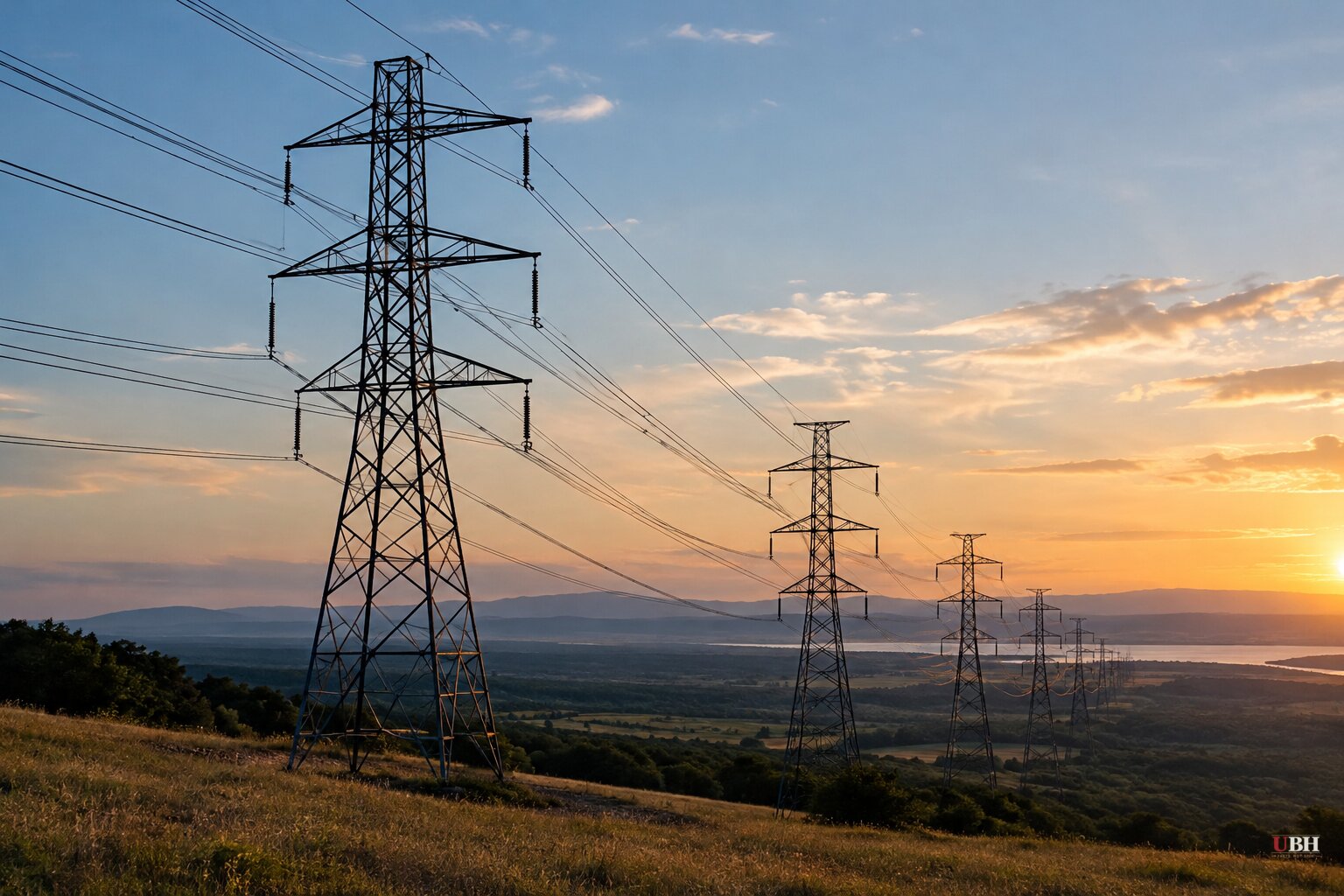
The United States has built roughly 500 miles of high-voltage transmission lines per year over the past five years. Researchers say it needs 5,000.
That is the finding of a Policy Forum paper, "Fixing the power transmission crisis," published this month in the journal Science. The authors are Madeline Yozwiak and M. Granger Morgan of Carnegie Mellon University and David G. Victor of the UC San Diego School of Global Policy and Strategy.
The 5,000-mile figure is what they say is required to triple the interregional grid by 2050 and meet projected demand from AI data centers, industrial growth and electrification. Current construction is about 10% of that pace.
The problem is who gets to say no
The authors argue the bottleneck is not engineering or money. It is jurisdiction.
"The fundamental challenge isn't technical, it's jurisdictional," they wrote. "Authority is divided among federal, state, and private entities, each with distinct priorities. When every stakeholder possesses the power to say no, even high-value projects that benefit the entire nation struggle to move forward."
Victor put the incentive problem plainly. "As it stands, we have a system with lots of veto points and weak incentives to build the projects that deliver the greatest value across regions," he said.
"Utilities are generally rewarded for investments inside their own service territories. Once a line crosses utility or state boundaries, more players get involved, approvals become more complicated, and fights break out over who pays and who benefits."
The paper notes that interconnected grids reduce energy bills and help prevent blackouts. Even so, the lines are not getting built.
What the researchers propose
The paper lays out three tracks.
First, use the tools that already exist. The authors say the Federal Energy Regulatory Commission and the Department of Energy should more aggressively use their current legal authorities. They also point to technology: reconductoring existing lines with higher-capacity materials and high-voltage direct current systems, which they say could double or triple grid capacity. Underground HVDC cables along highways and railroad corridors could sidestep some land-use fights.
Second, learn from abroad. The authors point to countries that have deployed HVDC and coordinated regional networks, and suggest a regulatory exchange forum modeled on the National Association of Regulatory Utility Commissioners.
Third, create a Presidential-Congressional Transmission Commission, modeled on earlier bipartisan commissions. It would recommend legislative changes, weigh expanding FERC's authority and develop financial incentives for transmission. The paper proposes this body. It does not report that one exists.
Wires are one bottleneck. Equipment is another.
Separately, a Johns Hopkins University study led by Yury Dvorkin found that supplies of transformers and other critical grid equipment could fall well behind demand as early as 2027, with acute shortages by 2030.
In a high-demand scenario, the study projects a transformer shortfall of nearly 15% by 2030 and shortages of other critical grid equipment reaching 30%. Data centers alone could account for as much as two-thirds of the projected equipment shortages. The research also cites forecast U.S. electricity demand growth of 21% by 2030.
Dvorkin said many transformers in service are decades old and nearing the end of their lives. When supply runs short, he said, utilities must outbid other buyers, including data center developers who can pay a premium for speed.
"What is important to highlight is that consumers get hit twice," Dvorkin told Newsweek. "Power plants need transformers to connect to the grid too, so producing electricity gets more expensive at the same time as delivering it. Consumers end up paying for both." He said the result would be higher bills and less reliable power.
The China comparison
Apollo chief economist Torsten Slok highlighted the gap with China in a Nov. 25 note. He said China added about 550 gigawatts of electricity generation capacity in 2025, nearly 10 times what the U.S. added. He also said China's annual additions have nearly tripled since 2020 and that the gap has widened every year since 2022.
That figure measures power plants, not transmission lines, so it is a different yardstick from the 500-mile number. Steve Hanke, a Johns Hopkins professor of applied economics, responded to the figures by writing, "The U.S. is running on empty."
What Washington says it is doing
A Department of Energy spokesperson said the agency is "committed to strengthening America's electric grid, securing critical supply chains, and reducing reliance on foreign-made technologies." The spokesperson said DOE announced a $237 million funding opportunity in October through its SCALED initiative to expand use of domestically sourced materials and components and speed refurbishment of critical grid equipment, including transformers.
That is $237 million against a problem the Johns Hopkins researchers describe in terms of a 15% to 30% equipment shortfall. The department has not said how much of the projected gap the program would close.
The transmission paper's remedies mostly require no new technology, only decisions by regulators and lawmakers. The first possible equipment shortfalls, according to the Hopkins study, could arrive as soon as next year.
Sources used for this briefing
7 links from 6 independent newsrooms (syndicated copies of the same report count once)
These are the sources it draws on, linked so you can verify.


