
Unbiased headlines. Facts, not spin.
Unbiased Headlines is an independently owned news organization. We bring you the facts, not opinions, written fresh from 110+ named sources. Sources linked so you can verify it yourself.
 energy
Major Story (7/10)
Event date: November 18, 2026 ·
Brent Settles at $95.44, Down About 20% in November, as Analysts Split Over Whether a 2027 Oil Surplus Will Materialize
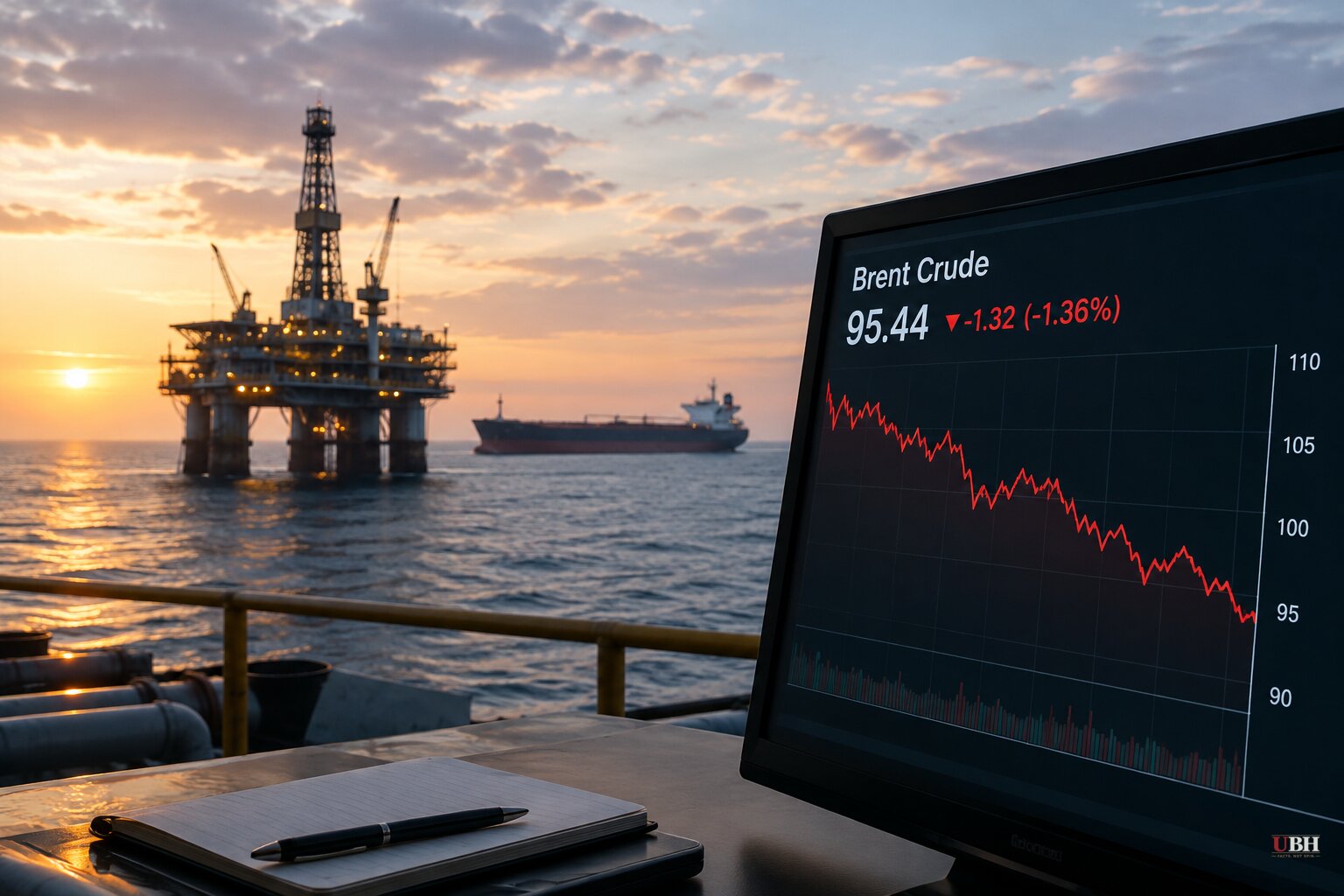
Since the Iran war began in late February, crude has gone from about $72 a barrel to a spring peak of $126, and now to $95.44. That was Friday's Brent settlement. West Texas Intermediate closed at $83.08.
The new fight is not over prices. It is over what comes next.
The surplus case
Brent is down about 20% this month from late October, when the contract hit $118. WTI is down about 21% after topping $104. U.S. retail gasoline has fallen well below $4 a gallon, and diesel is below $6.
The selloff rests on the International Energy Agency's November oil market report, published Nov. 13. Global supply rose 2.3 million barrels a day in October to 105.4 million, following a 3 million increase in September. That put supply above demand for the first time since the war started.
The agency now expects fourth-quarter supply to average about 105 million barrels a day, 1.7 million above forecast demand. It had previously expected a deficit. It raised its fourth-quarter supply estimate by 3.3 million barrels a day.
Demand is moving the other way. The IEA expects consumption to fall 2.7 million barrels a day this year to 102.3 million, blaming high prices, electrification and fuel efficiency. A 2 million barrel recovery is forecast for 2027.
Goldman Sachs Research published its own outlook on Nov. 18. It forecasts Brent averaging $88 in 2027 and easing to $78 by December of that year. It assumes no diplomatic breakthrough and no re-escalation that damages oil infrastructure. Goldman puts the 2027 surplus at 2 million barrels a day. Kpler sees 3 million.
"If the recovery in the Arabian Gulf region continues, we're going to have oversupply," said Bob McNally, president of Rapidan Energy and a former energy adviser to President George W. Bush.
The numbers that still look tight
The recovery is real but incomplete. Gulf exports, excluding Oman, hit 18.4 million barrels a day in October. That is still 26% below prewar levels, because attacks on tankers in the Strait of Hormuz have continued. Gulf refined product and LPG exports remain at about half of prewar levels.
Inventories tell a mixed story. Observed global stocks rose 52 million barrels in October, the first monthly increase since June. Most of that was oil on tankers, up 86 million barrels. Onshore stocks kept falling, and OECD inventories are at their lowest since at least 2016. Global inventories are down a cumulative 462 million barrels since the war began.
The IEA's World Energy Outlook 2026 estimated cumulative Middle East supply losses at 2.8 billion barrels by the end of October. "The Hormuz crisis has delivered a huge shock to the system," IEA Executive Director Fatih Birol said. "I don't see any credible pathway for the energy world to return to the way it was before."
IEA member countries are also speeding up releases of emergency stocks. That adds another 71 million barrels by the end of February, including more than 20 million barrels of diesel.
The skeptics
Not everyone buys the glut. Giovanni Staunovo, a UBS strategist, wrote that the market has become "too comfortable with the supply outlook." He said the November selloff has likely gone too far. "The rebound in Gulf exports should not be mistaken for a normalization of the oil market," he said.
David Goldwyn, who served as the State Department's special envoy for international energy under President Barack Obama, was blunter. "If pigs had wings, they'd fly," he said of the surplus forecast.
McNally expects a wide range instead. He said crude would trade between $70 and $80 in calm periods and could spike well above $100 if the conflict escalates. "We think there will be more disruptions, more risk and that those surpluses won't materialize next year," he said.
The IEA itself says downside risks "persist as attacks on shipping undermine maritime security." Goldman's base case also assumes no major change in the tensions.
The political variable
In October, investors were pricing in the risk of a major military escalation in the Persian Gulf after the U.S. midterms. Trump has not launched renewed strikes on Iran since then. Earlier this month he told reporters the war was "effectively over," and Brent dropped to $89.66, its lowest since late August. It has since climbed back to the mid-$90s.
Trump has also told Fox News he might launch renewed strikes on Iran after the new year. Reports emerged this month that senior Iranian officials believe the U.S. could be planning further strikes.
That leaves the 2027 surplus forecasts tied to an unanswered question. Goldman and the IEA assume Gulf flows keep climbing. Whether Gulf tankers keep moving through Hormuz, or a strike on Iran in the new year reopens the supply shock, is not something any forecast can settle.
Sources used for this briefing
7 links from 7 independent newsrooms (syndicated copies of the same report count once)
These are the sources it draws on, linked so you can verify.


