
Unbiased headlines. Facts, not spin.
Unbiased Headlines is an independently owned news organization. We bring you the facts, not opinions, written fresh from 110+ named sources. Sources linked so you can verify it yourself.
 energy
Major Story (7/10)
Event date: September 30, 2026 ·
OPEC+ Expected to Hold First-Quarter 2027 Oil Targets Flat as Iraq Disputes Its Capacity Estimate
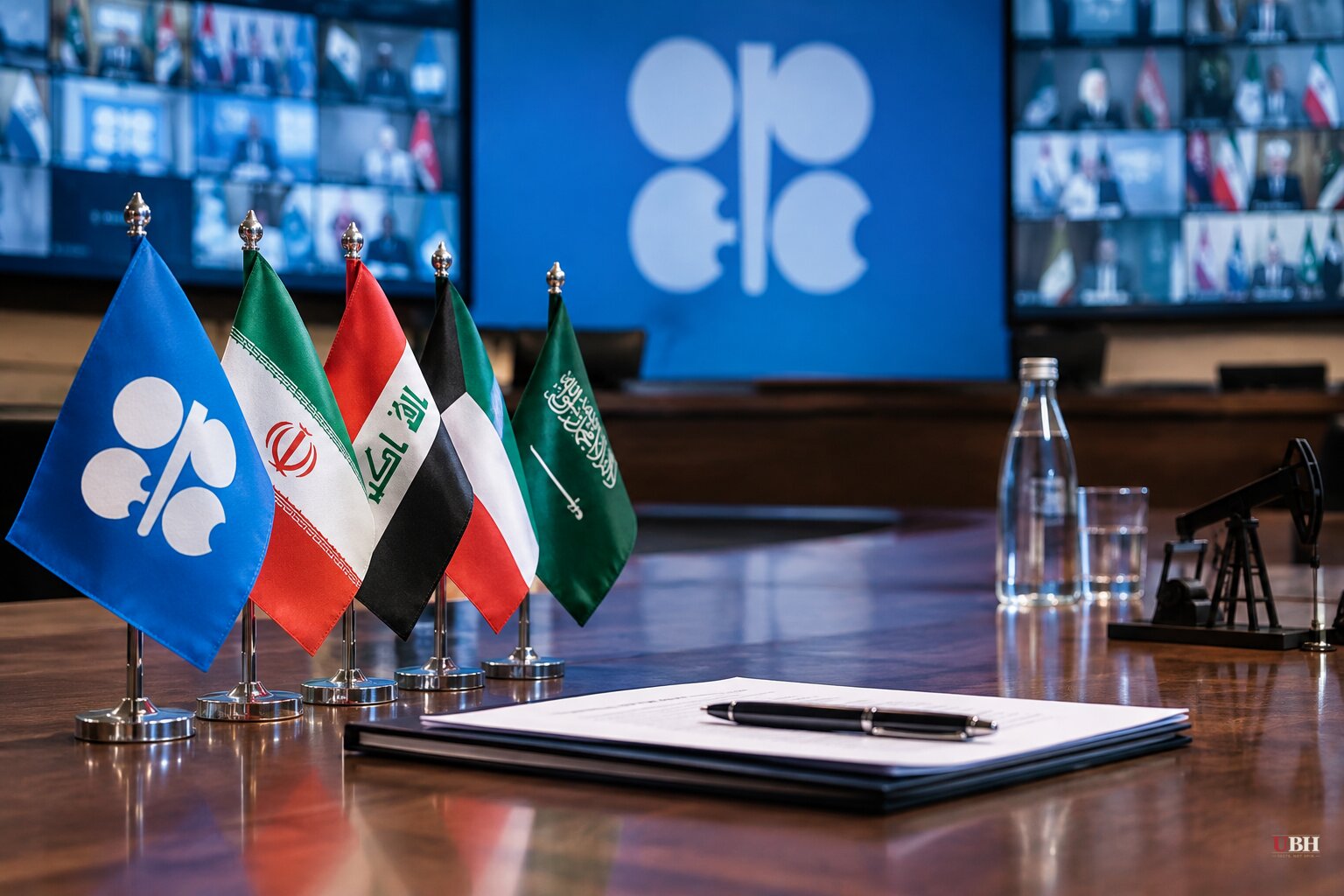
Since the United Arab Emirates quit OPEC and OPEC+ earlier this year, the group has struggled to hold itself together, and today's meeting is another test.
OPEC+ ministers are scheduled to begin a series of virtual meetings at 1300 GMT today, Nov. 29 (8 a.m. ET). Delegates told reporters the group has an agreement in principle to keep first-quarter 2027 output targets where they are. Two delegates said Saudi Arabia and its partners are due to ratify the plan during the online sessions. Nothing has been formally announced yet.
The plan that fell apart
OPEC+ had intended to set new 2027 targets. To do that, it commissioned its first-ever review of what each member can actually produce.
That review is now the problem. Sources familiar with the talks said Iraq and Kazakhstan challenged their assessments as too low. Preliminary findings put Iraq's capacity at 4.9 million barrels per day, and Baghdad is not happy about it.
Iraqi Oil Minister Basim Mohammed Khudair said Friday that Baghdad is negotiating with OPEC for a higher quota to support development of its energy infrastructure. Iraq, OPEC's second-largest producer, has warned it could leave the group if its quota is not raised.
Kazakhstan is also pushing for a higher estimate, according to sources familiar with the discussions.
Russian Deputy Prime Minister Alexander Novak said Wednesday the capacity review would be completed by the end of the year. Ministers are expected to see today what stage it has reached.
A freeze that changes little on paper
A freeze is unlikely to move physical supply much. Delegates told Bloomberg that most members are already pumping close to their maximum, so the targets are not the binding constraint for most of them.
The constraint is the war. The U.S.-Iran conflict has disrupted Gulf exports for much of the year. Bloomberg's delegates said recent efforts have restored oil flows to pre-war levels, though the market outlook remains clouded. Rapidan Energy Group also expects no change to targets, citing uncertainty over how long the war lasts and what it does to crude output and exports.
The International Energy Agency said last week the war has cost 2.8 billion barrels of cumulative supply from the Persian Gulf. The agency also said stronger energy-security measures adopted in response to the conflict could cut global oil demand by more than 4% by 2035, compared with its scenario based on governments' stated policies.
The risk to supply has not gone away. Iran International reported renewed attacks on tankers in the Strait of Hormuz and on Saudi energy infrastructure.
Prices are sliding toward a surplus
Oil rallied above $100 a barrel this year on the war and the disruptions. It has eased in recent weeks as Gulf exports rose and traders began pricing in a 2027 surplus. Bloomberg's delegates noted that crude futures have fallen almost 20% this month.
Brent settled Friday at $95.44, down $1.13, or 1.2%. It touched its highest level since Nov. 9 earlier in the session but stayed under $100. Brent gained about 3% on the week. U.S. West Texas Intermediate traded at $83.08, down 60 cents from Wednesday's close. There was no Thursday settlement because of Thanksgiving. WTI lost 0.9% on the week.
Rystad Energy projects a global surplus of about 5 million barrels per day next year, roughly 5% of world demand, even if Gulf supplies recover only partially. Lower prices mean lower revenue for every member of the alliance.
Fewer members, more rivals
The UAE left because it argued for years that its quota did not reflect what it had invested in capacity. Angola left OPEC at the start of 2024. Now Iraq is making a similar argument over a number it considers too low.
The United States is also taking market share and, per Reuters' reporting, benefiting from the group's divisions. Reuters also reported Friday that the Trump administration encouraged Iraq and Venezuela earlier this year to consider leaving OPEC. The White House's reasoning is not laid out in that reporting.
A quota freeze postpones the argument. It does not settle it. If the capacity review lands by year-end as Novak says, Iraq and Kazakhstan will see whether their numbers move before anyone sets targets beyond March. Whether Baghdad stays in the group if they do not is the open question.
Sources used for this briefing
7 links from 7 independent newsrooms (syndicated copies of the same report count once)
These are the sources it draws on, linked so you can verify.


