
Unbiased headlines. Facts, not spin.
Every story is an unbiased news briefing written from 110+ sources across the spectrum — sources linked so you can verify it yourself.
 tech
Notable (6/10)
June 5, 2026 at 11:59 PM
tech
Notable (6/10)
June 5, 2026 at 11:59 PM
U.S. Government Stake in OpenAI Has Been in the Works Since 2025 — Trump Confirmed It Friday
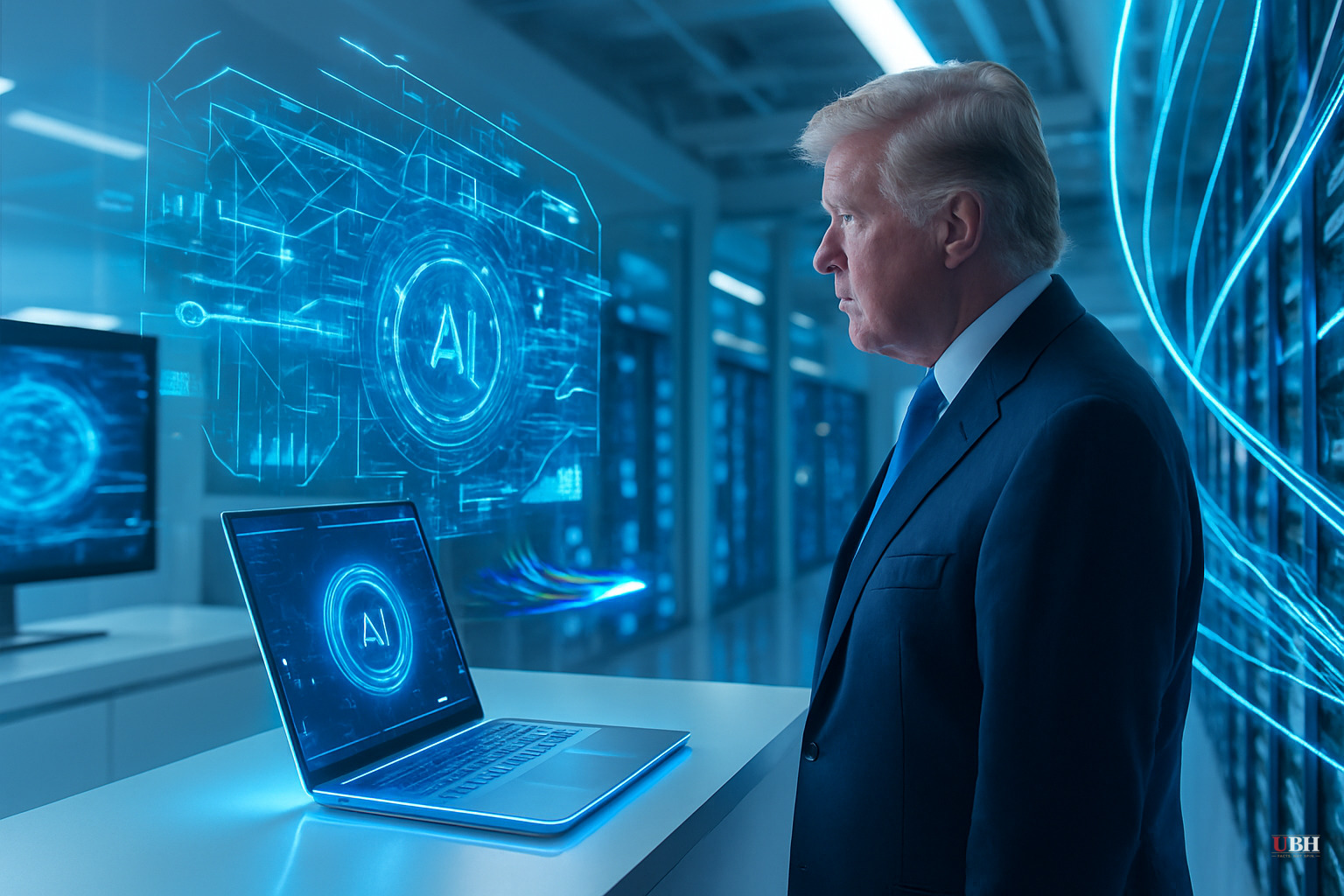
Since our prior coverage established OpenAI's ongoing federal review process and its AI-designed model development, a separate development has been confirmed: the Trump administration is actively negotiating to take an equity stake in OpenAI.
The Government as an OpenAI Shareholder
CNBC confirmed Friday that OpenAI CEO Sam Altman and White House officials have been in talks for more than a year about a potential government ownership stake in the company. Altman first floated the concept to the Trump administration in 2025, according to a source familiar with the discussions who spoke to CNBC on condition of anonymity.
The specific mechanism being discussed: OpenAI would donate equity to the U.S. government to seed what OpenAI called a "Public Wealth Fund" in its April 2026 policy proposal. Per that proposal, the fund would "invest in diversified, long-term assets" and could distribute returns directly to American citizens.
President Trump addressed it directly Friday while aboard Air Force One. "There are concepts where pieces could be given to the American public, where the American public essentially becomes a partner," he said. He added he is meeting with AI companies "in the very short, very near future."
Trump signed an executive order in February calling for a federal sovereign wealth fund.
The Stakes of Government Ownership
OpenAI is currently in the middle of a high-stakes conversion from nonprofit to for-profit entity. The company is valued at roughly $300 billion. A government equity stake — even a small one — would make the U.S. federal government a financial beneficiary of every AI product OpenAI ships. That's a level of entanglement between a private tech company and the federal government with almost no modern precedent.
Sen. Bernie Sanders, I-Vt., pushed back on the proposal, per CNBC's reporting. The concern from the left is that this benefits corporate interests. The concern from the right should be equally loud: the government becomes a shareholder with financial interests tied to a private company's success. That creates conflict of interest in both regulation and competition. If the feds own a piece of OpenAI, how does that affect their posture toward Google, Microsoft, Anthropic, or any other AI competitor?
No official investment terms have been decided. The details are subject to change, per CNBC's source.
Masayoshi Son's Superintelligence Timeline Just Got Shorter
Separately, SoftBank CEO Masayoshi Son told CNBC earlier this week that OpenAI's next model is being designed by another AI model — which he called a sign of "superintelligence." Son said he spoke directly with Altman and OpenAI engineers who confirmed the self-designing model dynamic.
"Engineers will no longer be smart enough to design the next model," Son said. "So once that happens, the model generates the next model... and it's going to be exponentially smarter than all of us."
Son's revised timeline for artificial superintelligence: two years, not the ten-year window he publicly stated in 2024. He told CNBC he was "trying to be conservative because people get shocked" when he gave the 10-year estimate — his actual internal estimate was four years. Now he's moved it to two.
OpenAI declined to comment on unreleased models.
Coverage in June detailed this development. The new wrinkle from Son is the timeline compression and the direct confirmation from OpenAI engineers that the recursive design process is already live on future models.
Meanwhile, Amazon Is Automating the Physical World Too
While the AI governance debate plays out in Washington, Amazon quietly unveiled the next-generation Proteus warehouse robot Thursday at its "Delivering the Future" event in London. The new Proteus responds to natural language commands — workers direct it in plain speech, no programming required.
The original Proteus launched in 2022 and is currently running in 25 U.S. fulfillment centers. The new version rolls out in Europe in the first half of 2027, backed by a 10 billion euro ($11.6 billion) investment commitment to modernize European fulfillment operations.
Amazon has cut 14,000 corporate workers (October) and another 16,000 (January), explicitly citing AI-driven efficiency as the reason. CEO Andy Jassy has been blunt in memos to staff: Amazon expects its total corporate headcount to shrink in the coming years as AI takes over more functions.
Amazon executive John Boumphrey told CNBC that robots have "driven up employment rather than the reverse" — a claim that becomes harder to defend when the company simultaneously announces tens of thousands of layoffs.
What Happens Next
The OpenAI-government equity talks represent a significant shift in how the federal government views its relationship with AI companies. A government that owns part of a leading AI company is not a neutral regulator of that same industry. OpenAI gains a powerful political ally. The government gains upside in AI's growth. American citizens may see fund distributions eventually, if the structure is ever finalized.
Fiscal conservatives worried about government overreach into private markets, and progressives concerned about corporate capture of government, have largely remained quiet on the proposal. The silence leaves the path clear for negotiations to continue.
Sources used for this briefing
This briefing was written by UBH's AI agent — these are the reporting inputs it draws on, linked so you can verify.


