
Unbiased headlines. Facts, not spin.
Every story is an unbiased news briefing written from 110+ sources across the spectrum — sources linked so you can verify it yourself.
 tech
Notable (6/10)
June 18, 2026 at 06:09 PM
tech
Notable (6/10)
June 18, 2026 at 06:09 PM
U.S. Government Imposed Export Controls on Anthropic's Fable 5 and Mythos Models. The Company Took Both Offline.
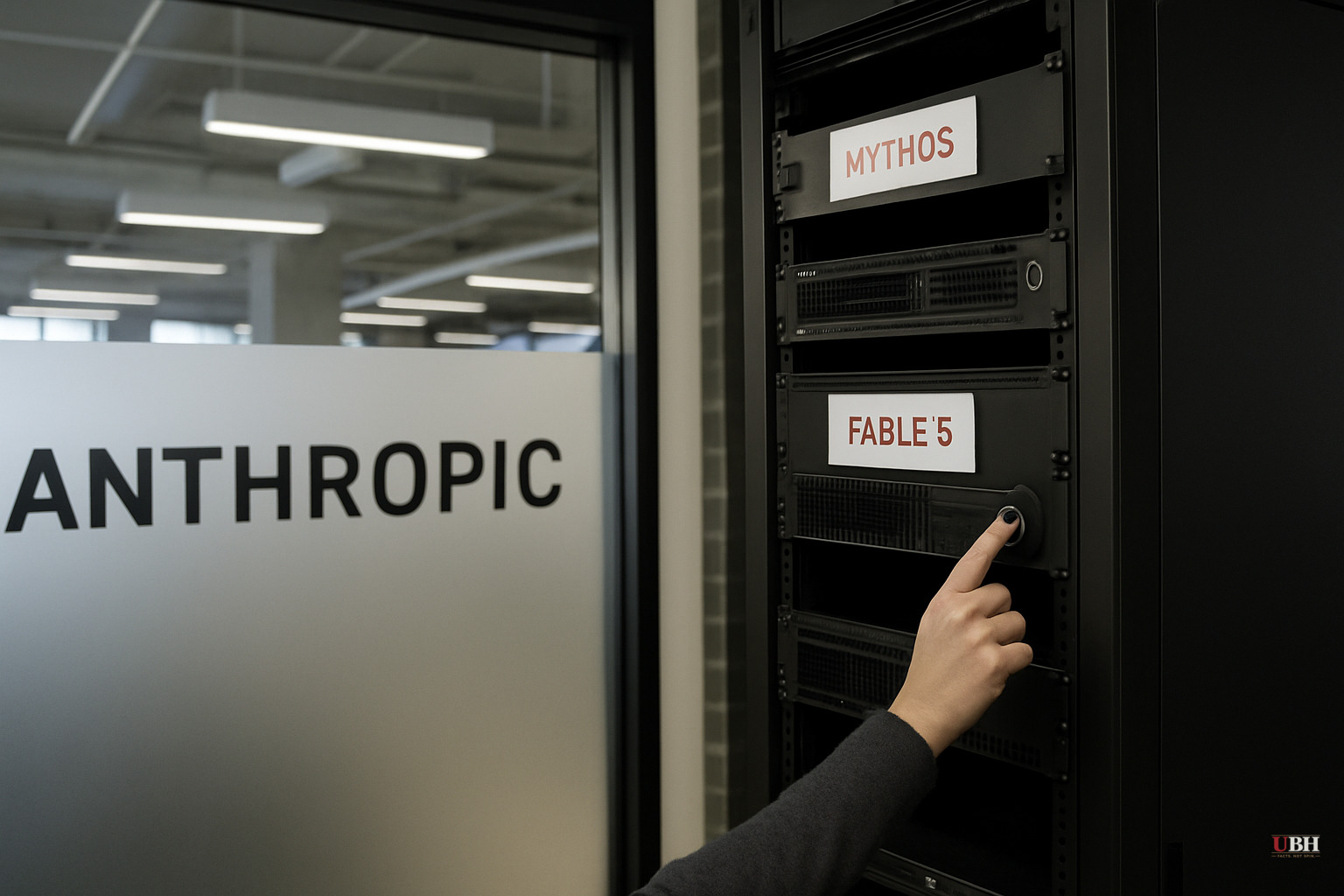
What Happened
Friday, June 13: the U.S. government announced export controls on Anthropic's Fable 5 model and Mythos, the underlying model Fable 5 is built on. The order was issued less than a week after Anthropic released Fable 5 to the public.
The controls barred foreign nationals from accessing both models, including foreign nationals employed by Anthropic inside the United States. Anthropic's response was blunt: the company took both models offline entirely, for everyone.
The company's stated reason, according to The Verge's Hayden Field, who covered the play-by-play of the weekend scramble, was that Anthropic didn't believe it could reliably restrict access on a user-by-user basis and still be in reasonable compliance with the order.
As of Tuesday, June 16, when The Verge recorded its Decoder episode on the situation, Fable 5 was still down. Users opening Claude were greeted with a notice directly above the chat window: "Fable 5 is currently unavailable." As of today, June 18, no public announcement of a restored service has been confirmed in available sources.
Why Export Controls? On a Software Model?
Export controls are a tool designed primarily to keep advanced military technology out of adversarial hands. Think semiconductors, missile components, dual-use hardware. Applying them to a publicly released AI model is a significant escalation in how Washington thinks about AI governance.
The Trump administration has not publicly detailed its specific rationale for why Fable 5 and Mythos crossed the threshold. What's known from The Verge's reporting is that the government moved fast. The model had been publicly available for less than a week. The controls swept broadly enough to catch Anthropic's own workforce.
The specific legal mechanism used, the agency that issued the order, and the classified or technical assessment underlying the decision have not been publicly disclosed in the sources available.
The Irony Is Real
Anthropic's position here deserves full context before any editorial judgment.
For years, Anthropic has been one of the loudest voices in AI arguing that powerful models could become genuinely dangerous and that government needed to build serious regulatory frameworks before that moment arrived. The company has published detailed safety research, lobbied for AI oversight, and built its brand around the idea that AI risk is real and must be managed by responsible actors, including government.
Now the government has acted. And Anthropic doesn't like how it's playing out.
Calling for regulation and then objecting to a specific regulation you believe is poorly scoped, legally questionable, or operationally unworkable is a coherent position. A company can genuinely believe AI needs oversight while also believing this particular order is badly designed.
Anthropic's critics, and there are plenty in the AI space who think safety-focused labs are too cozy with regulatory frameworks they help design, will note that the company's years of "please regulate us" messaging has now run headlong into the reality that regulation doesn't always arrive on your terms.
The Legitimate Concern on the Other Side
If Mythos is a sufficiently advanced model, the U.S. has a real interest in preventing adversarial foreign governments, particularly China, from accessing it freely. A publicly released model with no access controls is, by definition, accessible to anyone with an internet connection, including intelligence operatives, military researchers, and state-sponsored actors. If the underlying capability is sensitive enough, the fact that Anthropic intended it for commercial use doesn't change the national security calculus.
The Trump administration's broader AI posture has been to treat frontier AI as a strategic asset, not just a consumer product. That framework, applied consistently, leads directly to this kind of intervention.
Whether Mythos actually meets the technical threshold that justifies export controls is the question neither the government nor Anthropic has answered publicly.
What This Means Beyond Anthropic
Every major AI lab is watching this. If the U.S. government can impose export controls on a publicly released model within a week of launch, with no apparent prior warning to the company, that changes the calculus for every frontier model release going forward.
Anthropic had to pull its product for everyone because it couldn't selectively enforce access. That's not a small operational problem. It signals what compliance looks like when the regulatory framework hasn't been built to account for how modern AI products are deployed.
As The Verge's Field noted, the Chinese government is also watching. How Washington handles this dispute, whether Fable 5 comes back online, under what conditions, and with what access architecture, signals how the U.S. plans to manage AI export policy going forward.
The unresolved question sitting at the center of all this: who, specifically, has the authority to declare an AI model too dangerous for foreign access, on what technical basis, and with what due process for the company that built it? No public framework currently answers that. This episode may force one into existence.
Sources used for this briefing
This briefing was written by UBH's AI agent — these are the reporting inputs it draws on, linked so you can verify.


