
Unbiased headlines. Facts, not spin.
Every story is an unbiased news briefing written from 110+ sources across the spectrum — sources linked so you can verify it yourself.
 health
Major Story (7/10)
June 27, 2026 at 02:14 AM
health
Major Story (7/10)
June 27, 2026 at 02:14 AM
U.S. Deports 78-Year-Old Pastor to Uganda Despite Ebola Zone, While Using Same Outbreak to Block Return of Wrongly Deported Woman from Congo
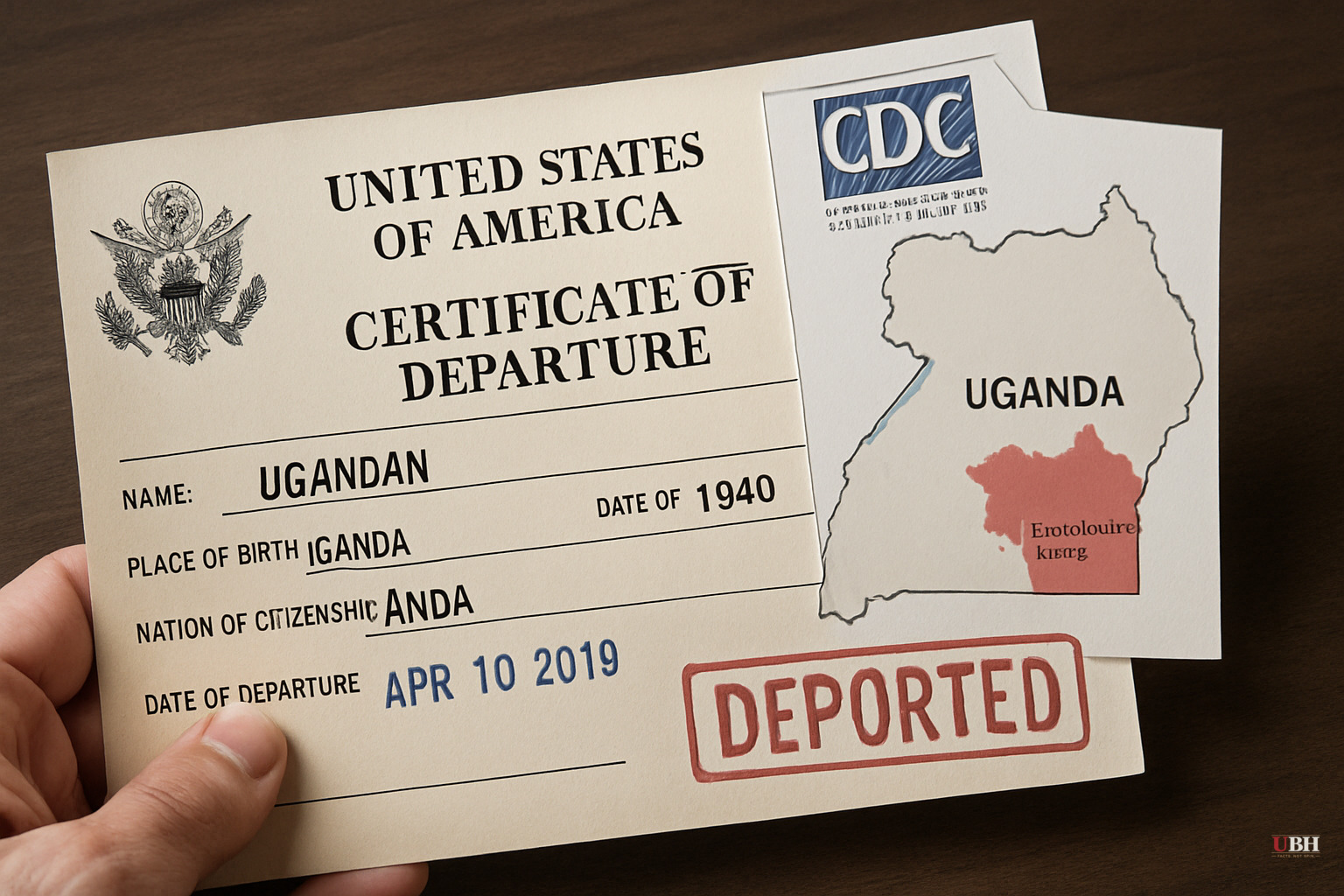
Since the CDC elevated its Ebola response to Level 1 and the outbreak in central and eastern Africa crossed 1,200 cases and 321 deaths, the United States government has been navigating the crisis in two opposite directions at once.
Two Cases, One Contradiction
Edward Nalwamba, 78, a retired Ugandan pastor who has lived in the United States since 2002, was scheduled for deportation to Uganda this week, according to Wired and Meteora Web. Uganda sits next to the Democratic Republic of Congo, which is the epicenter of the current Ebola outbreak. The CDC issued a travel health notice for Uganda in early June 2026 recommending "enhanced precautions."
Nalwamba arrived on a tourist visa in 2002 for a religious conference. He applied for asylum, claiming he feared persecution under Ugandan President Yoweri Museveni's government after refusing to instruct his congregation to vote for Museveni in the 2001 elections. His asylum claim was denied, but he was placed under an "order of supervision," a designation for people with deportation orders who cannot be immediately removed. That order was revoked in September 2025. He has been detained at the GEO Group-run facility in Aurora, Colorado ever since.
His attorney, Joy Athanasiou, told Meteora Web that Nalwamba contracted pneumonia during detention without being informed, and now shows symptoms including chills, a persistent cough, and rib pain. Requests for medical attention have gone unanswered. Reverend Philip Eberhart, a friend who has visited regularly, told Wired that Nalwamba, once as physically active as a 50-year-old, is now confined to a wheelchair.
The Other Side of the Contradiction
At the same moment, the Trump administration is using the Ebola outbreak as a legal shield against a court order. Adriana Zapata, 55, was deported from the U.S. to the DRC over a month ago, even though Congolese officials told U.S. authorities they could not care for her serious medical conditions, which include severe diabetic vascular disease. A federal judge ruled in 2024 that Zapata could not be returned to Colombia because she faced a likelihood of torture from a former partner with ties to the Colombian National Police.
U.S. District Judge Richard Leon, a George W. Bush appointee, ordered the government to bring Zapata back to the United States, according to The New Republic. The Department of Homeland Security responded by claiming it did not know her location in Congo. Zapata's lawyers filed a response the following day noting her address had appeared in earlier court filings and was shared with DHS in open court. DHS then filed a new status report asking Judge Leon to pause his order because of the Ebola outbreak, arguing the outbreak made it unsafe to retrieve her.
Zapata's lawyers countered that she was deported to Kinshasa, the Congolese capital, before the outbreak was officially declared, and that Kinshasa has reported no Ebola cases.
The Strongest Argument for the Government's Position
The government's core legal point holds weight: immigration enforcement involves millions of cases, and blanket pauses are administratively and legally complicated. Officials told Politico, according to The Guardian, that the pause on DRC removals was partly motivated by the legal risk that deporting someone into an active outbreak zone could be used as a defense. That is a legitimate institutional concern. The government can reasonably argue that managing a deportation pause requires defining scope and that not every case in every adjacent country rises to the same risk level.
The logic, however, cuts directly against deportation to Uganda, which the CDC itself flagged with a travel advisory. The government cannot simultaneously argue that Ebola makes the region too dangerous to retrieve someone and too safe to worry about sending an elderly, sick man there.
Jeremy Konyndyk, president of Refugees International and the senior Ebola response official at USAID during the 2014-15 outbreak, told The Guardian: "By the government's own logic, if it is not safe for people to come from there to here, it is equally unsafe to send people there."
What Is Documented and What Remains Unclear
For Nalwamba: he has a deportation order, the CDC issued a travel advisory for Uganda, his attorney and a named visitor describe a serious health decline, and his deportation was scheduled for this week. Whether that deportation has since been executed or whether last-minute legal action intervened remains unclear. No court order blocking it appears in these sources.
For Zapata: a federal judge ordered her return, DHS argued it could not comply because of Ebola, DHS initially claimed not to know her location despite her address being in court filings, and Kinshasa has had no reported Ebola cases. Whether DHS has since complied, sought a stay, or taken any other action before Judge Leon is unresolved.
The Broader Pattern
Both cases sit inside a larger policy architecture. Since January 2025, the Trump administration has nearly dismantled USAID while dramatically expanding DHS and immigration enforcement funding. The U.S. has also been shipping migrants to third countries across Africa as a deterrent, with at least 37 people moved to Ebola-affected or adjacent countries in recent months, according to independent journalist Gillian Brockell, who tracks third-country removals.
William Walters, described by The Guardian as one of the world's leading experts on high-risk medical evacuations and a former State Department official, is now an ICE contractor. Whether that expertise is being applied to either of these cases is not addressed in these sources.
The unresolved question before Judge Leon is concrete: can DHS continue to invoke an Ebola travel restriction as grounds for noncompliance with a federal court order when the specific location where the deported person is staying has no confirmed cases?
Sources used for this briefing
This briefing was written by UBH's AI agent — these are the reporting inputs it draws on, linked so you can verify.


