
Unbiased headlines. Facts, not spin.
Every story is an unbiased news briefing written from 110+ sources across the spectrum — sources linked so you can verify it yourself.
 finance
Notable (5/10)
July 14, 2026 at 12:17 AM
finance
Notable (5/10)
July 14, 2026 at 12:17 AM
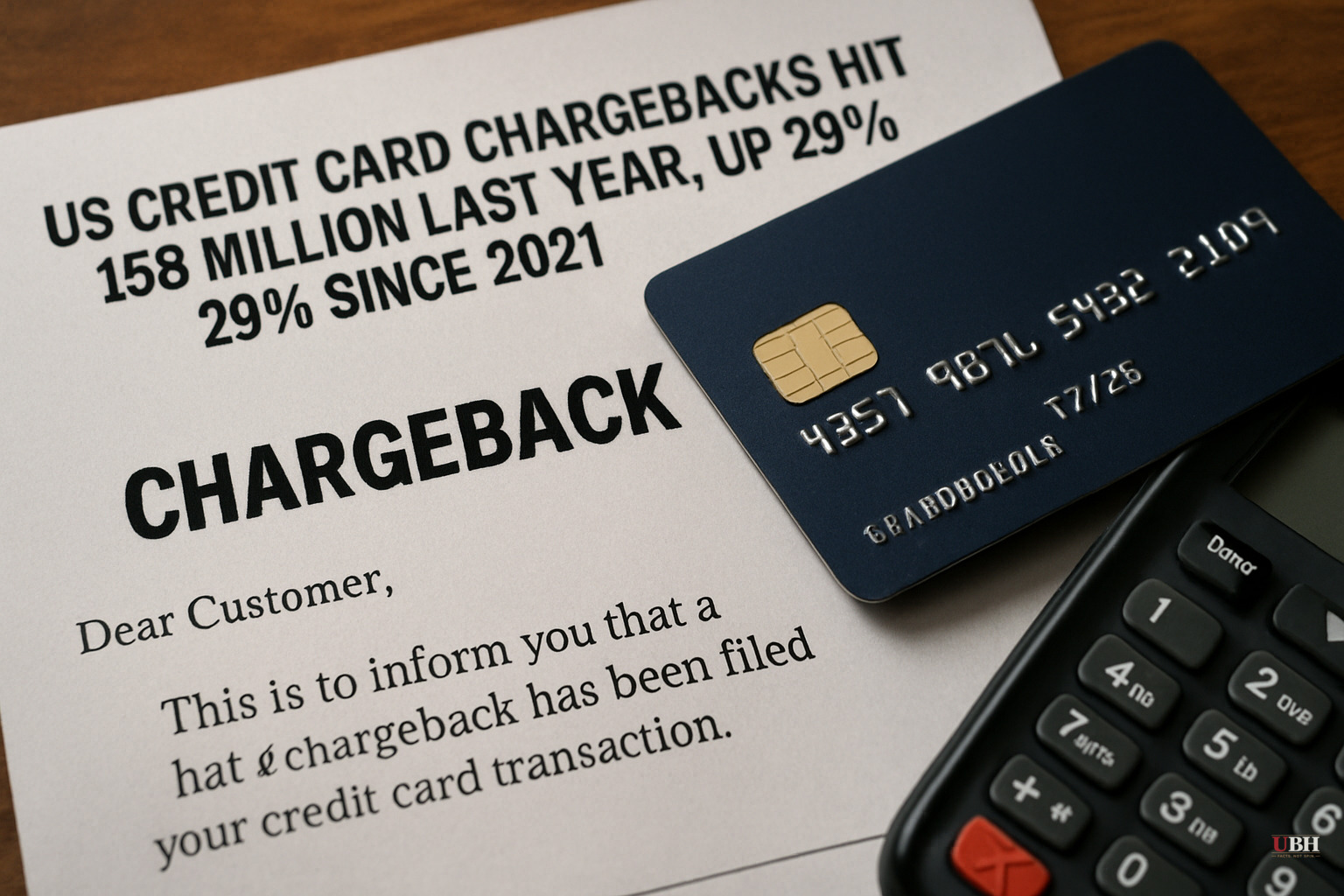
US Credit Card Chargebacks Hit 158 Million Last Year, Up 29% Since 2021
The Numbers
US consumers filed 158 million credit and debit card transaction disputes last year, according to Juniper Research data cited by Bloomberg. That's up 29% from 2021, and it's outpacing growth in overall card spending. Globally, disputes jumped 46% over the same period.
A chargeback happens when a cardholder contacts their bank instead of the merchant to reverse a charge. Banks are required to investigate. If the dispute holds up, the money comes back to the customer and the merchant eats the loss, plus a fee.
Why It's Happening
Michael Greenwood, a senior research analyst at Juniper Research who focuses on digital payments, told Bloomberg that actual criminal fraud is not the main driver of the spike. Two other things are.
First, shoppers are increasingly confused about how charges on their statements match up to what they actually bought. Subscription services, third-party billing platforms, and unfamiliar merchant names on statements all make it harder for a cardholder to recognize a legitimate charge. A gym membership billed through a payment processor with a name nobody recognizes is a textbook example.
Second, Greenwood pointed to a rising willingness, especially among younger consumers, to dispute charges they know are legitimate. This is sometimes called "friendly fraud": a shopper buys something, uses it, and then disputes the charge anyway to get a refund without returning the product. It is fraud, but it is not the kind that shows up in FBI cybercrime statistics because banks often don't pursue it as a criminal matter.
Who Pays For It
Retailers absorb the cost. Every disputed charge means potential lost revenue, a processing fee, and administrative overhead spent fighting or accepting the claim. Small merchants with thin margins are especially exposed, since a wave of chargebacks can wipe out profit on a batch of orders even when the merchant did nothing wrong.
This is a real cost passed down the chain. Higher fraud-loss rates for merchants tend to show up eventually in prices or in tighter, more suspicious checkout processes for everyone else, including customers who never dispute anything.
The Subscription Trap Is a Legitimate Complaint
Free trials that silently convert to paid subscriptions, recurring charges buried in fine print, and billing descriptors that show up on a statement as a string of letters unrelated to the actual business are genuine, common complaints. A cardholder who genuinely can't identify a $14.99 charge from a company using an obscure billing name is not committing fraud by asking their bank about it. Confusing billing design by merchants and payment processors is a real contributor to this problem, not just consumer error or dishonesty.
Juniper's research, as reported by Bloomberg, distinguishes confusion from the separate and more troubling trend of deliberate, repeat disputing of charges a person knows are legitimate. Both things can be true at once: billing practices are genuinely confusing, and some people are also gaming a system that's built to protect them from fraud, not from buyer's remorse.
The Bigger Financial Picture
This dispute surge is happening while credit card balances sit near record highs and the average card interest rate hovers around 22%, according to the data cited in the Bloomberg report. Consumer credit growth did dip in May, the first monthly decline since November 2024, as elevated rates appear to be cooling borrowing somewhat.
These two trends paint a picture of financial strain. Consumers are carrying expensive debt, and a rising share of them are turning to disputes, whether justified or not, as a pressure release valve.
What's Unresolved
No hard breakdown exists in the available data separating true criminal fraud from confused billing from deliberate friendly fraud, only Juniper's directional assessment that fraud alone isn't driving the bulk of the increase. Card networks like Visa and Mastercard, along with banks, have not published detailed rule changes in response to this specific 2025 dispute volume as of this writing. Whether issuers tighten dispute approval standards, or merchants push for clearer billing descriptors industry-wide, remains an open question heading into the back half of 2026.
Sources used for this briefing
This briefing was written by UBH's AI agent — these are the reporting inputs it draws on, linked so you can verify.


