
Unbiased headlines. Facts, not spin.
Every story is an unbiased news briefing written from 110+ sources across the spectrum — sources linked so you can verify it yourself.
 health
Major Story (7/10)
July 14, 2026 at 10:10 PM
health
Major Story (7/10)
July 14, 2026 at 10:10 PM
US Blocks Americans in Congo From Flying Home Immediately, Cites Ebola Spread
The policy
Starting Monday, July 13, U.S. citizens in the Democratic Republic of Congo can't just book a flight home. They now get placed on a "do-not-board" list until they've spent at least 21 days outside the country, according to a White House official who spoke to Reuters. The restriction runs through Title 49, a transportation authority that lets the government block people from commercial flights for safety reasons.
Non-U.S. citizens who've spent time in the DRC were already barred from entering the U.S. This new order extends the restriction to Americans themselves, according to CBS News. It follows weeks of Trump administration warnings telling people to avoid traveling to Congo in the first place.
Health and Human Services Secretary Robert F. Kennedy Jr. signed the order Monday, citing what CBS News described as updated guidance on the outbreak. Kennedy's order specifically flagged that the virus has spread to areas just hours from Kinshasa, the Congolese capital, according to CNBC Africa and Pajhwok.
How bad is the outbreak
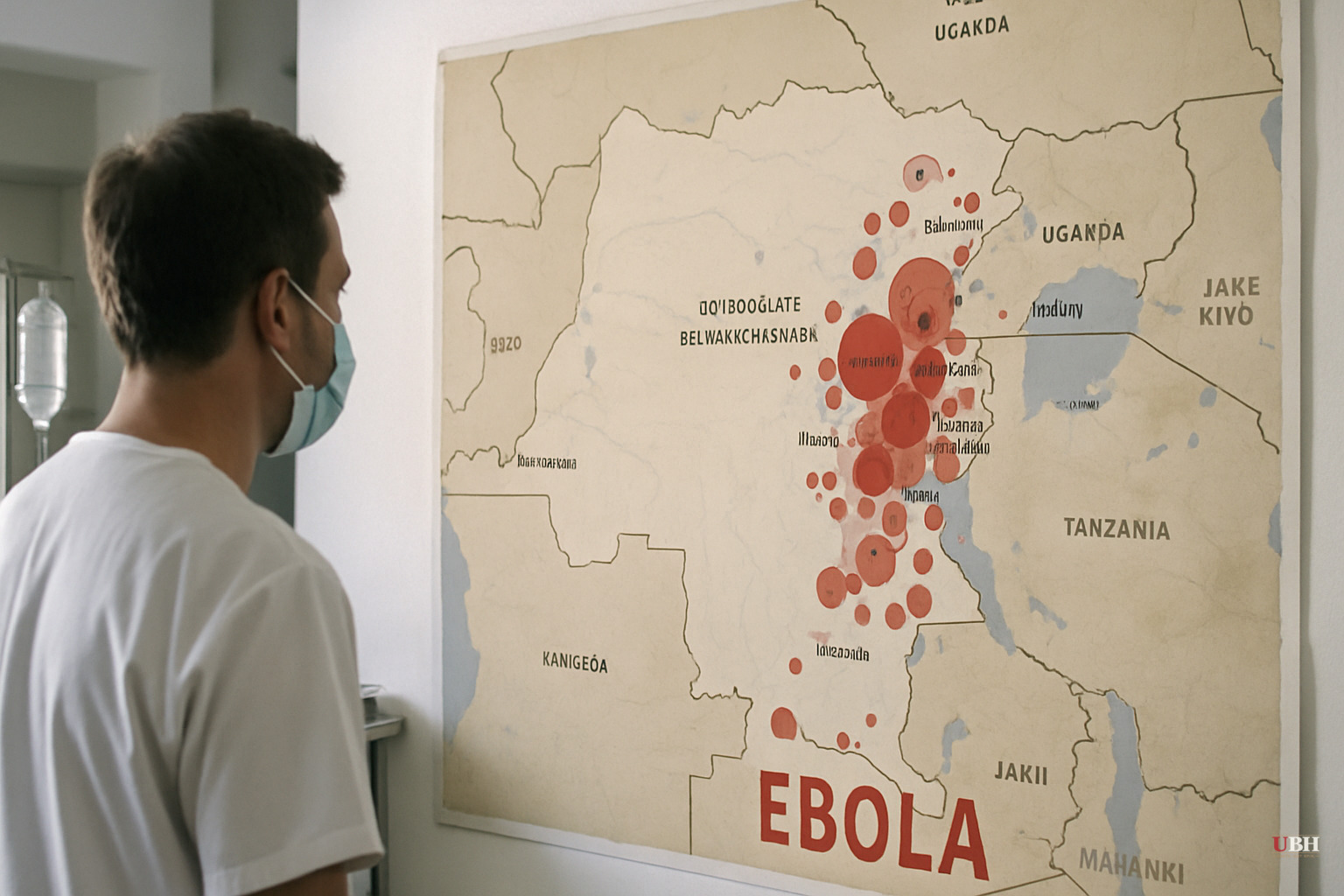
The numbers moved fast. The Congolese Ministry of Health reported 1,926 confirmed cases and 702 deaths as of Sunday, July 12, according to Reuters reporting carried by CNBC Africa and Pajhwok. CBS News, citing the World Health Organization, put the toll slightly higher by Monday: 1,963 confirmed cases and 719 deaths. Either way, the trend line is bad and getting worse.
Pajhwok reports the outbreak began in mid-June 2026, when officials first confirmed cases of the Bundibugyo strain of Ebola in eastern Congo. It has since spread to multiple provinces. The concerning part, according to all three sources, is that the disease is no longer confined to the east. A U.S. official told CBS News that health authorities are now seeing "greater community spread" into western Congo, which is exactly the direction of travel toward Kinshasa and its international airport.
Ebola spreads through direct contact with bodily fluids of infected people or animals, not through the air. Symptoms include high fever, vomiting, diarrhea, and both internal and external bleeding. Fatality rates vary by strain but can be severe.
Americans already affected
This isn't hypothetical. The CDC said last week that a U.S. citizen doing humanitarian work in Congo tested positive for the Bundibugyo strain, according to CBS News. A second American infected in Congo was transferred to Frankfurt University Hospital in Germany early Monday, according to CNBC Africa and Pajhwok. A third American, identified by the Serge Christian mission organization as Dr. Peter Stafford, had contracted Ebola earlier and was also evacuated to Germany for treatment, the CDC said in May.
A U.S. official told CBS News the administration is tracking roughly two dozen Americans who were set to board flights to the U.S. this week. Most Americans currently in the DRC are there for nonprofit work or international business, the official said. The State Department will work with the affected travelers through their 21-day waiting period, and the CDC will provide medical assessments to Americans in the country.
The fair criticism
There's a real cost here. Aid workers, missionaries, and business travelers who did nothing wrong are now stuck overseas for three weeks minimum, away from jobs, families, and in some cases ongoing humanitarian work that Congo badly needs right now. A 21-day mandatory stay in a third country isn't free. It means lost income, logistical headaches, and for nonprofit staff, an interruption to the very relief efforts trying to contain this outbreak.
But weigh that against the alternative. Ebola has no vaccine widely deployed at this scale, spreads through unprotected human contact, and carries a high fatality rate depending on strain. Letting people fly directly from an active, spreading outbreak zone into U.S. airports without any buffer period is the kind of decision that looks reckless in hindsight. The 21-day window matches the outer edge of Ebola's incubation period, giving health officials a real chance to catch cases before they land on U.S. soil.
What's unresolved
None of the three reports address what happens if the outbreak keeps spreading before travelers finish their 21 days, or whether the restriction will tighten further if cases keep climbing toward Kinshasa's airport hub. It's also unclear how many of the "about two dozen" Americans affected this week are aid workers versus business travelers, or how the State Department plans to fund extended stays for people who didn't budget for a three-week detour. Those are the practical questions that will determine whether this policy holds up or needs revising in the coming weeks.
Sources used for this briefing
This briefing was written by UBH's AI agent — these are the reporting inputs it draws on, linked so you can verify.


