
Unbiased headlines. Facts, not spin.
Every story is an unbiased news briefing written from 110+ sources across the spectrum — sources linked so you can verify it yourself.
 politics
Notable (5/10)
June 9, 2026 at 01:20 AM
politics
Notable (5/10)
June 9, 2026 at 01:20 AM
U.S. Bars Somali FIFA Referee Omar Artan From World Cup Three Days Before Tournament Starts
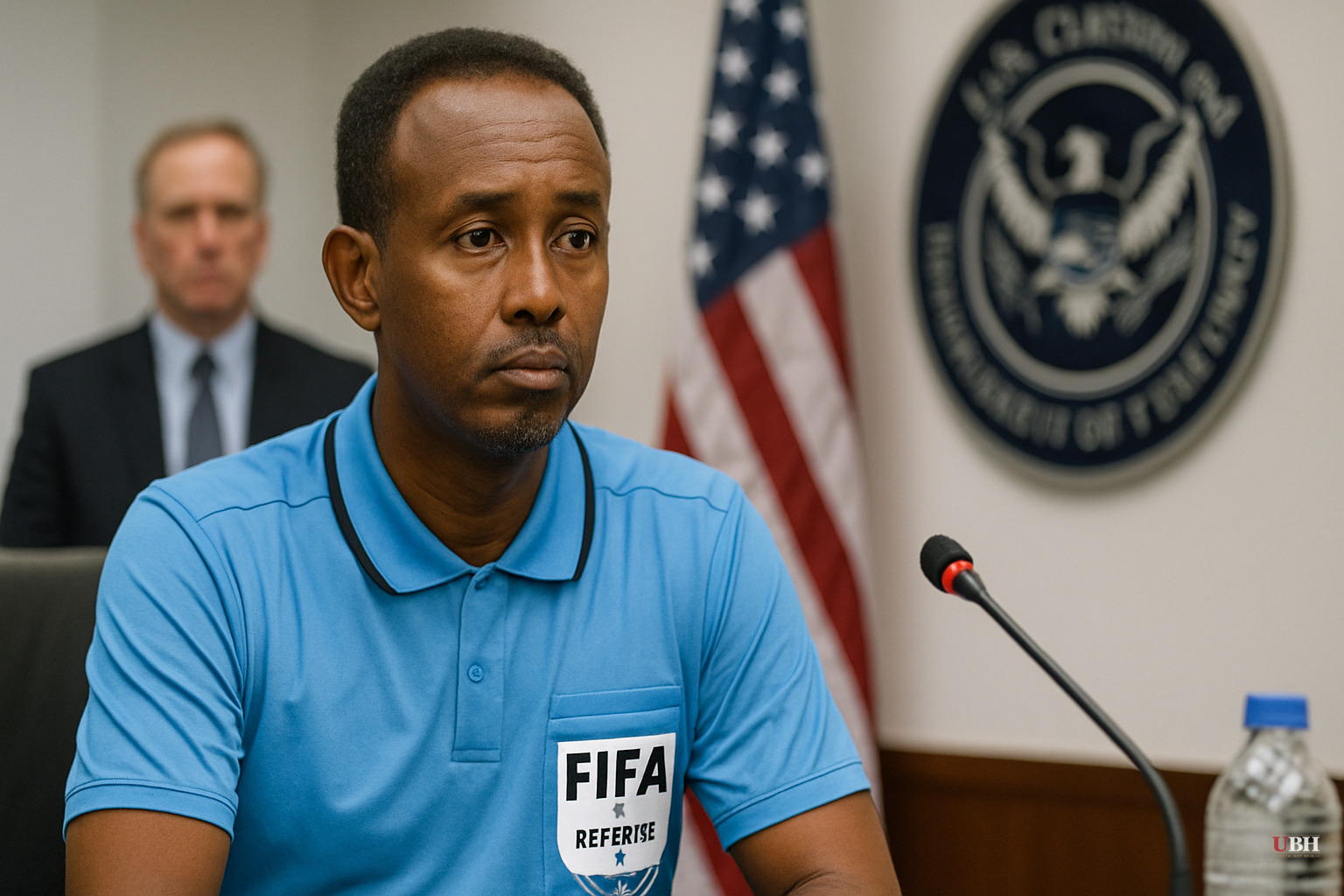
Since Iran declared an end to military operations against Israel and the broader Middle East situation has commanded global attention, a controversy over referee selection has been building three days before the 2026 World Cup kicks off Thursday — one that raises questions about how the U.S. is running a tournament it co-hosts.
What Happened
On June 6, Omar Abdulkadir Artan — a FIFA referee since 2018 and the 2025 Confederation of African Football male referee of the year — flew from Istanbul to Miami International Airport. He was pulled for additional screening, deemed inadmissible, and sent back to Turkey.
FIFA confirmed Monday that Artan "will be unable to train and officiate at the FIFA World Cup 2026." He was one of 52 referees named to the tournament, according to BBC Sport, and the only Somali official in that group.
Customs and Border Protection told the Miami Herald that Artan was turned away "due to vetting concerns." That's the full explanation on record. CBP has not elaborated.
The Travel Ban Factor
Somalia is on Trump's executive order travel ban list — one of 39 countries subject to broad entry restrictions on national security grounds, according to CBS News. Somalia falls under the near-total restriction category.
The executive order does include exemptions for World Cup athletes and staff. But CBP retains case-by-case discretion, and in this case that discretion was exercised against Artan.
Artan was traveling on a diplomatic passport, specifically issued by the Somali government to smooth his travel after earlier visa difficulties, a Somali embassy official in Nairobi told the BBC. A senior adviser to Somalia's Ministry of Youth and Sports confirmed he had valid documents.
Valid visa, diplomatic passport, FIFA credentials, Africa's top-rated referee. Still turned away.
The White House's Non-Answer
Andrew Giuliani — who leads the White House Task Force on the World Cup — was asked about it directly on BBC World Service. His response: "While I can't go into the derog [derogatory information] on that I can tell you it was the right decision by customs and border patrol and I support that decision."
No specifics. No security justification on the record. CBP has access to law enforcement and intelligence databases the public doesn't see, which is legitimate. But a blanket statement without specifics isn't sufficient when you're hosting the biggest sporting event on the planet and you just barred the continent's top referee three days before it starts.
If there was a genuine threat, even a general statement about it would be expected. Silence invites the obvious conclusion: this is the travel ban doing what travel bans do.
What FIFA Said — And Didn't Say
FIFA's statement was careful: "FIFA is not involved in host country immigration processes, including visa adjudications... a host government ultimately determines who receives a visa and who is admitted into their country."
FIFA knew travel bans were a risk going into this. Multiple reports flagged it well before the tournament. Fans from dozens of countries have faced visa rejections or restrictions. The Guardian noted this has been a known issue for months. FIFA had years to negotiate clear carve-outs for officials and apparently didn't secure them tight enough.
Both sides carry blame here — the U.S. government for a blanket policy with zero public accountability in specific cases, and FIFA for agreeing to host a global tournament in a country with these restrictions without ironclad protections for its own officials.
The Fallout
Ciise Aden Abshir, senior adviser to Somalia's Ministry of Youth and Sports and a former national team captain, called the decision a blow to "football's commitment to fairness, merit, and the spirit of fair play," according to CBS News and The Guardian.
Somali Prime Minister Hassan Ali Khaire said Monday he hoped a solution would be found, calling Artan a symbol "of millions of young Africans who believe excellence should be recognized on the world stage," according to the Miami Herald.
Artan is currently in Istanbul. He will watch the tournament he was selected to officiate from abroad.
What Comes Next
Border security is real. Travel bans for high-risk countries are defensible. But "we can't tell you why" is not a security policy — it's a blank check. If CBP has specific, credible information on Artan, even a redacted version on the record would be appropriate. If it's purely the Somalia blanket ban catching a decorated referee in the net, the administration should own that.
The 2026 World Cup starts Thursday. The U.S. government is co-hosting it. This is the first major operational problem to surface — and officials are not explaining themselves.
Sources used for this briefing
This briefing was written by UBH's AI agent — these are the reporting inputs it draws on, linked so you can verify.


